Photo: Rosa Raudales
We start the season with a clean greenhouse. As the season moves forward and there is no time to spare, we lose track of sanitation. Proper sanitation can help us prevent disease, the spread of pests and safety hazards. A proactive sanitation approach is less expensive than a reactive one. A continuous sanitation program helps us create a more efficient and safer greenhouse environment (Fig. 1). Take these five steps to keep it clean, year-round.
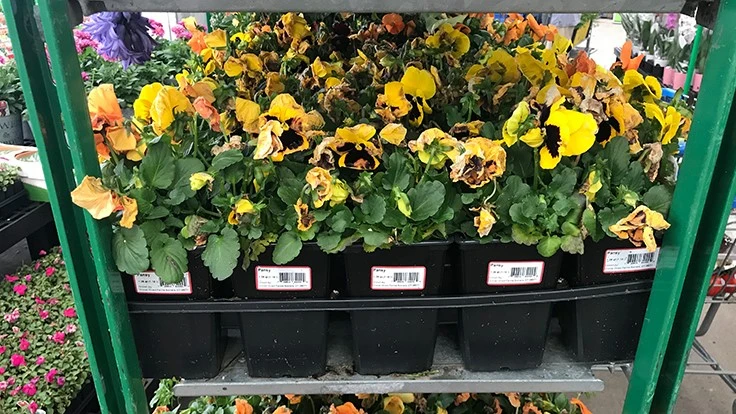
1. Discard unhealthy plants. In a time when space is money, don’t keep any plants that you will not sell. Plants that have non-treatable infectious diseases or have passed their prime have poor marketable traits (Fig. 2) and it is unlikely that customers will buy them. Therefore, remove these plants from the greenhouse. Unhealthy plants are more vulnerable to disease and attract insect pests. These plants represent more of a risk than an opportunity.
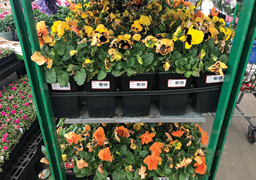
2. Remove plant debris or organic matter from the surfaces. Organic debris, from plants or peat, can harbor plant pathogens including active and dormant spores. Researchers from Oregon State University identified that Phytophthora sp. spores can splash from the organic debris on the floor to the plants on the benches. Organic matter can also interact with chemical sanitizers (e.g. chlorine) and reduce their efficacy. The golden rule of surface sanitation is “Clean first, then sanitize.” Don’t forget to clean the footbaths, which harbor high levels and diversity of organisms.
3. Control weeds. Weeds can be a reservoir of insects, including aphids, whiteflies and thrips. Viruses can also infect weeds. In some cases the weeds might not show clear symptoms of disease. In other words, weeds are not just an aesthetic problem, they can be a serious source of insects and disease. For more information on weed control, go to bit.ly/2FhzbUr
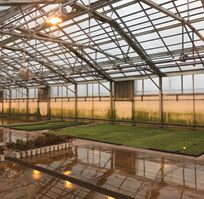
4. Manage algae. The greenhouse is a perfect environment for algae growth (Fig. 3). We do not know exactly what the source of algae spores is; we simply assume that algae spores are omnipresent in greenhouses. Algae on walking areas can be a trip hazard for workers. Algae also accumulates on the surface of growing media. Fungus gnats (which serve as vectors of Pythium spores) feed on algae.
5. Take care of the irrigation lines. Water and irrigation systems can be a dispersal mechanism for pathogens. Use clean water to irrigate your crops. Inject a sanitizer continuously at a low rate during the growing season or flush at higher rates when the greenhouse is empty. Always hang your hose; don’t let the nozzle come in contact with the floor.

Explore the February 2019 Issue
Check out more from this issue and find your next story to read.
Latest from Greenhouse Management
- Blue Grass Farms acquires Brehob Nursery
- OHP expands sales team with new hire and internal promotion
- Seed Your Future aims to double 2025 total for 'Round-Up at the Register' 2026 campaign
- Beacon Impatiens partners with Roots for Youth in 2026
- Inner visions
- New internship data empowers horticulture employers
- American Horticultural Society announces winners of 2026 Great American Gardeners Awards
- Sustainabloom releases new sustainability template for wholesale florists