2015/2016
Biological control agents are an increasingly popular option for control of greenhouse pests. For all growers, biologicals represent a viable control option, whether as part of a wider Integrated Pest Management plan or as part of an organic operation.
There is increasing market pressure to battle bugs with bugs. And the payoff for doing so can be significant. Organic floriculture operations, indoor and field, combined for a total sales value of $27,330,041 in 2014 versus $15,479,962 in 2008, a significant jump that shows the increasing dollar power of the organic movement.
Raymond A. Cloyd, professor and extension specialist in horticultural entomology/plant protection at Kansas State University frequently says that biological control is a proactive strategy, not reactive. Biologicals need to be in place before a pest problem arises. If an infestation is already ravaging your crops, it may be too late to use biologicals.
To help growers understand the ins and outs of biologicals, Cloyd prepared the following chart of common greenhouse pests and their biological control agent counterparts.

Click the image above for full chart.
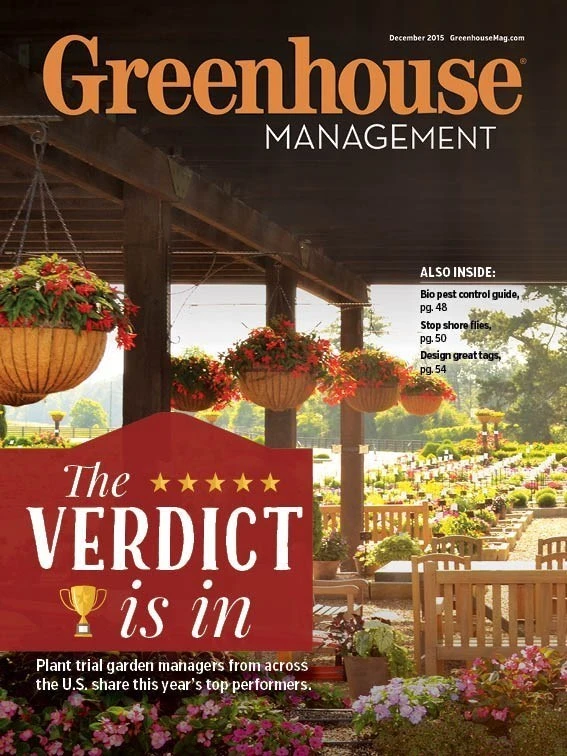
Explore the December 2015 Issue
Check out more from this issue and find your next story to read.
Latest from Greenhouse Management
- Quality Horticulture to acquire Hydrofarm Canada distribution
- Blue Grass Farms acquires Brehob Nursery
- OHP expands sales team with new hire and internal promotion
- The inventive women of TPIE ’26
- Seed Your Future aims to double 2025 total for 'Round-Up at the Register' 2026 campaign
- [WATCH] Remix: Sakata Playlist Combos and New Variety Spotlight
- Beacon Impatiens partners with Roots for Youth in 2026
- Inner visions