Editor's Note: This article originally appeared in the February 2026 print edition of Greenhouse Management under the headline “California bound.”


For grower-retailers, the spring season is a blend of nonstop sales and the crucial hunt for the next big seller.
While you’re running your business, the future of your product mix is being decided elsewhere.
The California Spring Trials (CAST) is not just a collection of greenhouses; it’s one of the most important events for gaining a competitive edge in the ornamental horticulture industry.
If you’ve hesitated to attend, thinking it’s too complex or time-consuming, it’s time to rethink. Missing CAST means missing the products, the people and the profit opportunities that will define future gardening seasons. And it’s easier than ever before to attend this year, from March 24 to 27, 2026.
1. Get the ultimate product edge
Your customers constantly seek novelty, guided by social media and programs like the National Garden Bureau’s New Plants. Attending CAST allows you to walk through trials and see the newest annuals, perennials and edibles in person. This lets you assess the plant’s habit, color stability and real-world performance months before it hits the market. Seeing hundreds of varieties side-by-side gives you the confidence to select the exact plants that resonate with your customers and can give your retail operation a distinct edge.
2. Predict trends and set prices
For retailers, knowledge equals profitability, and attending CAST is your crystal ball for understanding the future plant market. You’ll see major breeding trends early — like the focus on drought resistance or unique foliage — allowing you to strategically adjust orders and position your retail operation as the local authority on what’s new.
3. Get merchandising inspiration
The displays at CAST serve as master classes in merchandising; every stop showcases plants in their most exciting context. You’ll observe how top marketers combine color and form, helping you design displays that stop shoppers and convert curiosity into sales.
4. Gather story starters
Learn the unique selling points (USPs) of new varieties directly from the source, giving your staff the compelling talking points they need to sell with confidence.

5. Meet the breeders
The value of the plants you see is matched only by the value of the people you meet. CAST draws top-tier professionals, creating a uniquely focused environment for building career-changing relationships. This is your chance to talk directly to the plant creators about genetics and performance under specific conditions. You can give them feedback on what your customers need, creating a valuable loop.
6. Network beyond suppliers
You’ll be alongside successful retailers, public gardens and the media. These interactions often lead to collaborative ideas, shared solutions for challenges and leadership opportunities that elevate your professional game.
7. Plan with streamlined CAST logistics
Suggested itineraries and a new single registration system simplify planning, allowing you to hit all the stops efficiently.
8. Visit all stops in just four days
The trip can be executed in as little as four days, a minor time investment for a massive payoff. And CAST does not take place on the weekend, respecting the busiest time in spring.
If you absolutely cannot step away, send your annuals and perennials buyers. CAST is an invaluable professional development opportunity that will instantly pay dividends.
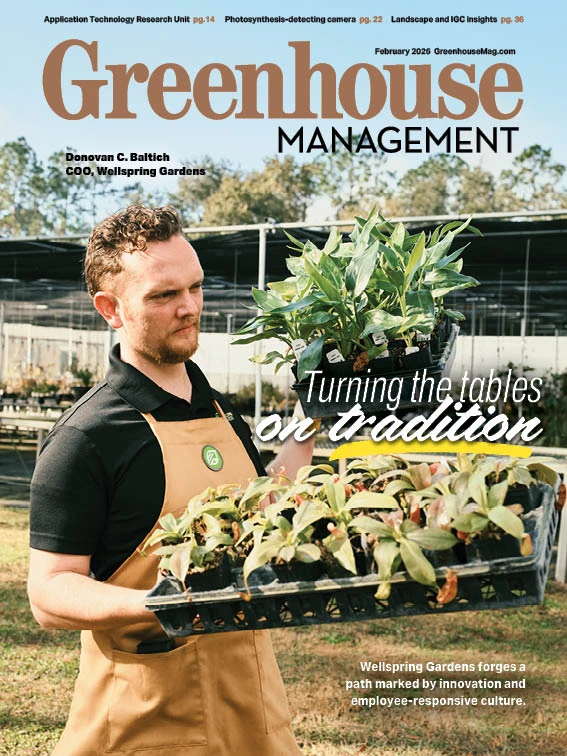
Explore the February 2026 Issue
Check out more from this issue and find your next story to read.
Latest from Greenhouse Management
- Proven Winners retail survey finds plant quality and selection are top shopping considerations
- The Growth Industry Episode 9: IPPS International Tour preview with Brie Arthur and Liz Erickson
- Weather report
- ‘Horticulture is just the vehicle that I ride’
- Gordie Bailey Jr., third-generation family leader of Bailey Nurseries, passes at 90
- Keep it moving
- New American Floral Endowment scholarship supports global floriculture research
- Seventh edition of Tulip Trade Event planned for March 2026 in Netherlands