Editor's Note: This article originally appeared in the August 2025 print edition of Greenhouse Management under the headline “From the greenhouse to the kitchen window.”
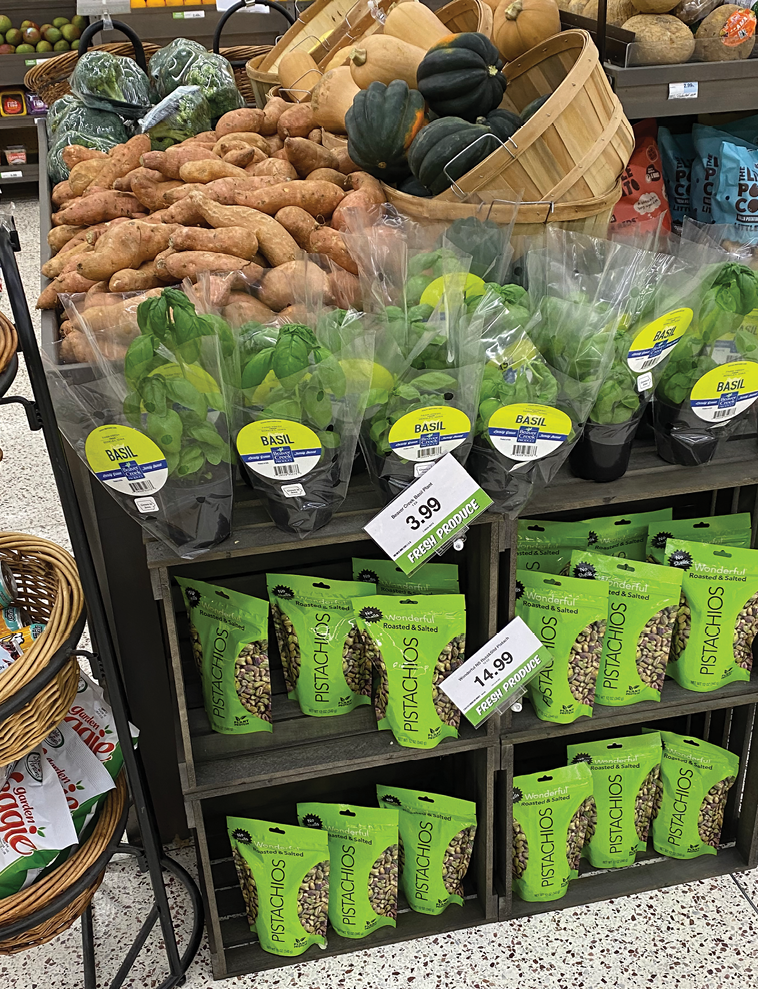
Managing fertilizers during containerized herb production is one part of producing a great crop, but what happens to these plants once they leave the greenhouse? They are often placed in lower-light environments in retail — and in the home — and provided with minimal water and no fertilization, which is not a recipe for success (Figure 1).
We designed an experiment to determine how fertilization in the greenhouse affected containerized basil when it was finished, as well as in the retail and consumer environments that followed finishing. We used both conventional and organic fertilizers in different forms, including both water-soluble and controlled- or slow-release fertilizers (CRF or SRF), applied at different concentrations.
Our experimental approach
To minimize any confounding factors when comparing the conventionally fertilized basil to the organically fertilized basil, we used the same organic basil seed for all treatments, as well as organic substrates for propagation and finishing. This meant fertilization was the only difference between our treatments.
Organic seeds of ‘Nufar’ basil were individually sown into 288-cell plug trays filled with a USDA-certified organic germination mix comprised of finely ground sphagnum peat moss, fine vermiculite and fine perlite and amended with limestone and a wetting agent (LM-18 Organic Germination Mix; Lambert).
Once seeds were germinated, plugs were fertilized once per week; those seedlings to be grown with conventional fertilizers were provided with 100 ppm N from a conventional water-soluble fertilizer (Peters Excel 15-5-15 Cal-Mag; ICL Specialty Fertilizers), while those to be grown with organic fertilizer were provided with 100 ppm N from an organic fertilizer (Nature’s Source Organic Plant Food 3-1-1; Nature’s Source).
When plugs were pullable, three weeks after sowing, they were transplanted into 4.5-inch containers filed with an organic soilless substrate comprised of coarse ground sphagnum peat moss, coarse perlite, limestone and a wetting agent (Pro-Mix MP Mycorrhizae Organik; Premier Horticulture Inc.), with three plugs per container.
For those plants that were going to be fertilized with conventional or organic water-soluble fertilizer, they were planted in unamended substrate. Alternatively, 0.4, 0.8 or 1.2 pounds nitrogen from a conventional controlled release fertilizer (CRF; 15-9-12 Osmocote Plus; ICL Specialty Fertilizers) or organic slow-release fertilizer (SRF; Suståne 8-4-4 Medium Grade; Suståne) was incorporated into each cubic yard of substrate before seedlings were planted.
Once planted, containers were moved into a glass-glazed greenhouse. Throughout the greenhouse phase of the study, plants receiving controlled- or slow-release fertilizer were irrigated with clear tap water, while the other plants were fertilized with 100, 200 or 300 ppm N from a conventional (Peter’s Excel 15-5-15 Cal-Mag) or organic (Nature’s Source Organic Plant Food 3-1-1) water-soluble fertilizer with each irrigation.
Three weeks after being transplanted into containers, when the greenhouse production phase of the experiment was complete, plants were moved into growth chambers to simulate a retail environment. Inside the growth chamber, plants were irrigated with clear tap water and provided with a constant 68 °F air temperature and DLI of 1 mol·m–2·d–1.
After seven days inside the chamber, the retail phase was completed. For the consumer phase, basil shoots were then cut down to two nodes, simulating a harvest, and then placed back into the growth chambers with the same air temperature and DLI for three weeks to simulate use and regrowth in a household.
At the end of each phase — greenhouse, retail and consumer — one-third of the containers for each fertilizer were harvested. Data were collected on chlorophyll concentration (greenness), height and width, fresh and dry shoot weight, substrate pH and electrical conductivity (EC), and shoot tissues were analyzed for mineral nutrient concentrations at the end of the production, retail and consumer phases.


What we found
For the most part, the containerized basil plants were mostly affected by fertilizer treatment or the growing environment for each of the phases. Plants were taller at the end of the retail phase compared to at the end of the greenhouse phase and were shortest at the end of the regrowth following their first harvest at the end of the consumer phase (Figure 2).
Similarly, the fresh and dry weight were greater at the end of the retail phase compared to the end of the greenhouse phase and weighed the least at the end of the consumer phase. Across these different phases, basil fertilized with 100 to 300 ppm N from conventional WSF yielded the most fresh and dry weight of all the conventional and organic fertilizer treatments.
However, since the time in each of the environments — greenhouse (21 days), retail (seven days) and consumer (21 days) — was different, it is useful to look at the growth weight in terms of fresh weight per day (Table 1).
Plants provided with conventional WSF during the greenhouse phase grew more each day than other plants during the greenhouse phase, but there were no differences in growth rates across fertilizer treatments during the retail and consumer phases.
In addition to growth, greenness and tissue nutrient concentrations were affected differently by fertilizer treatment and growing environment. The chlorophyll concentration of upper and lower leaves was measured at the conclusion of each phase. The darkest green lower leaves were on plants fertilized with 300 ppm N from conventional WSF, whereas the lightest green was on plants fertilized with 0.4 lb. N/yd.3 conventional CRF.
Regardless of fertilizer concentration, leaf greenness of lower leaves decreased from greenhouse to retail to consumer phases. Tissue N followed a similar pattern as lower-leaf chlorophyll concentration. It was greatest and fell within the recommended tissue N range (4 to 6%) during the greenhouse phase for plants fertilized with all concentrations of conventional WSF and the highest rates of organic WSF or SRF.
However, by the consumer phase, only plants fertilized with the highest concentration of conventional WSF were within the recommended range, along with plants receiving organic WSF or SRF.

What it means
We found that across production, retail and consumer phases, increasing WSF concentrations of conventional or organic fertilizers had no effect on the regrowth of herbs in the consumer phase after their initial harvest. Additionally, containerized basil provided with conventional CRF had comparable regrowth to all the other fertilizer treatments. Ultimately, we believe this is due less to the fertilizer treatments, but the location of plants and the duration they were in there.
Basil began the consumer phase after a one-week simulated retail phase and after shoots were harvested to two nodes. The environmental conditions during the simulated consumer phase were simply not conducive to growth, especially with only around one-fourth of their canopy remaining after the simulated harvest.
Even with fertilizer still being provided to plants, in the case of the conventional CRF, the low light and small canopy did not promote growth and likely served as the limiting factor. If our consumer environment was more conducive to growth, perhaps simulating a plant enthusiast who would put their plants under light and provide a higher light intensity, we may well see different results, but most plants aren’t grown in such nice conditions in the average home.
Regardless of chlorophyll concentration or tissue N, none of the plants displayed lower-leaf yellowing to the degree a visual deficiency could be diagnosed or reduced marketability. While we did not present the results here, we had the same results for upper leaves where magnesium and micronutrient deficiencies would be observed — there were visual symptoms that would reduce marketability, regardless of tissue concentration.
Certainly, if the plants would have been harvested and grown out a second time or simply provided more time to grow in the consumer phase, deficiencies may become visible, but we didn’t see that with the time frame used in this experiment.
The take-home message
Greenhouse growers want to provide value and grow a better plant for consumers. However, our research found that the fertilization during production may not be the place to focus efforts. The good news is that post-harvest performance was comparable across the fertilizer treatments, meaning the strategies you use to provide mineral nutrients to your crop will still get the job done for consumers enjoying their herbs at home.
Explore the August 2025 Issue
Check out more from this issue and find your next story to read.
Latest from Greenhouse Management
- Blue Grass Farms acquires Brehob Nursery
- OHP expands sales team with new hire and internal promotion
- Seed Your Future aims to double 2025 total for 'Round-Up at the Register' 2026 campaign
- Beacon Impatiens partners with Roots for Youth in 2026
- Inner visions
- New internship data empowers horticulture employers
- American Horticultural Society announces winners of 2026 Great American Gardeners Awards
- Sustainabloom releases new sustainability template for wholesale florists