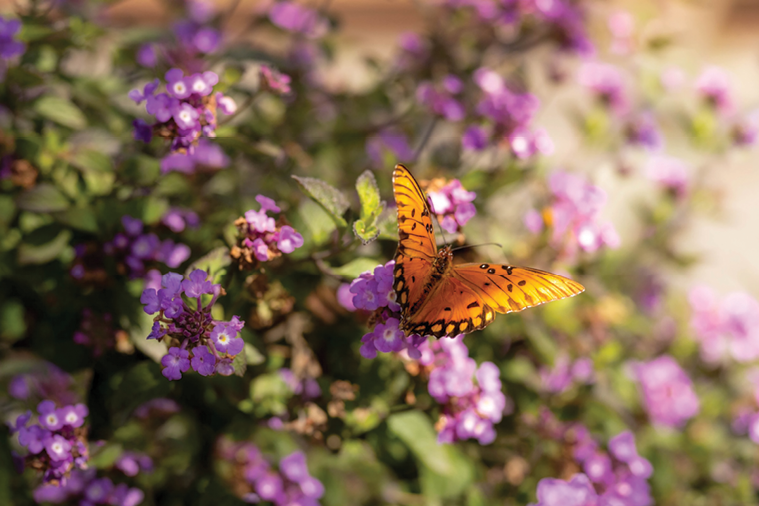
Pollination is crucial for maintaining the populations of many plants in agricultural systems. Seventy-five percent of all flowering plants and 35% of food crops rely on pollinators for reproduction. Think about it as one of every three bites taken was made possible by a pollinator.
Even non-pollinator plants or self-pollinating plants benefit from pollinators in their ecosystems indirectly: enjoying genetic diversity for resilience. By protecting and understanding pollinators, there is more variety and availability of food, supporting food and agricultural security.
Why are pollinator populations declining?
Pollinator populations have documented declines in multiple regions around the world, including North America. These declines stem from biodiversity and habitat loss due to urbanization and fragmentation, the use of agrichemicals, implications of climate change, and the presence of parasites, diseases and invasive species.
Agricultural practices contribute to this decline — the reduction in pollinator habitats, lack of crop diversity and chemical pest management can be destructive. Knowing this empowers us to adapt agricultural practices to promote the conservation of ecosystems and slow the decline of pollinator populations.
What can growers do to support pollinator health?
Producers have a lot of power to support pollinator health through their agricultural practices. Firstly, it is crucial to know and understand the pollinators in your area and what they need to thrive. Pollinators are diverse! While most people think of bees and butterflies, there are also beetles, birds, bats, flies, wasps and more.
Even greenhouse growers who do not use bees or other pollinators can still support pollinator habitats by incorporating the right native plant species around their greenhouses — seeding a variety of flowering plants on the property grounds and planting near greenhouse openings. Growers can also utilize unused areas as ecological focus points to protect and enhance biodiversity.
In agricultural practices, growers can monitor pests through an Integrated Pest Management (IPM) program and protect habitats from exposure to agrichemicals. By prioritizing non-chemical intervention and being intentionally selective of plant protection products, growers can reduce the impact on pollinator health.
They can also adjust the way they apply chemicals, for example, by using spot treatments, checking nozzles and droplet size, monitoring wind patterns and direction, or planning a delivery system for chemigation.
How does this apply to growers of crops that don’t require pollinators?
Protecting and supporting pollinator health is also important for non-pollinator crop ecosystems. All crops can benefit indirectly from pollinators, and all growers can provide safe habitats.
The presence of pollinators helps support broad biodiversity, build resilience through genetic diversity and increase habitats for supportive species, which reduces pest pressures. Growers can consider pest management practices that create impact beyond their farm and support the broader agriculture sector as a whole.
What resources are available to growers to support pollinator protection?
Organizations are increasingly widening their services to encompass pollinator health protection. The USDA Natural Resources Conservation Service, the University of California Statewide IPM Program, regional integrated pest management centers, extension offices and industry organizations like the American Floral Endowment’s Sustainabloom and the Xerces Society all support producers with guidance on pollinator health.
A variety of third-party certification programs recognize growers with practices that support pollinator health. For example, the GLOBALG.A.P. flagship standard, Integrated Farm Assurance (IFA) for flowers and ornamentals and for fruit and vegetables, covers IPM and has a biodiversity component that addresses habitat requirements.
Explore the October 2025 Issue
Check out more from this issue and find your next story to read.
Latest from Greenhouse Management
- Quality Horticulture to acquire Hydrofarm Canada distribution
- Blue Grass Farms acquires Brehob Nursery
- OHP expands sales team with new hire and internal promotion
- The inventive women of TPIE ’26
- Seed Your Future aims to double 2025 total for 'Round-Up at the Register' 2026 campaign
- [WATCH] Remix: Sakata Playlist Combos and New Variety Spotlight
- Beacon Impatiens partners with Roots for Youth in 2026
- Inner visions