Editor's Note: This article originally appeared in the July 2025 print edition of Greenhouse Management under the headline “Mud and roots.”

Men’s Harvester Mid Rubber Boot
Just as it’s necessary to have rugged equipment meant for all terrains and conditions in your greenhouse operation, so too does your workforce need footwear that can take on the elements while keeping them comfortable. The new Men’s Harvester Mid Rubber Boot from The Original Muck Boot Company fits the bill, with a laundry list of features that makes it particularly useful for the horticulture environment. Made for both wet and dry conditions and constructed from hand-laid sheet rubber, the Harvester features a lugged outsole for traction, reinforcement to make using tools more comfortable and a molded heel kickoff to aid in hands-free removal at the end of the day. The Harvester Mid (so named for being only calf-high) also includes a 4-millimeter memory foam footbed and anti-microbial footbed insert topcover that offers both odor control and moisture management. No more smelly employee locker areas. Well, at least not from the boots.

Root Tech BioPot
Tackling plastic waste has been a huge concern for the horticulture industry, and manufacturers have risen to the challenge with a variety of options. Enter newcomer Root Tech and its range of BioPots. In a selection of sizes from 4-inch to 200 gallons, BioPots are fabric-based grow pots made from biodegradable materials like sugarcane and beet biowaste that naturally decompose. The bag-like pots also feature a design that the company says “enhances root development” through air pruning. The fabric-like nature of the material allows air (and eventually roots after planting) to pass through, promoting oxygen at the roots and keeping the roots from circling. They also offer excellent drainage and aeration, crucial for healthy root development. Once planted, the pots are meant to stay with the roots and either transferred into the next size of container or put right into the ground. That characteristic may also help growers cut down on labor, removing the step of pot management in transplantation.
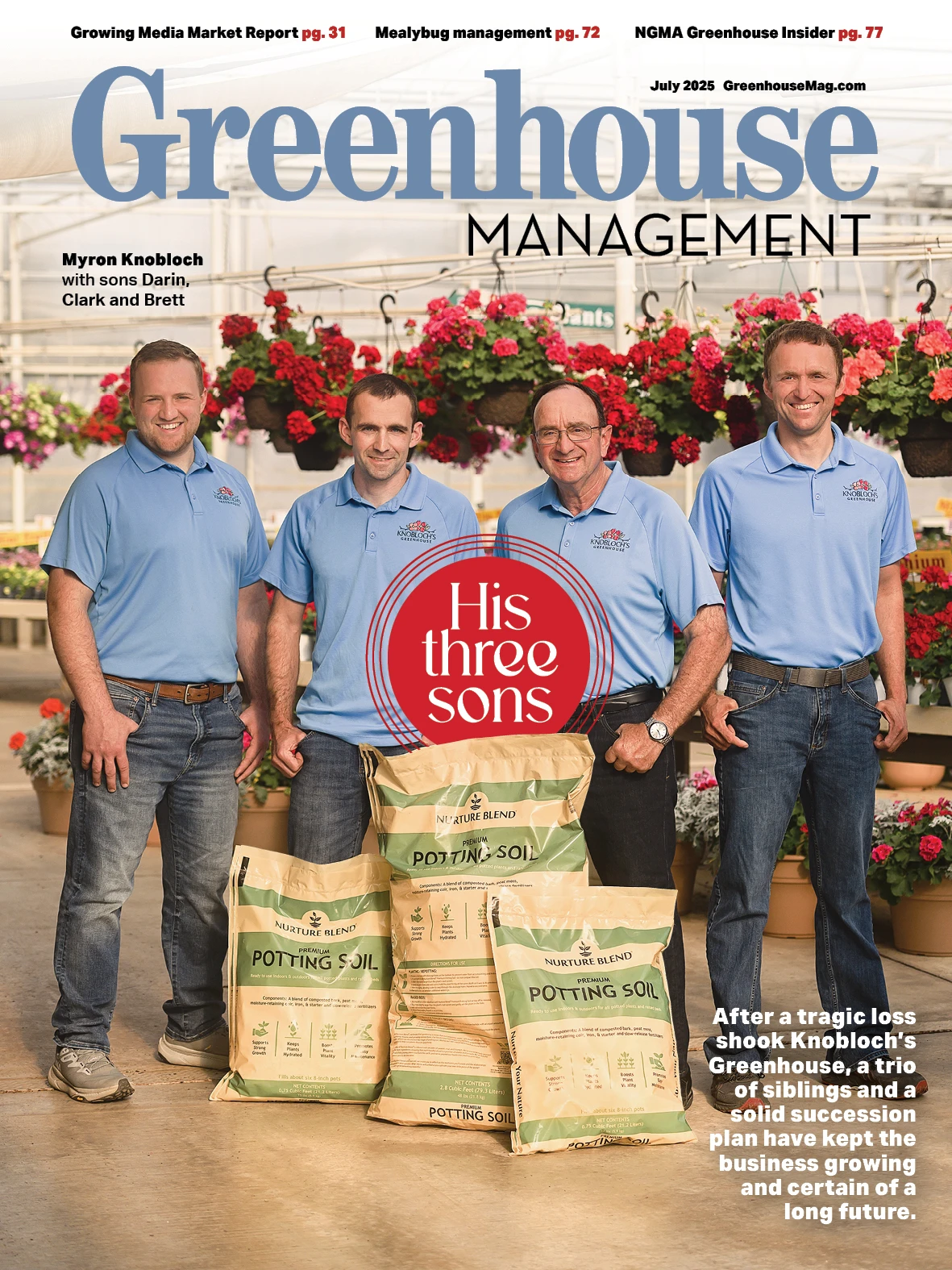
Explore the July 2025 Issue
Check out more from this issue and find your next story to read.
Latest from Greenhouse Management
- Blue Grass Farms acquires Brehob Nursery
- OHP expands sales team with new hire and internal promotion
- Seed Your Future aims to double 2025 total for 'Round-Up at the Register' 2026 campaign
- Beacon Impatiens partners with Roots for Youth in 2026
- Inner visions
- New internship data empowers horticulture employers
- American Horticultural Society announces winners of 2026 Great American Gardeners Awards
- Sustainabloom releases new sustainability template for wholesale florists