Editor's Note: This article originally appeared in the July 2025 print edition of Greenhouse Management under the headline “Made in the shade.”
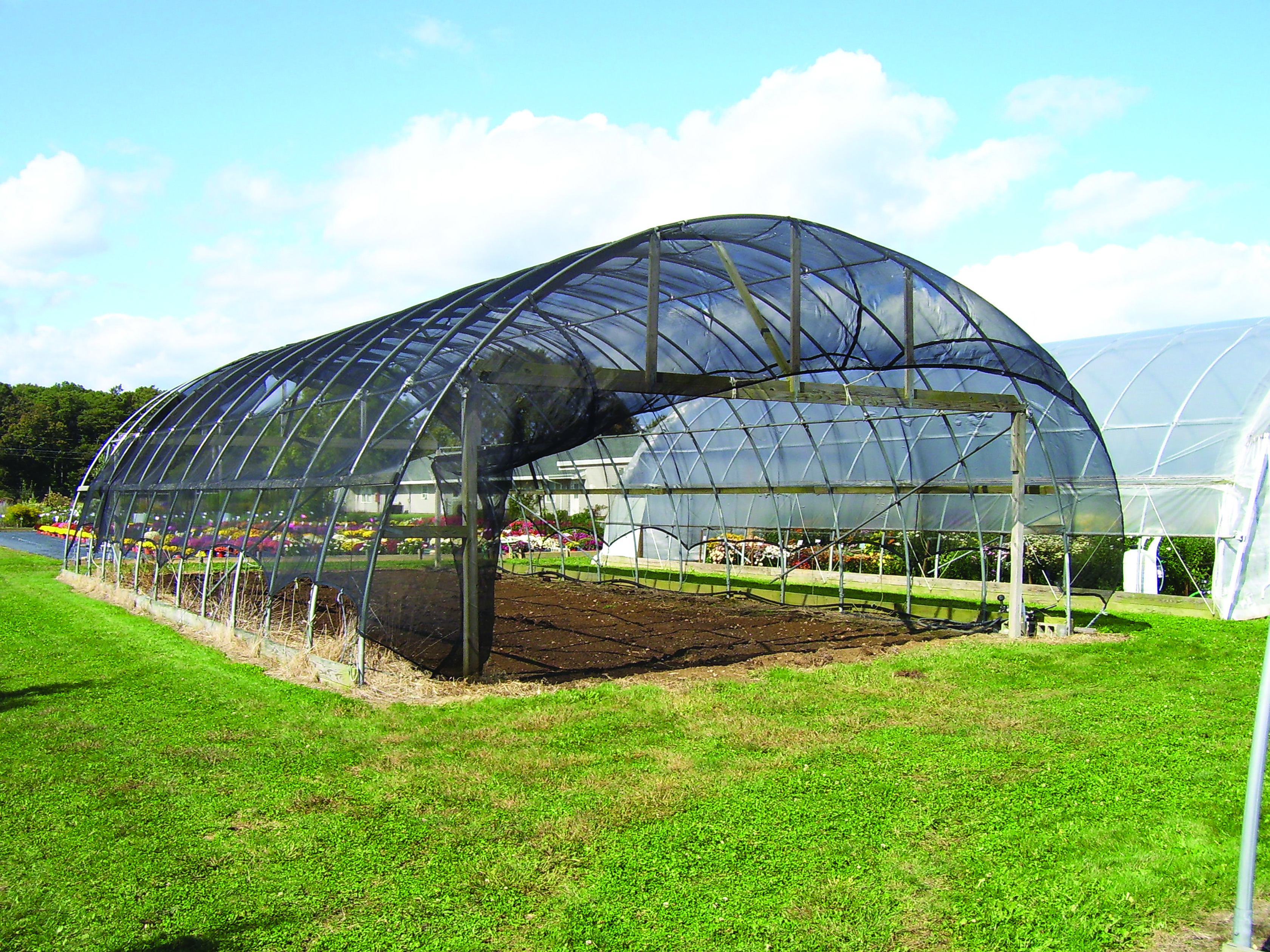
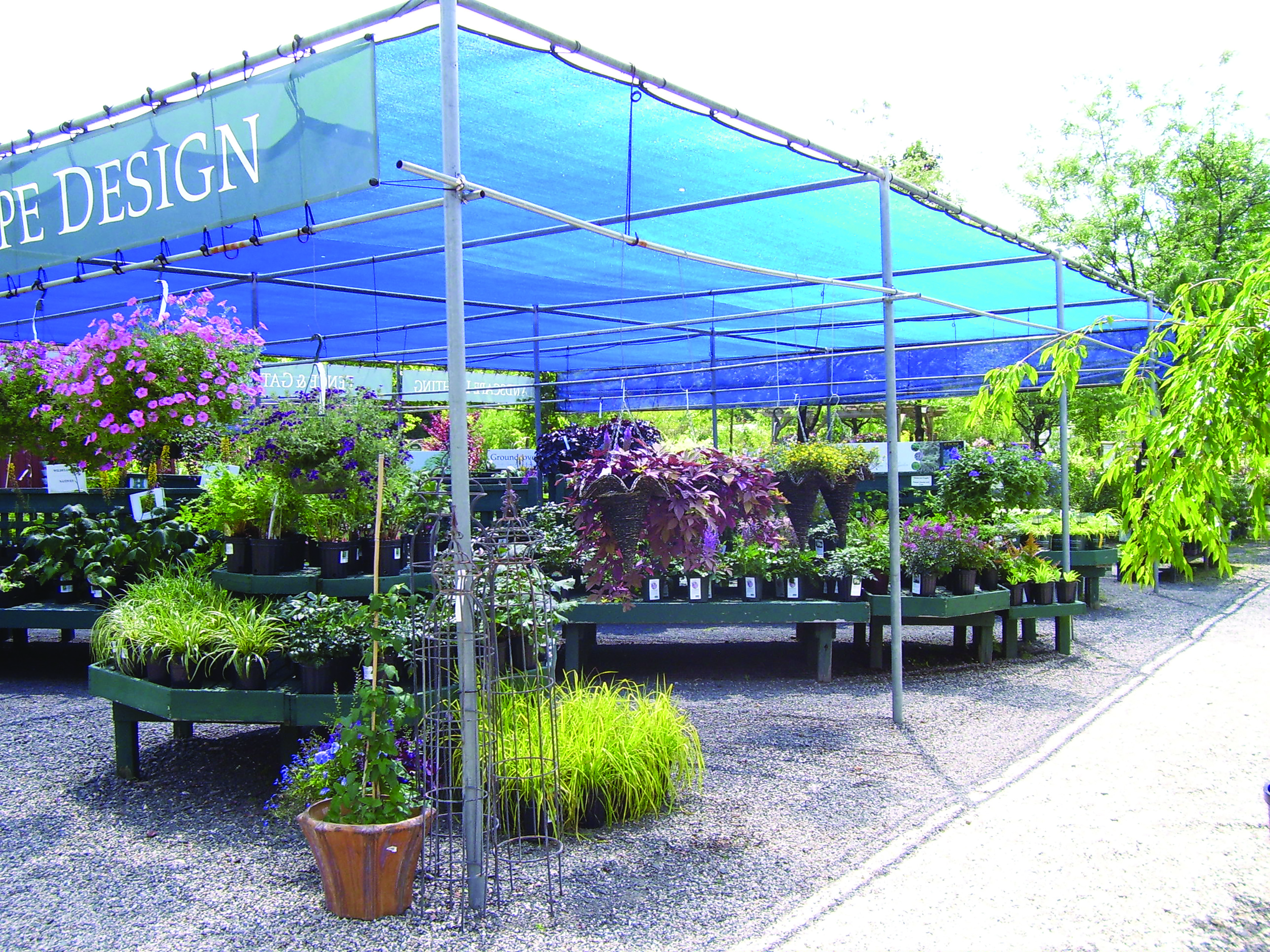
With the high cost of building greenhouses, a low-cost shade house may be a viable option to provide additional space for peak production periods. This type of structure can provide protection from warm and cold temperatures, wind and pests. It is good for hardening plants and can reduce irrigation needs and pesticide use. Many garden centers install a shade house to provide protection for the plants and customers.
They are most useful in southern climates, where they can be used year-round. In snowy, northern climates, the structure is limited to three seasons. The cloth is usually removed or rolled up and fastened to the support frame for the winter.
Shade houses are easy to build without needing a foundation, glazing or an environmental control system. As the shade material is porous and light, duty construction is generally adequate. They can be built with a fixed or retractable screen.
Shade material basics
The most common shade materials are woven or knitted fabrics made from polypropylene, polyethylene or polyolefin. These are lightweight, easy to apply and available in several degrees of shade, from 10% to 90%. They’re usually custom-fabricated to fit the structure. Most materials are ultraviolet-stabilized. Knitted materials have an average life of seven to 10 years, and woven materials have a life of 10 to 12 years.
Colored shade material is a tool with specific advantages. Photoselective shading can affect plant morphology and physiology. Colored shade material can also provide pest control on certain crops. Vegetative growth, flowering, fruit quality and yield can be enhanced by changing the ratio of the shade material color.
Structures
Hoophouse: The frames of hoophouses are frequently used to support the screen material. An existing greenhouse can also be used. The shade material can be fabricated to cover the entire structure and can be attached with aluminum extrusions or bungee cords.
Cable frame: These shade houses can have either a flat or pitched roof. Construction consists of posts surrounded by concrete that are set into the ground on an approximate 10 feet by 20 feet or 20 feet by 20 feet spacing. The height can be 8 feet to 16 feet. Cable attached to deadmen (buried anchors) located around the perimeter provides the bracing for the tension in the wires. Stainless steel cables with adjustable turnbuckles are strung between the posts to support the cloth shade material that is attached with clips or hooks. Shade material hung on the sidewall around the perimeter is attached to the upper and lower cable. This provides wind protection for the plants.
Retractable roof: This is another type of shade house that is still being installed in warmer climates, though many have been replaced by open-roof greenhouses that offer better protection and year-round climate control.
As solar radiation varies considerably over the day and from season to season, the main advantage of the retractable design is the ability to regulate the amount of sunlight that reaches the plants. Increased growth of the plants results, as ventilation can be controlled to reduce temperature. Ventilation can also reduce the incidence of disease. Reducing the intensity of sunlight can lower irrigation needs, as both the plants and the soil are kept cooler.
Both cable and truss-style retractable roof designs utilize standard energy/shade screen technology for opening and closing. One gear motor can handle up to 50,000 square feet of growing area. The shade material is usually stored at the post line and may be protected from sun and snow by a hood.
Most retractable shade houses are available with roll-up sidewalls. These use a conventional roll-up mechanism and small gear motors. This provides ventilation on demand and accessibility for plant handling.
A-roof: In areas where protection of the plants from snowfall is important, an A-roof design can be used. The A-roof can be covered with an impervious material that sheds the snow and rain to a gutter for removal. Supplemental heat can also be added if desired.
Improved technology and design of shade houses has provided growers with a low-cost option. They are a useful growing tool to use in place of adding more greenhouse space.

Explore the July 2025 Issue
Check out more from this issue and find your next story to read.
Latest from Greenhouse Management
- Blue Grass Farms acquires Brehob Nursery
- OHP expands sales team with new hire and internal promotion
- Seed Your Future aims to double 2025 total for 'Round-Up at the Register' 2026 campaign
- Beacon Impatiens partners with Roots for Youth in 2026
- Inner visions
- New internship data empowers horticulture employers
- American Horticultural Society announces winners of 2026 Great American Gardeners Awards
- Sustainabloom releases new sustainability template for wholesale florists