Editor's Note: This article originally appeared in the May 2025 print edition of Greenhouse Management under the headline “More than just plants.”

As horticulture professionals, we know that what we grow goes far beyond plants. We grow beauty, nourishment, joy and connection. And as the industry evolves, so must our understanding of what truly drives value in the eyes of both wholesale and retail customers.
We are in a time when products alone are no longer enough. Experience is what people really crave. Experience is what makes them return, refer and remember.
Reading “The Experience Economy” by B. Joseph Pine II and James H. Gilmore gave me language for something I’ve seen growing in our industry for a while now. It’s not just about selling goods or offering services anymore. It’s about creating moments people remember — immersive, emotional and meaningful experiences that stand apart in a crowded marketplace.
This is where the real opportunity lies — because while plants may be available anywhere, experiences are not.
We’re not just selling petunias
Let’s face it: anyone can sell a hanging basket. Online platforms, big-box stores and grocery chains all offer plants at competitive prices. But that’s not what keeps customers loyal. It’s certainly not what builds community or brings someone back year after year.
What brings them back are memories: how our space felt on a Saturday morning in spring; a warm welcome from staff who remember their name; a child planting their first sunflower; the smell of tomato leaves in a greenhouse bursting with life. These sensory moments aren’t an afterthought; they’re the differentiator.
And when we design for them with intention, we don’t just win sales. We build brand loyalty, emotional connection and long-term value.
The four realms of experience
Pine and Gilmore identify four dimensions of powerful experiences: entertainment, education, esthetic and escapist. These are surprisingly intuitive in horticulture — we’re often offering them already, just without naming them.
Entertainment: From spring festivals to live music in the garden or greenhouse, we engage people’s joy.
Education: Our workshops, signage and conversations help customers grow in confidence and skill.
Esthetic: Every greenhouse and retail space offers a chance to inspire through design, color and beauty.
Escapist: Think fairy garden trails, plant-and-sip nights or immersive greenhouse yoga. We provide a place to step away from the everyday.
When multiple realms are present, the experience becomes richer and more memorable. It shifts from being about a transaction to becoming part of someone’s story.
The wholesale experience matters, too
It’s easy to assume that experiential strategies are for retailers, but that’s a narrow view. Even in wholesale, the way we make our partners feel shapes their loyalty and perception of our value.
Grower tours, branded storytelling, custom programs and proactive support aren’t just nice touches — they are part of the experience.
Think about it this way: Are we a vendor, or are we a partner? Do our retailers feel supported, inspired and equipped when they work with us? That experience (behind the curtain, so to speak) matters just as much as what shows up on the delivery truck.
The memory is the product
One of the most striking ideas in “The Experience Economy” is this: “The memory is the product.”
If we adopt that mindset, everything changes. We become curators of memory and not just merchants of marigolds. We prioritize sensory richness, emotional engagement and personal connection.
We also begin to place proper value on our expertise and inspiration. Knowledge, guidance and connection should not be given away without thought. Charging for workshops, offering tiered experiences or designing membership models are not “extras.” They’re reflections of the true value we bring to the table.
And let’s be clear: Customers will pay for meaningful experiences. The more memorable the interaction, the more they’re willing to invest — not just financially, but with their time, attention and loyalty.
Post-pandemic demand for connection
We’re living in a moment when people are actively seeking reconnection with nature, with others and with themselves. After years of virtual everything, they crave authenticity, presence and purpose. Horticulture is uniquely positioned to meet that need.
In fact, we’ve always had the raw materials for great experiences: soil, growth, seasonality and transformation. We deal in beauty, care and potential. When we add storytelling, community and design to that, the result is nothing short of transformative.
What this looks like in practice
So what does it mean to design for experience? Here are just a few strategies we’ve found powerful and see working across the industry:
Create space for interaction: Touch, smell, try and taste. Let customers “do,” not just see.
Tell stories: Behind the plants, behind the growers and behind the spaces.
Offer education with inspiration: Workshops, quick tips and visual guides. Meet customers where they are.
Celebrate moments: Tie into holidays, life milestones or seasonal shifts.
Invite repeat connection: Loyalty programs, subscriptions and memberships keep people engaged beyond a single visit.
A challenge to the industry
We all know the heart and hustle it takes to grow this business. But as we look toward the future, I believe our biggest growth opportunity isn’t just in better product — it’s in better experiences.
We can no longer rely on being the most convenient or even the most affordable. But we can be the most memorable. The most meaningful. The most worth sharing.
So, the question becomes: What would it look like if we designed our entire operation — from greenhouse to point-of-sale — to be unforgettable?
Let’s lean into what we do best: creating moments and growing experiences worth coming back to.
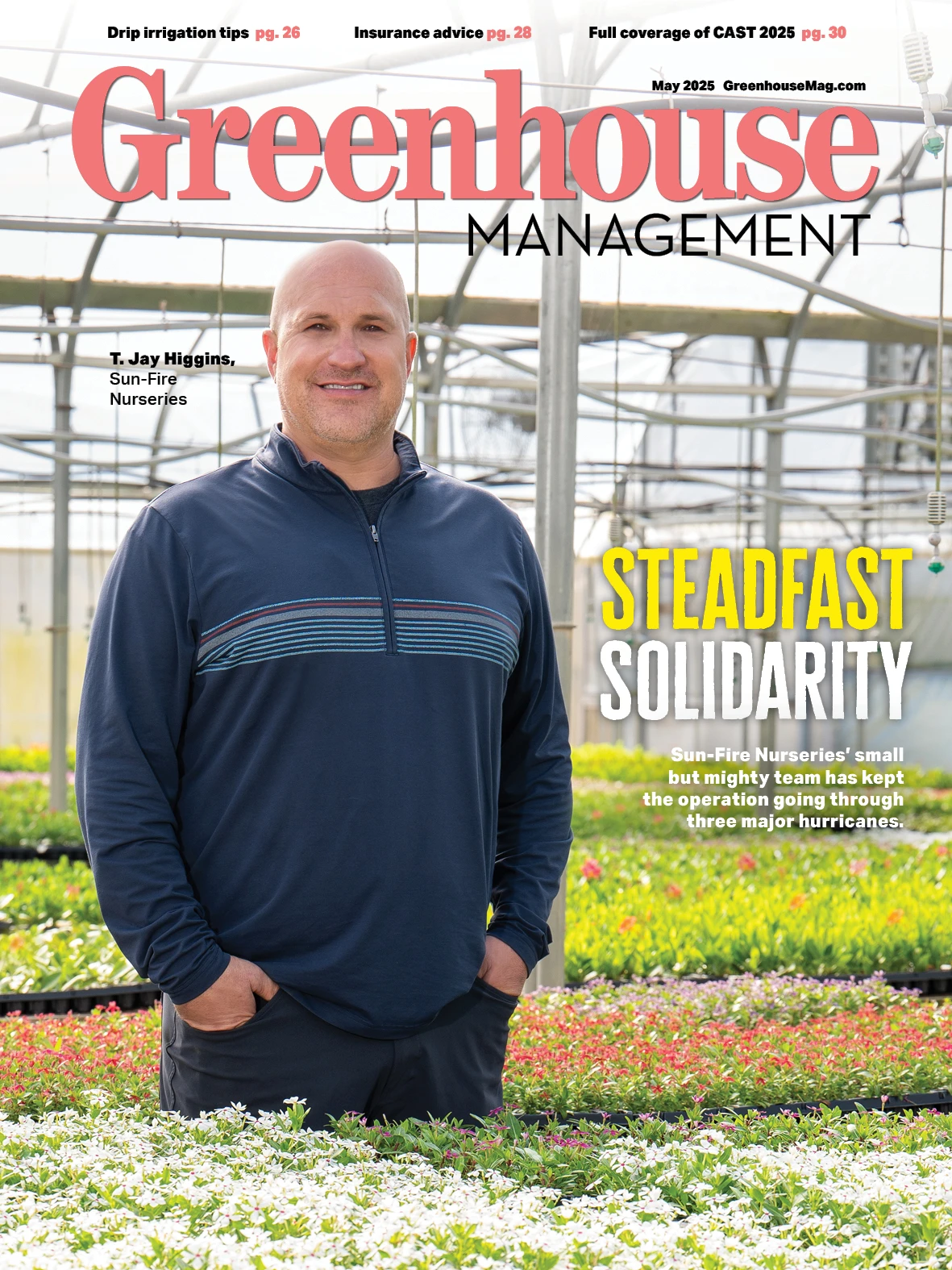
Explore the May 2025 Issue
Check out more from this issue and find your next story to read.
Latest from Greenhouse Management
- Jackson & Perkins expands into Canadian market
- Green & Growin’ 26 brings together North Carolina’s green industry for education, connection and growth
- Marion Ag Service announces return of Doug Grott as chief operating officer
- Cincinnati Zoo & Botanical Garden debuting new perennial section at 2026 Breeder Showcase
- The Garden Conservancy hosting Open Days 2026
- Registration open for 2026 Perennial Plant Association National Symposium
- Resource Innovation Institute and North Dakota State University explore co-location of data center and greenhouses
- Fred C. Gloeckner Foundation Research Fund calls for 2026 research proposals