Last year, the Florida Department of Plant Industry collected a sample of aluminum plant (Pilea cadierei) infested with all life stages of Myzus fataunae Shinji, the pilea aphid. This aphid is native to Japan and Korea, and this was the first record of the species in the Western Hemisphere. The discovery was made in Longwood, Florida (Seminole County). M. fataunae appears to feed on all aboveground parts of the plant but favors new growth and petioles.
With the explosive popularity of pilea plants in the United States, it’s imperative that growers and retailers inspect all incoming plants for this aphid.


Hosts include: Pilea cadierei, P. pumila, other ornamental pilea, false nettle (Boehmeria spp.) and pellitory (Parietaria spp.).
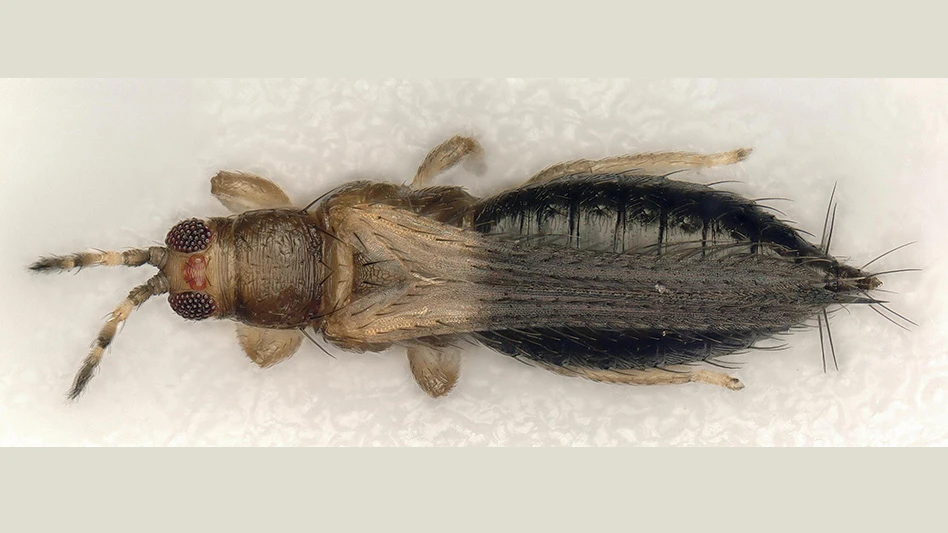
Scouting: A hand lens is necessary to survey for M. fataunae. Other aphids may be present on the host and potential host plants, but the target will stand out by its small size and distinct bicoloration. The wingless adults are two-toned, with a brown head and thorax and yellow abdomen. Young immatures are entirely greenish white, while older instars develop the bicoloration. Most diagnostic characteristics cannot be seen without high-powered optics.
Cut potentially infested plant parts and place them in a vial of alcohol. Alternatively, separate foliage from roots (to prevent soil particles from obscuring aphids) and beat it against the side of a shallow white tray; then, tap the plant material over the tray using a pencil. Inspect dislodged debris on the tray using a hand lens and, with a brush, transfer the aphids into alcohol.
Explore the May 2019 Issue
Check out more from this issue and find your next story to read.
Latest from Greenhouse Management
- The resolute
- Stay warm, stay ready
- Coleus Lime Edge (Skeletal) named 2025-26 Flower of the Year in Japan
- New SustainaGuides on lighting and water conservation from Sustainabloom available
- Chad Miller shares best-performing plant varieties in Colorado State University trial gardens
- Meet the All-America Selections AAS winners for 2026
- Source.ag raises $17.5M for applied AI in CEA, pushing total funding past $60M
- How to grow a rainbow