As growers, we often think of pest control as a necessary evil: a continuous threat looming over our heads, interfering with our growing strategies and requiring skilled, expensive labor to execute. We train our employees to scout for the early signs of infestations we know will eventually take hold and spread. We stock our cabinets with expensive chemistries in hopes they will mitigate these infestations, until resistance develops. We learn through trial and frustration that pest control only takes away from our bottom line, so we tend to ignore it until it’s too late. This is a squandered opportunity.
Benefits of proactive biocontrol
Regardless of the crop, growers know they will eventually face pressure from mildew, mites and sap-sucking insects. By committing to a bio-first IPM program, much of this pressure can be reduced and even eliminated before it begins. By leveraging the natural enemies of these pests and diseases, growers are taking advantage of predator-prey relationships that have existed for millennia. An aphid can develop resistance to chemicals, but there is no resistance to a hungry, hunting lacewing.
Many growers are trained to see crop protection and chemical knowledge as one and the same. While there are instances where chemical control is called for, it is usually because a natural balance has been disrupted or disregarded. Modern growers recognize that balance is key to a successful and profitable crop and that there are no silver bullets in a bottle.
By accepting and preparing for the inevitable pest infestation, growers can not only create balance in their crop but actually improve their profitability by maximizing the potential of each plant and minimizing skilled labor hours. A strong, healthy plant, inoculated with beneficial microorganisms and patrolled by predatory insects, will yield more with less management. Less scouting and fewer sprays mean pest control becomes an opportunity for profit and differentiation in a tightly competitive market rather than a necessary evil.

Support at every step
A well-informed and executed IPM plan may sound like an expensive and complicated strategy, requiring expert consultants, high-quality biologicals and specially trained staff. Partnering with Koppert means gaining access to all these things and more. With nearly 60 years as the world-leading biocontrol company, Koppert’s commitment to quality and knowledge provides unrivaled support to our customers who are ready to empty their chemical cabinet and start growing at a higher level.
Unlike the competition, Koppert is a producer, not a distributor, which means our growers have direct access to the largest production of beneficial organisms in the world, shipping four days a week. With the largest in-house consulting team across 34 countries, we have an expert positioned near your facility, ready to walk your crop, train your staff and support you on the path to pesticide-free crop production.
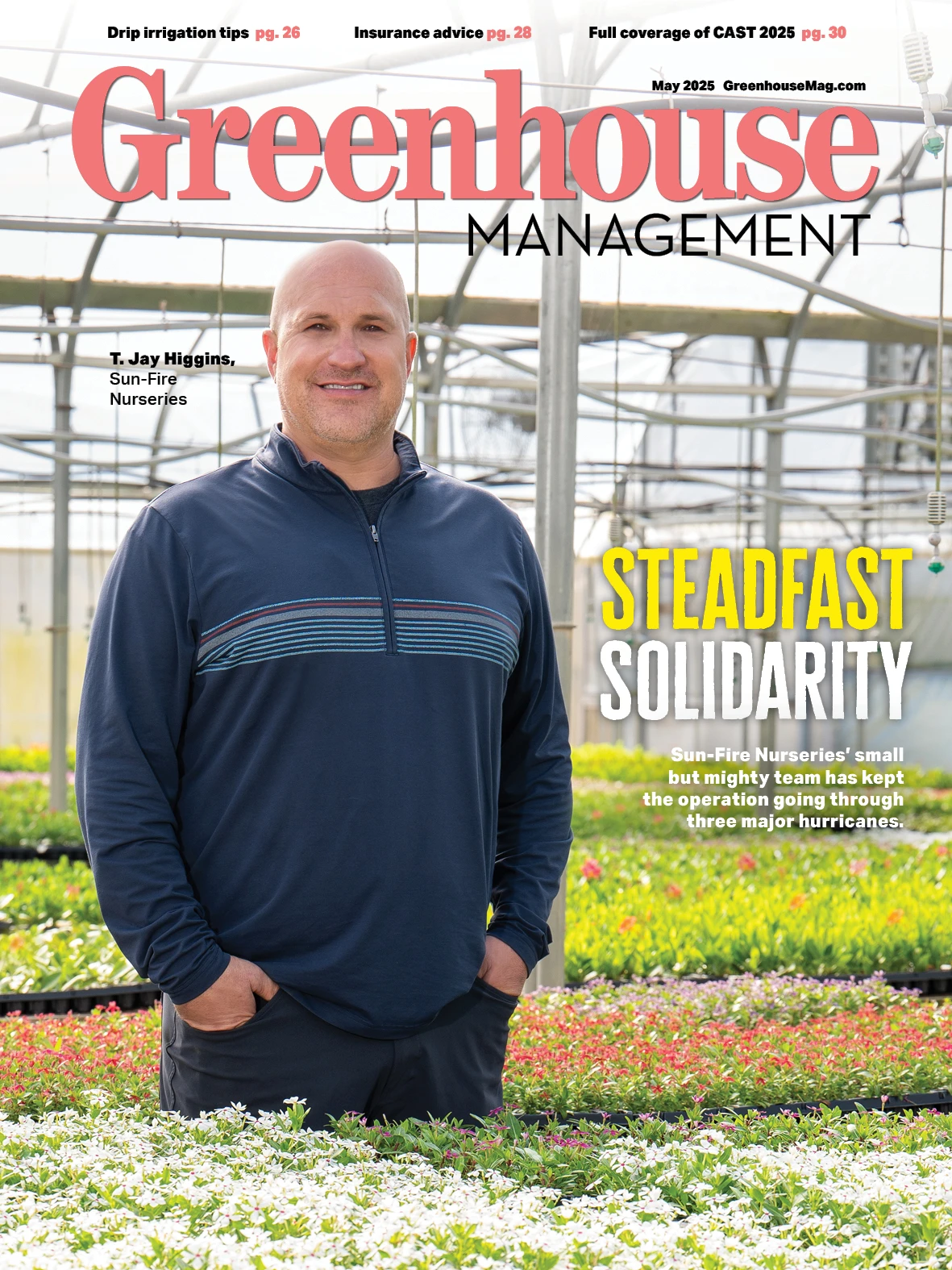
Explore the May 2025 Issue
Check out more from this issue and find your next story to read.
Latest from Greenhouse Management
- Quality Horticulture to acquire Hydrofarm Canada distribution
- Blue Grass Farms acquires Brehob Nursery
- OHP expands sales team with new hire and internal promotion
- The inventive women of TPIE ’26
- Seed Your Future aims to double 2025 total for 'Round-Up at the Register' 2026 campaign
- [WATCH] Remix: Sakata Playlist Combos and New Variety Spotlight
- Beacon Impatiens partners with Roots for Youth in 2026
- Inner visions