Editor's Note: This article originally appeared in the September 2025 print edition of Greenhouse Management under the headline “The right kind of fight.”

Most people treat conflict like a live wire — it is best left untouched. But in business, especially in fast-moving, high-stakes environments, conflict is a requirement, not a risk.
We’re not talking about drama or dysfunction. We’re talking about the kind of honest, heated, respectful debates that surface ideas, pressure-test assumptions and push us beyond what’s comfortable into what’s possible. We are not talking about arguing just to argue or cause trouble just for the hell of it.
If you want real progress, you’re going to have to get into the weeds sometimes. And yes, it’s going to be messy. But the truth of the matter is that conflict is the vehicle for progress and growth.
Conflict isn’t the enemy — avoiding it is
Patrick Lencioni lays this out brilliantly in “The Five Dysfunctions of a Team.” One of the most common issues isn’t too much conflict; it’s not enough of the right kind.
“Teams that fear conflict have boring meetings and fail to tap into all the opinions and perspectives of team members,” he writes.
That hits. We’ve all been in those meetings where everyone nods, no one speaks up and the real opinions get aired in the greenhouse or breakroom later. That’s not harmony; it’s avoidance. And it slows everything down.
The root of healthy conflict is trust. If I believe you’re here for the same mission I am, I don’t need to tiptoe. I can challenge your idea, get challenged in return, and we both walk out better for it.
When it’s personal, it’s harder and more worth it
Here’s the thing about working in a family business: you don’t always get the luxury of leaving things unsaid.
Sometimes, conflict shows up at the morning meeting and again at Sunday dinner. It’s layered and complicated, and you can’t just compartmentalize your way around it.
But when you figure out how to have those hard conversations — without blowing things up — it builds muscle. Over time, the team (or the family) learns to sit with tension, push through resistance and still stay connected on the other side.
That’s not dysfunction. That’s growth.
Enter the ‘right fight’
Business strategist Saj-nicole Joni calls this kind of intentional, purpose-driven tension the “right fight.” In her book “The Right Fight,” she encourages leaders to engineer structured conflict around issues that matter most.
It’s not about picking battles. It’s about designing them with rules, values and clarity.
“Leaders must structure conflict in ways that drive performance,” she says.
That means disagreements aren’t just allowed — they’re expected. But they’re grounded in mutual respect and aligned purpose.
What it looks like in the arena of life and work
In our world, the right fight might sound like:
- Do we prioritize automation this year or keep investing in people?
- Which crops are ready for scaling, and which aren’t pulling their weight?
- What kind of partnership aligns with who we are, not just what we sell?
These are high-stakes conversations. And if they’re too polite or too watered down, we miss the nuance and usually, the opportunity.
How to build a team that can handle conflict
Here’s what I’ve learned (the hard way):
Start with trust: It’s not optional. Without it, everything else crumbles.
Encourage disagreement: If everyone’s in agreement all the time, someone’s not speaking up.
Stay on the issue: Attack the idea or process, not the person.
Get to clarity, not consensus: We don’t all have to agree; we just all have to commit.
Make space for the debrief: After a heated conversation, circle back. How did it land? What did we learn?
The bottom line
Conflict isn’t chaos. It’s fuel.
If you’ve got the trust, the structure and the shared purpose, you can argue like hell — and come out the other side more aligned than you were before.
So, stop avoiding tough conversations. Invite them in. Design them. Use them. The biggest leaps forward usually come right after a moment that made you uncomfortable.
Just make sure you’re fighting for the right things.
Jennifer Moss is the Visionary (EOS Company) & CEO of Moss Greenhouses in Jerome, Idaho. She’s highly skilled at conflict resolution, challenging the status quo and attaining inclusivity.
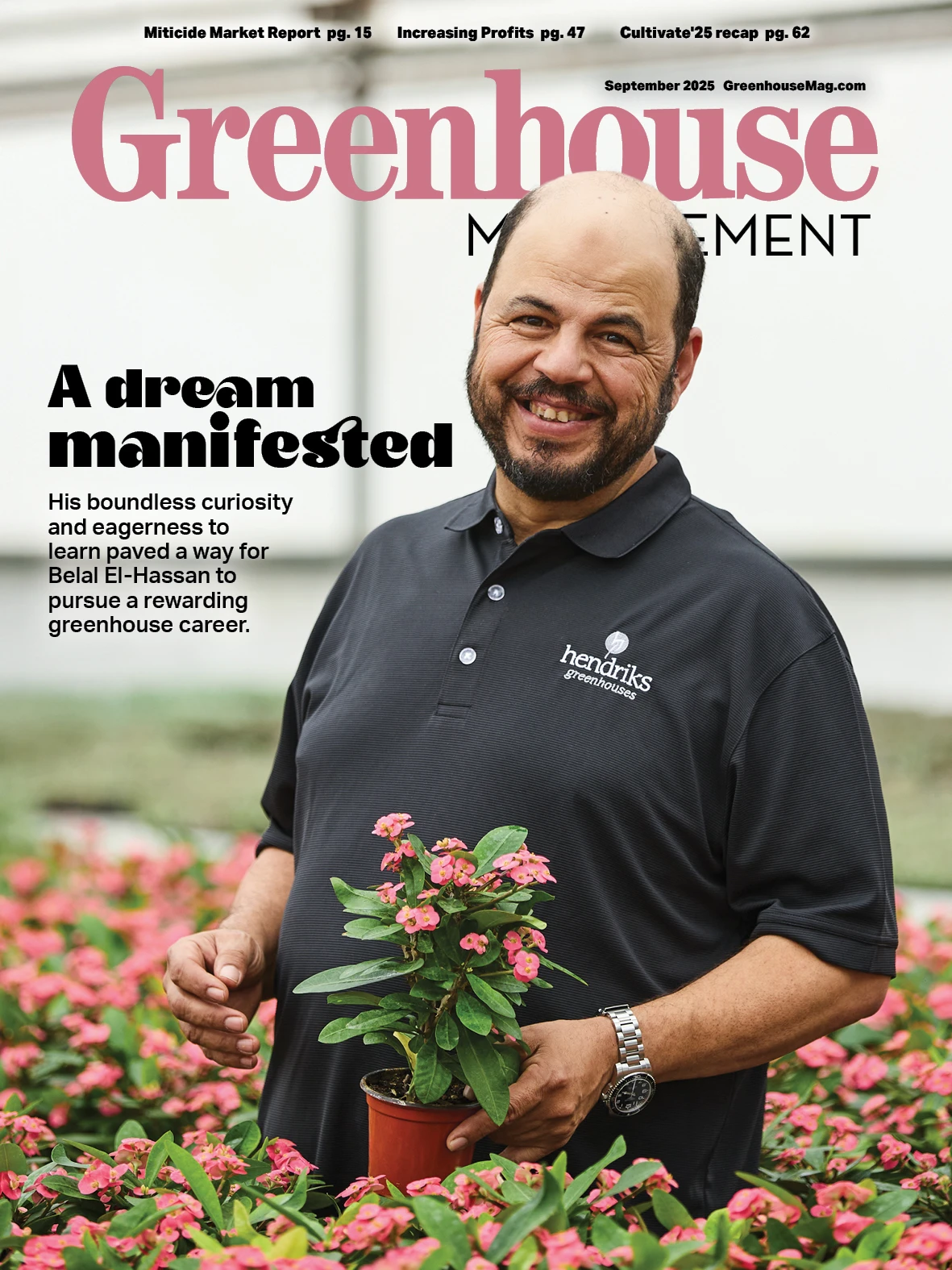
Explore the September 2025 Issue
Check out more from this issue and find your next story to read.
Latest from Greenhouse Management
- Quality Horticulture to acquire Hydrofarm Canada distribution
- Blue Grass Farms acquires Brehob Nursery
- OHP expands sales team with new hire and internal promotion
- The inventive women of TPIE ’26
- Seed Your Future aims to double 2025 total for 'Round-Up at the Register' 2026 campaign
- [WATCH] Remix: Sakata Playlist Combos and New Variety Spotlight
- Beacon Impatiens partners with Roots for Youth in 2026
- Inner visions