Editor's Note: This article originally appeared in the July 2025 print edition of Greenhouse Management under the headline “An intricate balance.”
Year after year, the Philadelphia Flower Show inspires people with phenomenal garden and design concepts. This year, the show’s theme was “Gardens of Tomorrow.” Jennifer Reed, founder of New Jersey-based Jennifer Designs, took home the Best in Show – Floral award this year.
Reed designed “Welcoming Wildlife Home” to help showcase the essential role of wildlife in maintaining a healthy, thriving ecosystem that is grounded in biodiversity, she explains.
“We are thrilled to celebrate the creativity and vision of the designers who brought this year’s Flower Show to life,” says Seth Pearsoll, the Pennsylvania Horticultural Society’s vice president and creative director of the show. “Through cutting-edge design and thoughtful plant choices, these designers remind us that our gardens are not just reflections of today, but also powerful tools for creating more sustainable, biodiverse and connected communities tomorrow.”


Greenhouse Management: Tell us about your exhibit, Welcoming Wildlife Home.
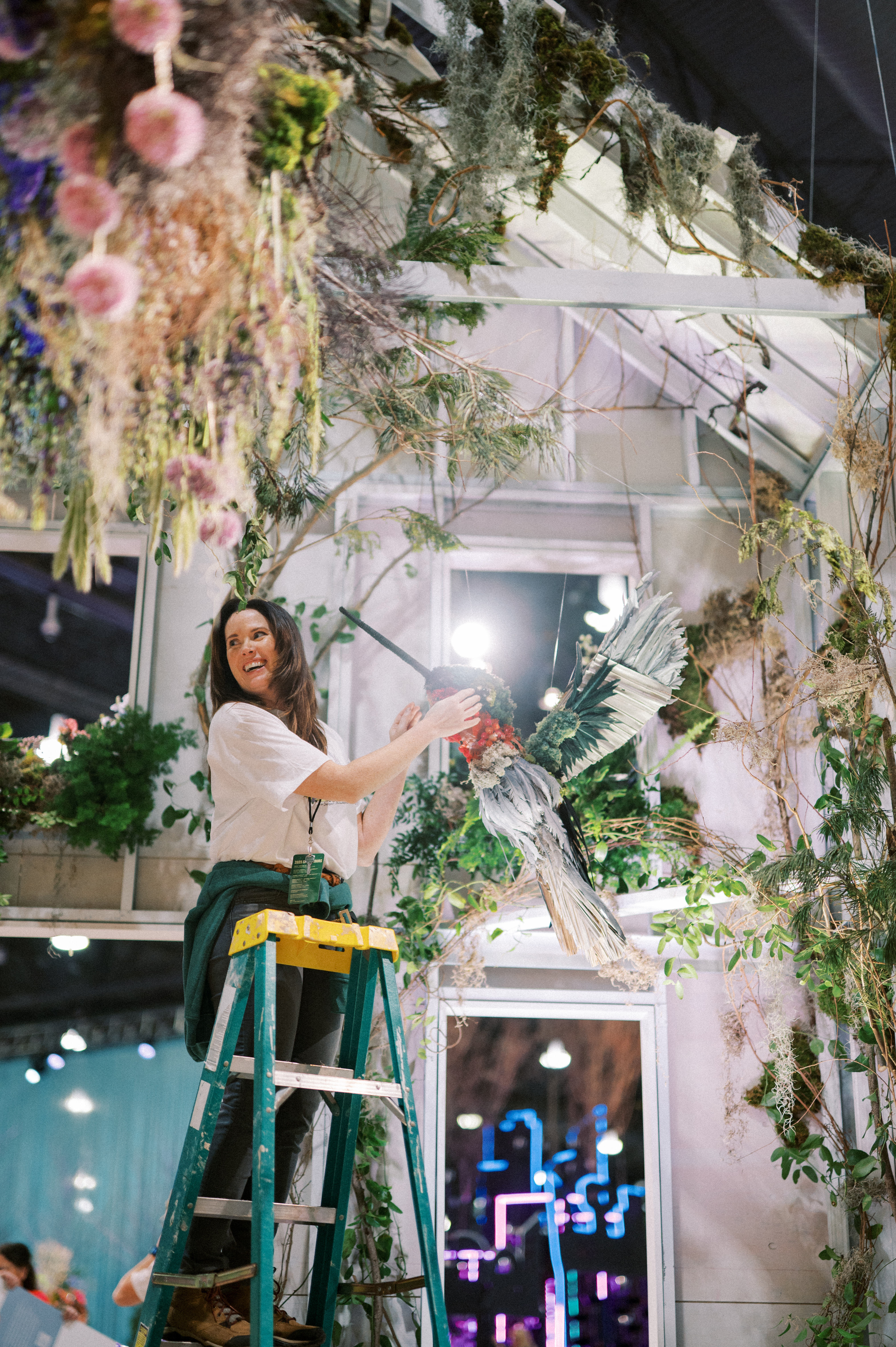
Jennifer Reed: The home featured a garden filled with wildlife-friendly plants that provide essential habitats for various species. As guests approached the front facade of the house, there were examples of real-life ways to create wildlife habitats at their own home using native and wildlife-friendly plants, as well as insect and bird houses.
As guests explored the sides of the exhibit, the house revealed a more whimsical display, showcasing wildlife sculptures gathering together and “coexisting” as wildlife begins to take over the space. We had so much education and whimsy in our design.
And the extra layer of it was that each creature had a personality type. At the table there was a bee, squirrel, butterfly, turtle, frog and bird. Visitors could take a quiz to see which creature they identified with. It provided a personification element that made it so much more likely to want to invite those friends into our backyard.
GM: How did you find inspiration for Welcoming Wildlife Home?
JR: My daughters volunteered at a local nature center, and we got involved in learning about biodiversity and its impact on the environment, as well as how we can do more (to help encourage biodiversity) with our home gardens. Also, I love wildlife and sculpting!
GM: Once the idea was born, describe the rest of your creative process.
JR: Many months — nine to be exact — went into researching the exhibit and choosing which creatures I was going to create. We also forced several varieties of native and wildlife-friendly plants to showcase.
The design concept was based on a dinner party that invited everyone to the table, meaning we all need a place to coexist. I sculpted the wildlife out of recycled materials and natural floral and foliage materials.
GM: How did you choose which plants and flowers to use?
JR: The floral designs were all American-grown flowers and were chosen based on flowers that grow in this region (Pennsylvania). It was important to showcase American flower farmers and share the importance of supporting our local farms and growers. All of the plants were wildlife-friendly. The landscape plants featured at the front of the house were grown by Peace Tree Farm in Pennsylvania.
GM: What did you hope visitors would take away from the exhibit?
JR: Ultimately, it was intended to be an immersive display that highlighted how thoughtful plant choices and habitat creation support the intricate balance of wildlife, encouraging visitors to see their gardens as vital refuges for biodiversity.
The future of gardening should include wildlife as an essential tool, and it was our hope to educate viewers of the crucial importance of implementing biodiversity practices.


GM: What did you learn through this process, and are you doing any of these things at home?
JR: I learned so much doing this exhibit. I really dive deep into a subject matter and learn it. I’ve learned so much in terms of things like how all the creatures in my backyard need water, how not to clean up my leaves and my sticks because it’s their refuge for the fall and winter.
I learned to make sure there are multiple bird feeders everywhere, and not caring so much that a squirrel wants to eat some of the birdseed. I’m also thinking more about plant choices — not necessarily having to all be native, but at least having a purpose to what I’m planting.
GM: How many exhibits have you designed for the Philadelphia Flower Show?
JR: I have designed five exhibits.
GM: What is it about the Philadelphia Flower Show that keeps you coming back?
JR: I just love being a part of such a beautiful community that values my creativity and allows me to showcase my ideas with such a large audience. I also love being a part of the PHS family that gives so much back to our community.
Kelli Rodda is editorial director of Greenhouse Management magazine. Contact her at krodda@gie.net.
Explore the July 2025 Issue
Check out more from this issue and find your next story to read.
Latest from Greenhouse Management
- Blue Grass Farms acquires Brehob Nursery
- OHP expands sales team with new hire and internal promotion
- Seed Your Future aims to double 2025 total for 'Round-Up at the Register' 2026 campaign
- Beacon Impatiens partners with Roots for Youth in 2026
- Inner visions
- New internship data empowers horticulture employers
- American Horticultural Society announces winners of 2026 Great American Gardeners Awards
- Sustainabloom releases new sustainability template for wholesale florists