Editor's Note: This article originally appeared in the December 2025 print edition of Greenhouse Management under the headline “60 years of technology.”

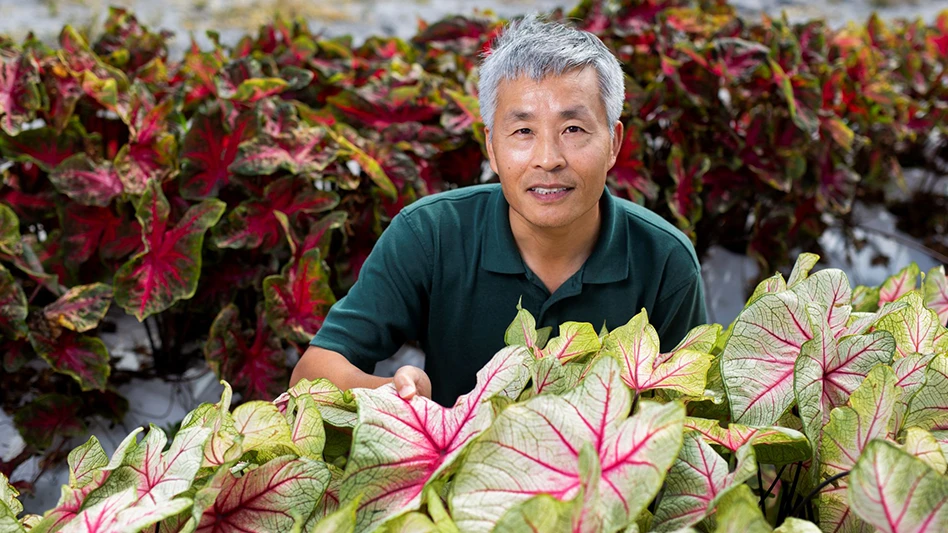
After 60 years of working with growers and industry professionals, it’s time to pass the torch to the younger generation. I have enjoyed the opportunity to work with many growers, researchers and manufacturers over these many years. They have always been very helpful to me.
I was hired in 1966 by the University of Connecticut to provide extension engineering assistance to the relatively small greenhouse/nursery industry in the state. Since then, the industry has developed into a major segment of agriculture in the United States. A major factor contributing to this was the development of plastic film. It provided low-cost, environmentally controlled structures that allowed plants to be grown year-round.
One of my first projects was to construct a greenhouse at the university that used the double-layer inflated covering developed by the late professor Bill Roberts at Rutgers University. It was used to demonstrate to growers the advantages of polyethylene glazing and the energy savings that could be achieved. This technique became the standard in the industry.
Next came plastic containers. This changed the way plants were grown and handled. It allowed plants to be handled and shipped at a lower cost and made mechanization possible.
Improving the environment that the plants needed followed. The typical floor furnace was replaced by high- efficiency heating equipment as the cost of fuel increased during the 1970s. Energy-conserving products, such as the energy/shade screen systems, also proved to be a good investment. In recent years, USDA has been helpful by providing incentive funds for energy improvements for existing houses.
The 1960s houses were mostly cooled with fans. As the price of electricity started to rise, most of the country went back to using roof and sidewall vents. The horizontal flow air circulation system developed at UConn by the late professor Jay Koths was also adopted throughout the world as a means of providing more uniform temperature and air distribution with low energy use.
With increasing labor costs, it became obvious that mechanization was needed to produce the increasing quantity of plants that were needed by homeowners. Mechanization took quite a few years to develop, as government funding for research and development was not available. Manufacturers soon found that there was an expanding market for many types of equipment.
Improvements in control of most equipment used in the industry followed. Controllers, computers and the required sensors needed to be designed to meet the special requirements of the environment and crops. Today, almost all equipment has some components that use electronics.
Lighting continues to be in the development phase. LEDs now offer an efficient source of light that can be controlled to provide the correct spectrum and level to produce quality plants any time of the year. They also allowed plants to be grown in buildings without any natural sunlight.
From my experience, one reason that the industry developed so rapidly was the sharing of information by all segments. Through grower organizations, university educational programs, trade shows, open houses and trade magazines, ideas became available to all growers. In my many visits to growers, I was never refused the opportunity to photograph an idea that could be published in a magazine article or shown at a grower meeting. Very few industries have this openness. As the greenhouse/nursery industry continues to grow, there will continue to be many technological developments that will aid growers.
Greenhouse Management magazine and other publications have provided a good service to the industry by getting new ideas and developments out to the growers. Education is a continual process of learning after leaving school. I have enjoyed the opportunity to be part of this over the many years.


Explore the December 2025 Issue
Check out more from this issue and find your next story to read.
Latest from Greenhouse Management
- Blue Grass Farms acquires Brehob Nursery
- OHP expands sales team with new hire and internal promotion
- Seed Your Future aims to double 2025 total for 'Round-Up at the Register' 2026 campaign
- Beacon Impatiens partners with Roots for Youth in 2026
- Inner visions
- New internship data empowers horticulture employers
- American Horticultural Society announces winners of 2026 Great American Gardeners Awards
- Sustainabloom releases new sustainability template for wholesale florists