Editor's Note: This article originally appeared in the March 2026 print edition of Greenhouse Management under the headline “Simple solutions for solid savings.”

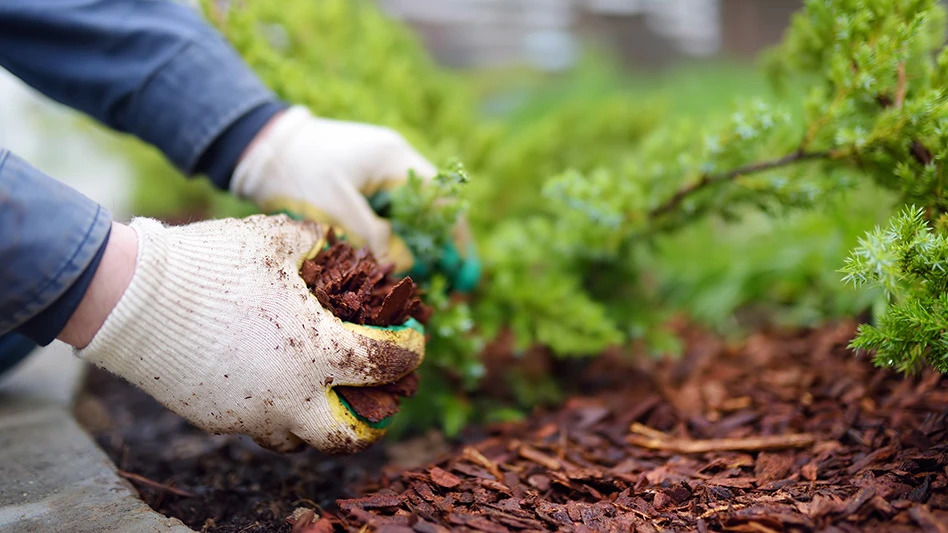
Photo courtesy of Lambert Peat Moss
At a time when the cost of everything seems to constantly increase, and everyone is working hard to make their business successful and remain profitable, here are some ways to help save money on your growing media expenses.
- One consideration, which is also an excellent practice, is to premoisten the substrate before filling the containers. You will be surprised how much the volume changes by doing so. If you find this advice hard to believe, the following explanation and small experiment will likely convince you. To proceed, fill 15 to 20 pots with the mix straight from the bales. Pour the contents of all the pots onto a table, add moisture to reach the level you want for repotting and refill the pots with the mix. You will notice that you end up with some leftover material on the table — probably more than you expected. Now imagine doing this with an entire greenhouse containing thousands of pots. The number of extra pots filled will be noticeable.
- Another thing to consider is buying the product in compressed bales instead of loose fill. You can technically load almost twice the volume of mix on the same truck. With freight costs being so high, this will allow you to reduce the cost per cubic foot of mix. If your operation is large enough, it is worth doing the calculation to evaluate the purchase of a bale buster machine as part of the process. This will help you determine the return on investment and make the best decision.
- With the cost of all growing media components rising significantly since the pandemic era, it is also worth considering replacing all or some of them with an alternative. Many years ago, Lambert developed a wood fiber substitute that can be incorporated alone, or in combination with perlite, to help reduce costs without decreasing the quality or performance of the final blend. The quality of the substrate is improved, as the exclusive Lambert Wood Fiber lasts longer than bark or traditional wood products due to the origin of the raw material. Advantages of this alternative component include reduced shrinkage in containers over long periods of time and better structure retention that maintains drainage and air space. However, to conserve the advantage of the peat moss physical properties, it is recommended to maintain the wood fiber percentage within the 15% to 30% range.
- Buying a mix that already contains everything you need can also help reduce costs. While the savings on components may be small, the labor savings can be significant. For example, if you work with a blend containing controlled release fertilizer, purchasing it already incorporated by the soil manufacturer will not cost more and will eliminate that step. In addition, the blend will be more consistent due to the use of specialized equipment.
Applying at least two or three of these considerations at your greenhouse operation will help save some on production costs.
Explore the March 2026 Issue
Check out more from this issue and find your next story to read.
Latest from Greenhouse Management
- New internship data empowers horticulture employers
- Sustainabloom releases new sustainability template for wholesale florists
- National Garden Bureau, All-America Selections recognize pepper breeder Terry Berke, Territorial Seed Company President Tom Johns
- University of Florida ornamental breeding program unveils 50th (and 51st) caladiums
- American Floral Endowment 2026 scholarship applications now open
- Resource Innovation Institute and The Ohio State University launch first national CEA training certificate for design and construction professionals
- Farm Bill passes out of House Committee on Agriculture
- [WATCH] The Biological Blueprint for Stronger Pest Management