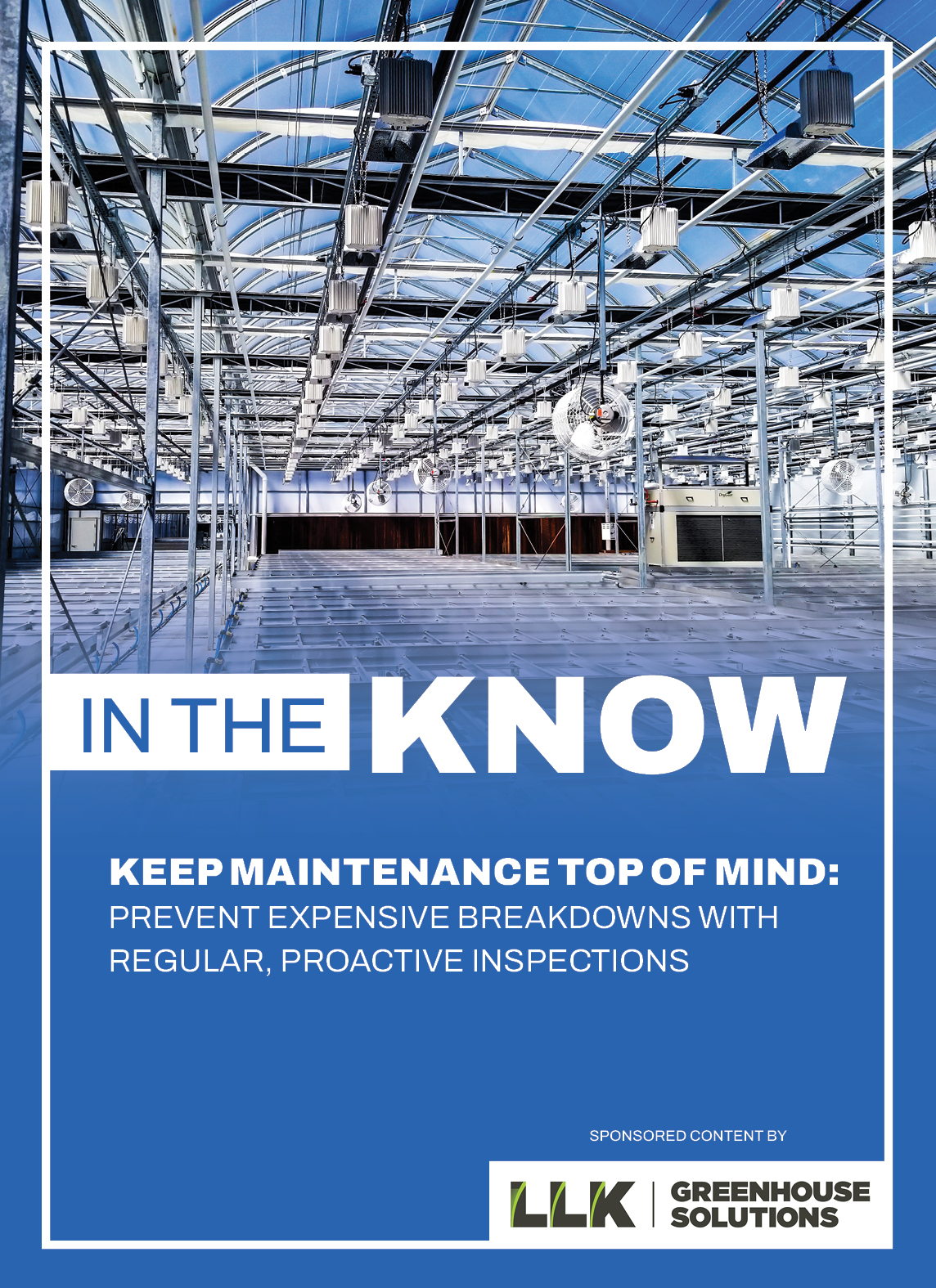
Click on the image above to view a PDF version of the full In the Know report.

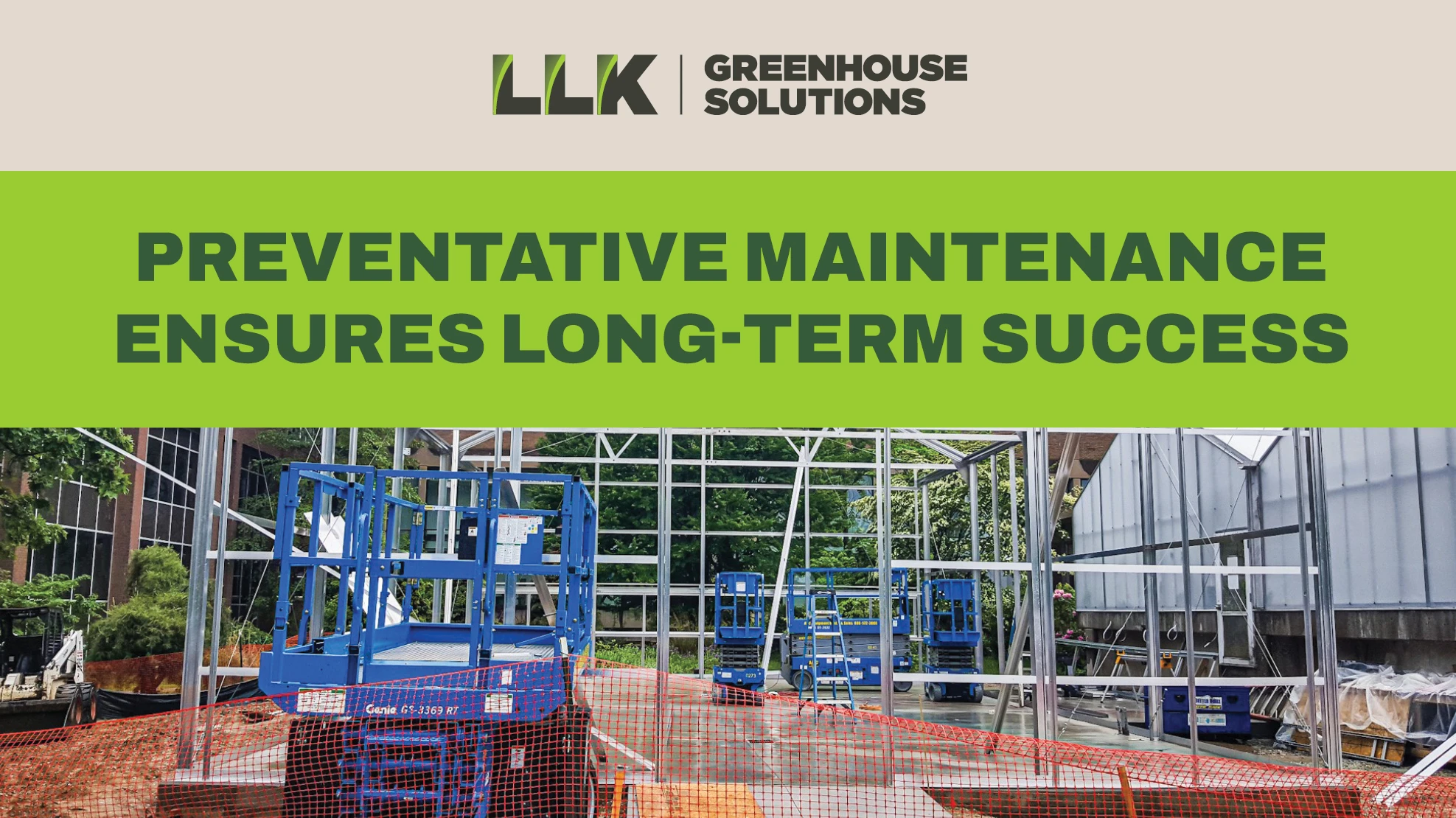
In greenhouse management, success often hinges on one unglamorous but essential principle: preventative maintenance.
Melissa Davis, senior horticultural facilities director at Kent State University in Ohio, knows this better than anyone. Her leadership has transformed Kent State’s aging greenhouse into a thriving hub of innovation and productivity, offering a blueprint for proactive management.
Revitalizing a legacy
Kent State’s greenhouse has come a long way since its 1960s origins, but by 2014, the facility was in dire need of a refresh — a challenge Davis embraced head-on.
Working with LLK Greenhouse Solutions, she and the university oversaw a sweeping renovation that upgraded everything from glazing and equipment to environmental controls.
The result? A modern greenhouse with eight specialized bays designed for precise plant growth. “When I took the directorship, it really was in disarray,” Davis says. The team was still pulling chains to open and close vents, as an illustration. “We’ve built a facility that can truly support the work we’re doing now.”
Renovating the greenhouse (and later building a new 1,500-square-foot research facility next door) was a major step forward.
But to keep those facilities in order, that long-term goal required ongoing preventative maintenance, something that Davis takes seriously each year.
Routine maintenance as a non-negotiable
For Davis, preventative maintenance is the backbone of the greenhouse’s operations. Twice a year, her team partners with LLK to conduct comprehensive maintenance to ensure all mechanical components are in peak condition — just before the spring startup and after the growing season.
This semi-annual practice includes servicing motors, addressing rust caused by high humidity and ensuring the facility is ready to withstand seasonal shifts.
The key is to think about the consequences of each piece of equipment — consider what goes right when it’s working and what goes wrong when it’s not.
Here are her pro tips:
Schedule routine maintenance.
Twice annually, before the onset of the spring growing season and again as part of winter preparations, thorough checks and maintenance are crucial. This schedule ensures that all systems are optimized to support robust plant growth and to endure dormant periods without degradation.
Inspect key systems regularly.
Key mechanical systems, such as ventilation motors and racks, require regular inspections to keep them running smoothly and to prevent the accumulation of rust and wear, especially in the high-humidity environments typical of greenhouses. Regular greasing, adjustments and replacements of worn parts can prevent the sudden failures of these critical systems.
Keep maintenance protocols adaptable.
Given that research and cultivation needs can shift dramatically throughout the year, maintenance protocols must be flexible to adapt to new demands. This might mean altering the setup for different crops or research projects, requiring the maintenance team to understand and respond to these dynamic needs swiftly.

Act on issues early.
Documenting and addressing minor issues before they escalate into major problems is a cost-effective strategy that extends the lifespan of greenhouse infrastructure. Documenting regular maintenance checks helps identify potential issues early, reducing downtime and the costs associated with significant repairs or replacements.
This proactive approach can also assist in planning, budgets for the future (for example, “x” years out for polycarbonate roof replacement).
Adopt a comprehensive maintenance plan.
An effective maintenance plan covers more than just mechanical and structural checks. It also includes ensuring that environmental controls are properly calibrated and that the physical infrastructure, such as glazing and seals, is intact and functional. This holistic approach not only preserves the physical assets but also ensures that the internal environment is always conducive to plant growth and research activities.
Leverage technology for efficiency.
Under Davis’ direction, the greenhouse has embraced technology, transitioning from labor-intensive manual operations to streamlined automation.
Automated systems now handle key environmental controls, reducing workload while improving precision. This shift from manual to automated systems has been transformative, enhancing the precision of environmental controls such as temperature and humidity regulation, which are crucial for plant health and research accuracy. Broadly speaking, the university’s embrace of tech and automation reduces the human labor required and also elevates the consistency and reliability of the conditions within the greenhouse.
Looking forward, Davis plans to implement automatic shading, which will further refine energy efficiency and control over light exposure, optimizing conditions for plant growth and facilitating even more sustainable operations. This progression toward automation in greenhouses underscores a broader trend in agricultural technology, where precision and efficiency lead to better outcomes and more sustainable practices.
You can save and print the maintenance checklist & log below from LLK Greenhouse Solutions. Scan the QR code to access the full checklist.

Mitigate risks.
Even with a meticulous maintenance schedule, challenges arise. Extreme weather events, for instance, can test any facility’s limits. To mitigate these risks, Kent State’s greenhouse relies on integrated weather stations that adapt to changing conditions in real time.
Davis shares an example: “If the vents are opened, and wind speeds suddenly reach damaging levels, the system will automatically adjust. It’s a safeguard that’s become invaluable.”
Navigating unpredictability is a crucial theme in preventative greenhouse maintenance because unexpected events can severely disrupt operations. Disruptions (such as severe weather) could damage plants, delay production cycles and increase costs unexpectedly. By anticipating these risks and having adaptive systems in place, such as weather-responsive controls, greenhouses can maintain stable environments, safeguard crops and ensure continuity in operations despite unforeseen challenges.
A model for proactive management
Davis’ emphasis on consistent maintenance, technological innovation and risk mitigation preserves infrastructure while fostering optimal growing conditions.
Her proactive measures ensure that Kent State’s greenhouse remains a leading example of how thorough care and innovation can coalesce to create an optimal environment for both academic research and plant cultivation.
Read the rest of the In the Know report:
Explore the September 2025 Issue
Check out more from this issue and find your next story to read.
Latest from Greenhouse Management
- Blue Grass Farms acquires Brehob Nursery
- OHP expands sales team with new hire and internal promotion
- Seed Your Future aims to double 2025 total for 'Round-Up at the Register' 2026 campaign
- Beacon Impatiens partners with Roots for Youth in 2026
- Inner visions
- New internship data empowers horticulture employers
- American Horticultural Society announces winners of 2026 Great American Gardeners Awards
- Sustainabloom releases new sustainability template for wholesale florists