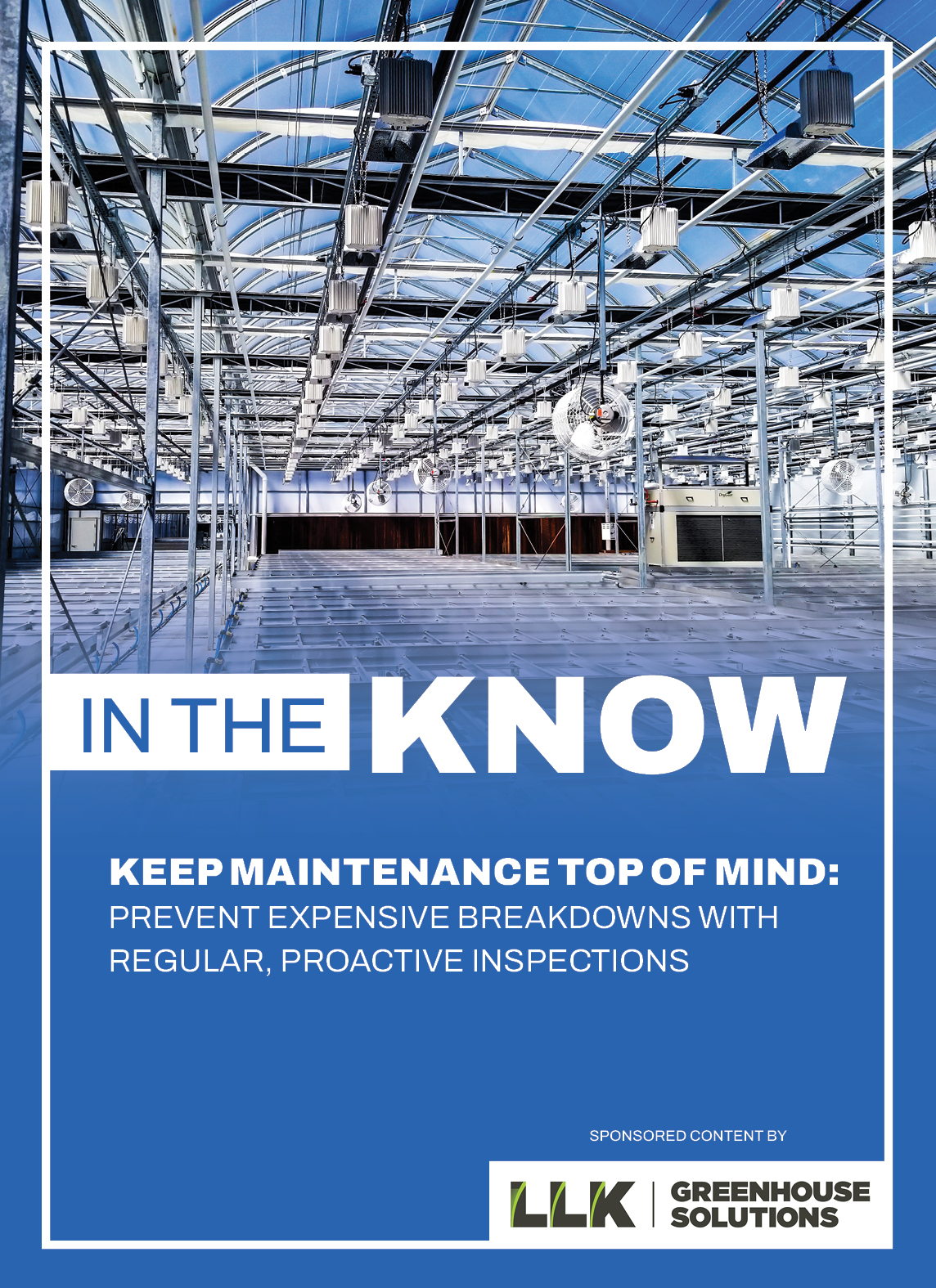
Click on the image above to view a PDF version of the full In the Know report.

In greenhouse operations, critical failure points often lurk where visibility is limited. Roof panels at 25 feet up and pinion gears hidden inside ventilation mechanisms may not be top-of-mind — but when they fail, the consequences resonate throughout the facility.
Anthony Hill, LLK Greenhouse Solutions’ national sales manager and construction lead, states an industry truth: Maintaining equipment often gets pushed down the to-do list until something stops working.
And when the structure, equipment and/or controls get left uncared for, it leads to the quiet erosion of performance over time.
The imperceivable threat above
Polycarbonate panels shield greenhouses from the elements, offering excellent thermal properties, durability, light levels and impact resistance.
With proper UV protection, panels can last up to 20 years. But photooxidation — triggered by prolonged UV exposure — gradually breaks polymer chains, leading to yellowing, brittleness and reduced clarity/light levels.
From observation at ground level, panels may still appear clear, but a roof-level vantage reveals micro-cracks or deterioration that dims light penetration and weakens structure.
Maintenance teams often avoid roof inspections because they’re physically demanding, risky or simply not scheduled. Hill notes that operators rarely climb the 20 or 25 feet necessary just to check glazing until the panels visibly fail, which can impact productivity.
The mechanics hidden inside
Within the greenhouse interior, mechanical systems handling ventilation, shading or cooling may seem silent and reliable.
Yet internal parts like cotter pins, rack and pinions, or fan motor bearings quietly degrade. Hill points out that routine servicing — like greasing pinions and tightening fasteners — can prevent larger, costly failures months down the line.
Extension-based maintenance guidance reinforces this: Accumulation of dust on fan blades or binding shutters can reduce ventilation efficiency by 30% to 50%, causing stagnant air zones, poor cooling performance, heavy condensation and, ultimately, higher energy and repair costs.
Without regular cleaning and lubrication, these quiet systems become sources of climate instability.


How these issues sneak in and undermine performance
Operators often place confidence in automation, but automated systems can lure teams into complacency.
Hill emphasizes that when vents open and close quietly at first, it’s easy to overlook them — until they begin making noise or fail outright. That noise creeping in is often the first alert that motion systems are degrading.
Maintenance tends to slip through the cracks, and putting it off starts to become the norm.
Hill describes how LLK’s team checks client status semiannually to keep maintenance conversations alive — even when budgets stall.
Keeping those touchpoints visible ensures small issues don’t become capital-intensive breakdowns.
Connecting research & facilities strategy
Strong material like twin-wall or multi-wall polycarbonate may seem low-care, but without proper UV stabilizers, it can succumb to photo-aging through chain scission, yellowing and embrittlement. That’s why routine inspection — even just to document minor surface changes — can delay deterioration and extend service life.
Similarly, a well-maintained mechanical system doesn’t just run — it communicates through its efficiency. When fan belts are clean, bearings are greased and pins are seated, airflow remains high, condensation stays low and disease pressure drops.
A more strategic inspection
When LLK advises clients, inspection planning becomes a structured cadence. Semi-annual internal reviews paired with annual maintenance vendor visits allow teams to spot issues both above and within.
Documentation becomes routine — observations on polycarbonate clarity, smooth movement in gearboxes, noise changes and vent response times.
At facilities like Kent State University's research houses, LLK integrated roofline assessments into broader modernization plans.
Teams reported that once glazing inspections entered regular rotation, maintenance practices shifted from reactive patchwork to proactive care — smoothing out energy use and dropping maintenance callbacks significantly.
Pay attention to what’s not visible
The parts that fail first in a greenhouse usually aren’t the ones you’re watching. Polycarbonate that’s weathered from years of UV exposure. Cotter pins slowly backing out of place. Vent motors working a little harder than they did last season.
These issues don’t announce themselves — they creep in quietly and chip away at performance.
That’s why smart operators treat access and inspection as part of the infrastructure itself. If you can’t reach your roofline, you won’t check it. If your shade gearboxes are out of sight, they’ll be out of mind.
Build a standard operating process that makes these checks routine. Fold roof glazing reviews into your seasonal schedule. Walk the vent lines with a focus on sound, friction and wear. Log the small stuff — rattles, tight spots, haze in the panels — before they become big problems.
In the long run, staying ahead of maintenance issues will always beat trying to react.
Read the rest of the In the Know report:
From LLK Greenhouse Solutions: A proactive approach
Maintenance: Preventative maintenance ensures long-term success

Explore the September 2025 Issue
Check out more from this issue and find your next story to read.
Latest from Greenhouse Management
- Blue Grass Farms acquires Brehob Nursery
- OHP expands sales team with new hire and internal promotion
- Seed Your Future aims to double 2025 total for 'Round-Up at the Register' 2026 campaign
- Beacon Impatiens partners with Roots for Youth in 2026
- Inner visions
- New internship data empowers horticulture employers
- American Horticultural Society announces winners of 2026 Great American Gardeners Awards
- Sustainabloom releases new sustainability template for wholesale florists