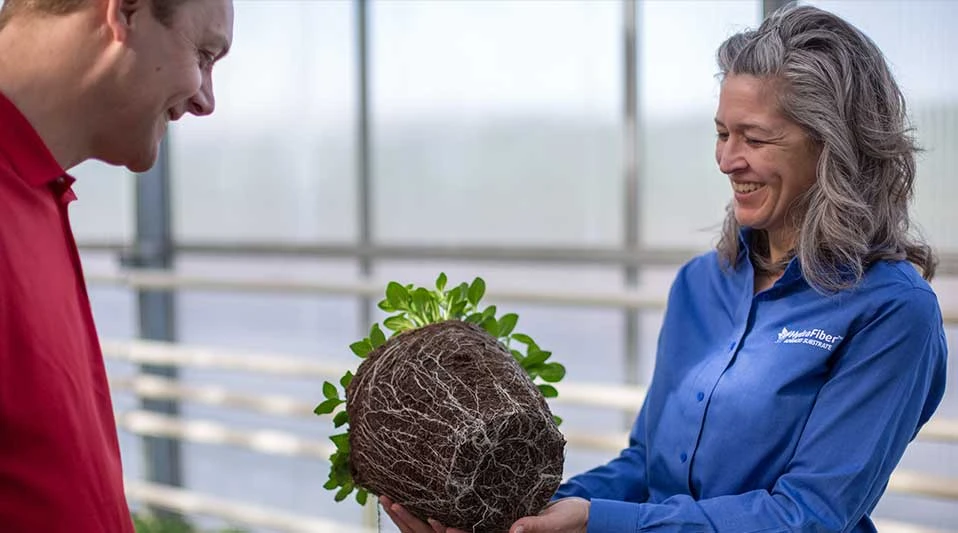
Photo courtesy of Profile Products
As global demand for sustainable growing media accelerates and raw material shortages challenge growers worldwide, it’s time to ask: Is your substrate mix built for the future—or stuck in the past?
For decades, a peat and perlite blend has served as the industry standard in greenhouse production. But standards are meant to be challenged—and HydraFiber is leading the charge.
Created by Profile Products, HydraFiber has given commercial growers a more consistent, reliable alternative to the status quo and it’s changing the way growers think about their substrates.
Challenging the Old Assumptions
In greenhouses, that might mean looking at your production and asking: “Are we doing this because it’s the best way—or just because it’s how we’ve always done it?”
That’s the mindset that led to HydraFiber’s creation.
Jeff Langner, senior marketing manager at Profile Products, says asking better questions helped the company develop a raw material upgrade to perlite, which isn’t always stable, consistent, cost-effective, or clean.
“We asked, ‘What if we can bring something new to the market that fixes a lot of common problems for growers?’” he says. “We felt confident that we could offer a raw material that is consistent, reliable, stable, highly effective for shipping and storing, and – most importantly – creates an effective environment for plant growth.”
With fiber processing already at the core of Profile’s business, product developers looked at the properties of its engineered fibers more than a decade ago and worked to supply a high performing substrate that could serve as an alternative to perlite or even a way to supplement reliance on other raw materials such as peat or coir.
Enter HydraFiber: Performance, Not Just Promise
Created from southern yellow pine with no added chemicals, HydraFiber has proven through extensive adoption by customers globally to provide effective water-holding capacity, air space, and favorable pH and EC values. But what makes HydraFiber a game-changer is how it delivers that performance consistently, sustainably, and at scale like no other all natural raw material.
“Time and again, we’ve seen growers succeed with HydraFiber across a wide variety of crops,” Langner says. “But it really took proving it crop by crop, operation by operation, for growers to believe in what we were doing.”
HydraFiber is now trusted by hundreds of growers worldwide and continues to gain momentum as the substrate of the future.
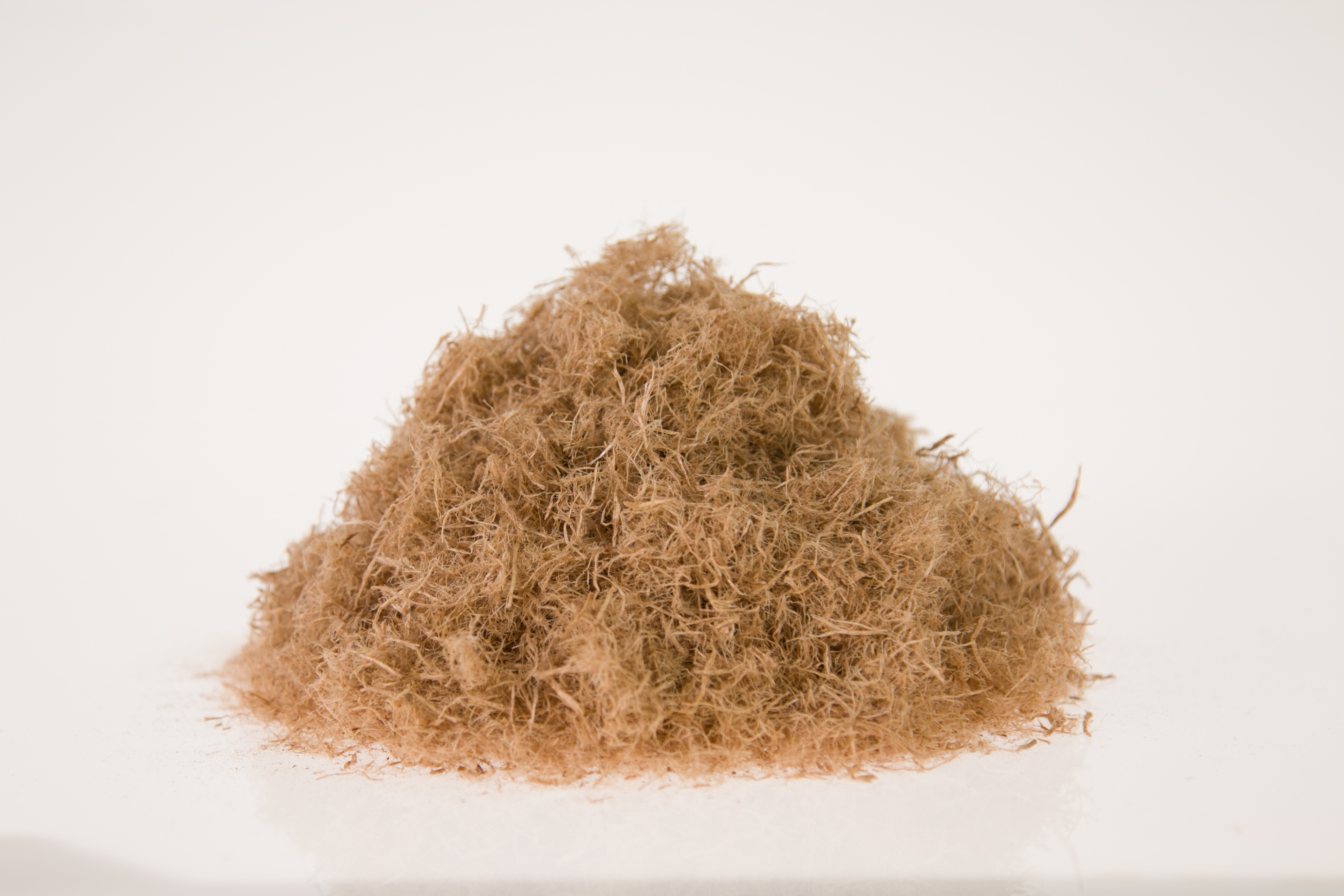
HydraFiber vs. perlite: A side-by-side look
Let’s break it down:
| Feature | HydraFiber | Perlite |
|---|---|---|
| Raw Material | Southern yellow pine | Volcanic glass |
| Process | Thermally refined, pressurized | Flash-popped like popcorn |
| Consistency | Engineered and quality-checked every 30 minutes | Varies load to load |
| Sustainability | Made from renewable wood fiber | Mined from non-renewable resources |
| Shape/Size | Singulated strands for maximum surface area | Naturally irregular and porous |
| Shipping Efficiency | Highly compressed for fewer bales and pallets | Bulky, requires more shipments |
“What growers get with HydraFiber is consistency—load to load, season to season, year to year. A product that takes the guesswork out of media.” Langner notes.
That consistency reduces waste, eliminates the need to discard out-of-spec material, and improves both profitability and ease of use.
More Profitable, More Sustainable
Because HydraFiber bales are highly compressed, growers require fewer pallets per shipment. That translates to:
- Fewer trucks on the road
- Lower freight costs
- Less labor to manage on arrival
It’s not just a better media—it’s a smarter logistics solution.
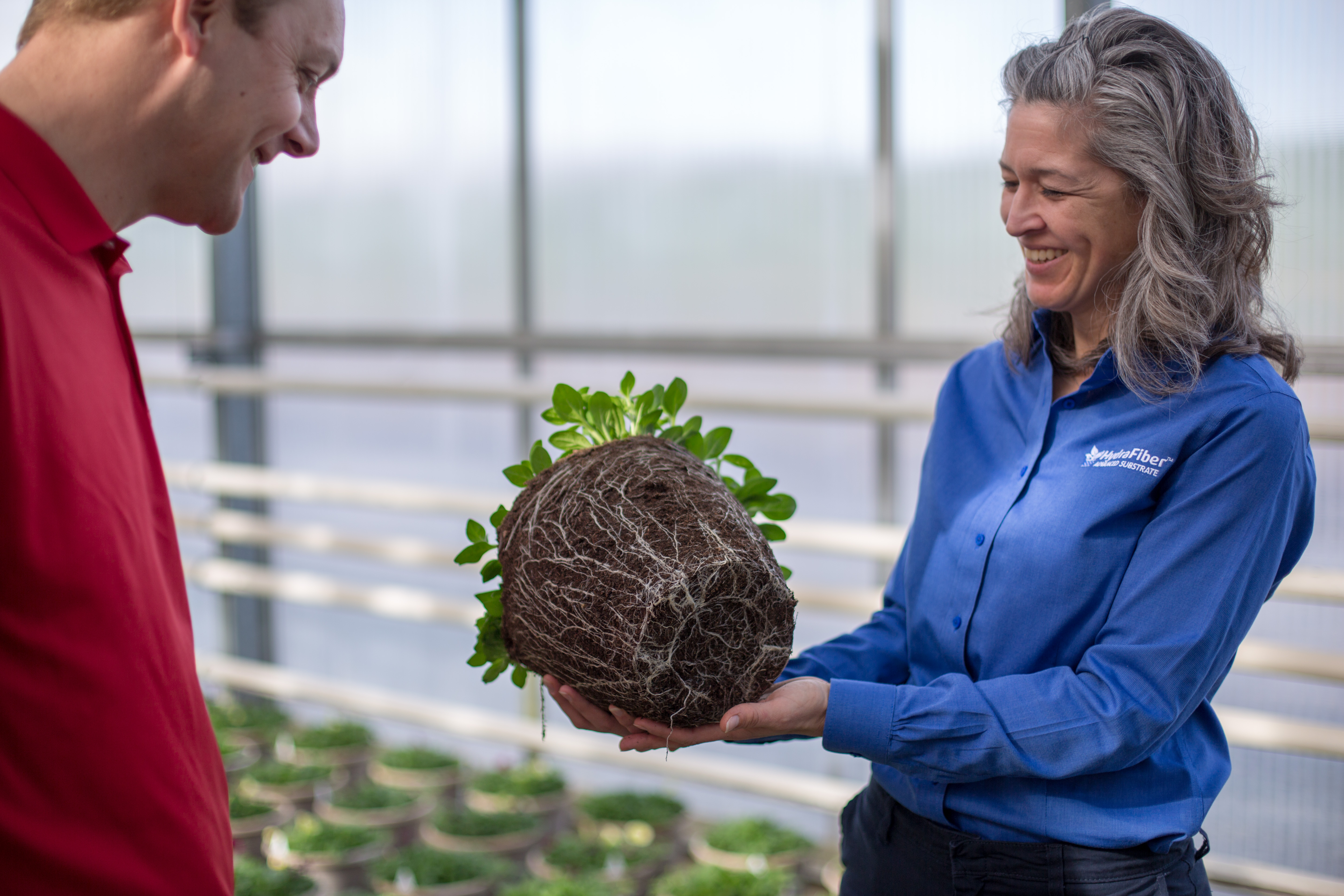
HydraFiber vs. peat/perlite: Rethinking water retention
Langner says another standout feature is HydraFiber’s ability to not only retain water but also to rewet when dried down effectively.
“It holds onto water because of the porosity in the fibers,” he explains. “This might be the biggest benefit we’ve seen from retail consumers—just the ability to re-wet, whereas materials like peat moss just don’t rehydrate well.”
For growers and retailers alike, this means:
- Prolonged shelf life at retail
- Less drought stress
- A better consumer experience
- A more forgiving environment for end users
From Start to Finish: Scalable, Flexible Integration
Many HydraFiber users also work with AdeptAg, Profile’s equipment partner, which manufactures specialized HydraFiber processing equipment that decompress and prepare the media for blending. These systems make it easy to scale up without sacrificing quality or consistency.
For growing operations that can’t invest in equipment, Profile partners with regional blenders to supply ready-to-use mixes containing HydraFiber, ensuring growers of all sizes can make the switch with minimal disruption.
This flexibility removes barriers to adoption, helping growers upgrade their mix without overhauling their process.
Real Results, Real Growers
Growers who’ve adopted HydraFiber have reported:
- Up to 40% savings on freight and handling
- Up to 30% labor reduction
- Proven results across bedding plants, perennials, trees, and shrubs
“When the substrate performs, everything else improves,” Langner says. “That’s what HydraFiber brings to the table.”
The Bottom Line
Raw materials are changing. So is the industry. Peat and perlite may have been the standard, but they’re no longer the only option—nor the best one.
HydraFiber delivers:
- Proven performance
- Unmatched consistency
- Smarter logistics
- Greater sustainability
And most importantly, it helps growers succeed—today and into the future.
“HydraFiber isn’t just a new ingredient. It’s a new way to grow.”