
Every grower and gardener knows the fruits of their labor live or die by the weather. Sometimes, plants thrive as the climate plays fair with a greenhouse’s needs. In the worst case, plants die from poor planning, underpreparing or a simple unexpected act of nature. Either way, growers must understand the weather outlook in order to be successful.
According to Joe Woznicki, a meteorologist and energy and agricultural weather consultant for the Commodity Weather Group, the advice — and plants — for 2026 will be ruled by our transition out of one climate phenomenon: La Niña.
“La Niña is when the waters in the tropical Pacific are cooler than normal,” he explains. “And that’s what we’re in right now. So, the tropical Pacific is cooler than normal. El Niño is when the waters are warmer than normal.”

According to Woznicki, La Niña can bring dryness across the southern U.S. If the spring or summer weather breaks into either a neutral state or El Niño, it could mean better rains in those areas previously affected by the drier winter pattern.
According to the National Oceanic and Atmospheric Administration (NOAA), El Niño is a phenomenon marked by an unusual increase in water temperatures in the equatorial Pacific Ocean. The event was marked by South American fishermen for centuries, who dubbed it El Niño, a term for baby Jesus, due to its propensity to show up around Christmastime during affected years.
Due to the ocean’s inextricable link with atmospheric conditions, breaking into El Niño, as seen in previous years, could catch growers off-guard, with weather conditions unfamiliar in typical seasons.
“The main thing to watch is . . . if we do get into a rapid El Niño pattern,” Woznicki says. “For the Midwest and even the East Coast, an El Niño summer is generally milder and wetter. So, the risk is if we get into El Niño faster, then we’d be cooler and wetter for the summer.”

So, how does a grower stay on top of continually changing and difficult-to-predict climate patterns? Former meteorologist Frank “Frankie Flowers” Ferragine from outside of Toronto says you simply don’t. The current green industry author warns that “anything could happen,” meaning a grower’s best offense is a good defense when dealing with the weather.
“A volcano could erupt across the world that could impact us here,” he gives as an example.
And he’s noticed growers tend to plan crops based on last year’s weather, a pitfall he cautions against.
“That’s found in terms of consumer trends,” Flowers says. “Let’s look at a cold crop like osteospermum. One summer it looks great in the garden because it was a cool, wet year. The following year, everybody wants to buy osteospermum because they remember how good it was the previous year. That doesn’t mean it’s going to be good that year.”
Flowers recommends maintaining a close watch on weather patters online, as they shift and change by the day. Furthermore, growers should pivot and trust their instincts when they need to.
“There’s tons of information available with apps,” he says. “My favorite app is an app called Storm, and it gives hour-by-hour detailed information on everything from wind to rain. When it comes to the greenhouse industry, we generally have a recipe on how to grow things well based upon temperatures and even variation of light. That recipe can change. You have to have flexibility.”
So, stay flexible and prepare for what you can. While things certainly could change, there are a few key things growers should know given the current weather, which Woznicki says might lead to a late start in spring.
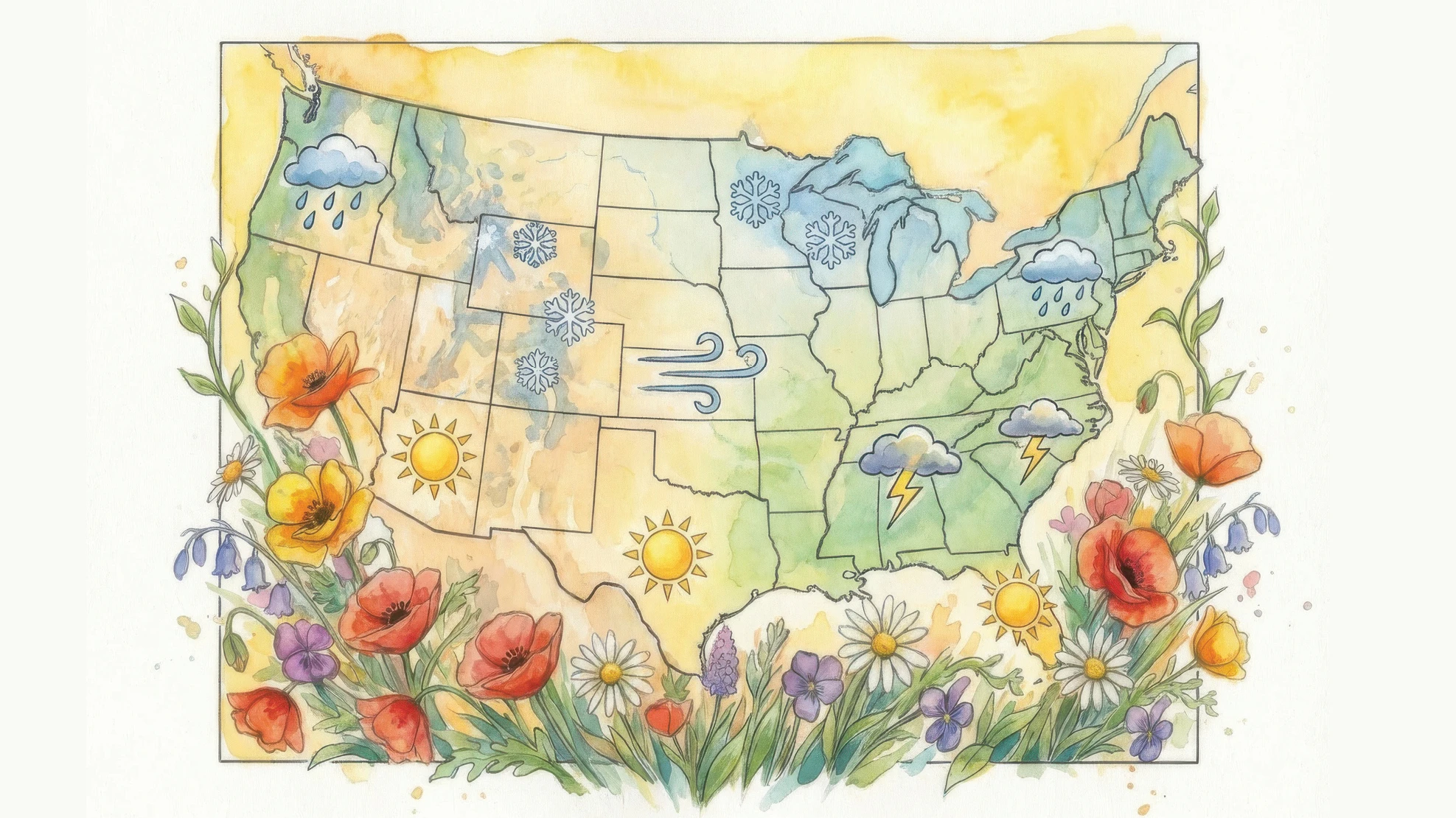
“I do worry that we have some lingering La Niña effects in the atmosphere and that we might hold on to colder air across the northern tier of the country a little bit deeper into spring. I think the south in general will start off probably warmer than normal to start spring off. It’s that northern half of the country that I’m expecting could have a later start to spring with those cooler temperatures.”
That is a concern, considering that research has shown that unfavorable cold and wet weather can slow down retail sales in the busiest season. Those slow sales can cause upstream effects on growers, so managing stock and keeping a precise eye on potential demand will be important heading into a possibly frosty spring.
Latest from Greenhouse Management
- Jackson & Perkins expands into Canadian market
- Green & Growin’ 26 brings together North Carolina’s green industry for education, connection and growth
- Marion Ag Service announces return of Doug Grott as chief operating officer
- Cincinnati Zoo & Botanical Garden debuting new perennial section at 2026 Breeder Showcase
- The Garden Conservancy hosting Open Days 2026
- Registration open for 2026 Perennial Plant Association National Symposium
- Resource Innovation Institute and North Dakota State University explore co-location of data center and greenhouses
- Fred C. Gloeckner Foundation Research Fund calls for 2026 research proposals