Researchers at Purdue Univ. have discovered that adding a yeast gene to tomatoes increase production of a compound that slows aging and delays microbial decay in tomatoes. The results of the research have been published in “The Plant Journal”. Horticulture professor Avtar Handa said the results would likely transfer to other fruit.
“We can inhibit the aging of plants and extend the shelf life of fruits by an additional week for tomatoes,” Handa said.
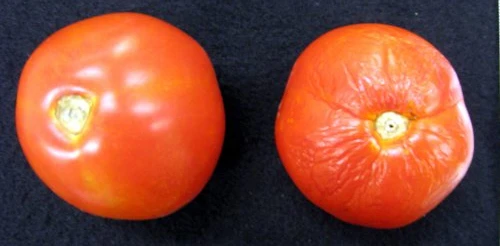
Fully ripe tomatoes from plants which received the gene lasted about 8 days longer before showing signs of shriveling compared with non-transgenic plants. Decay and rot symptoms associated with fungi were delayed by about 3 days.
“We can add this gene to the tomatoes or look at natural variation and select the cultivars that already have a high level of this gene's expression,” Handa said.
Pictured: Adding a yeast gene to tomato plants can inhibit aging and extend shelf life of the fruit.
Photo by Avtar Handa, Purdue Univ.
Latest from Greenhouse Management
- The Growth Industry Episode 10: State of the Horticulture Industry
- Millennium Pacific Greenhouses launches California Grown Cucumber Program
- Scientists develop vitamin A-enriched tomato to fight global deficiency
- Tennessee Green Industry Field Day scheduled for June 11
- UTIA and UT Knoxville research teams will develop automated compost monitoring system
- Ken and Deena Altman receive American Floral Endowment Ambassador Award
- [SNEAK PEEK] Leading Women of Horticulture: The women of Fairview Greenhouses & Garden Center
- [SNEAK PEEK] Leading Women of Horticulture: The inventive women of TPIE ’26