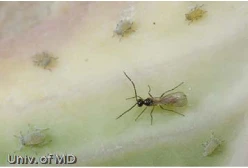
Aphids can be a major problem on plants still in greenhouses. Members of Univ. of Md. Extension are reporting finding aphids on zinnias, snapdragons, petunias, peppers and eggplants. Fortunately, there are several predators that can move into greenhouses to help reduce aphid populations.
Some of these predators can also be ordered from biological suppliers and released in the greenhouse in spring to provide early season control. Extension personnel recommend monitoring aphid levels to determine if a pesticide is needed to knock down populations. If biological controls are being used or will be released choose insecticidal soap and horticultural oil since these products have less of an impact on beneficial insects.
High numbers of soldier beetles and other predators have also been seen on perennials. Extension personnel said they are seeing an unusually high number of these beetles this year. There are 16 genera and 455 species of soldier beetles known in North America.
The adult beetles, which are also referred to as leatherwings, feed on nectar, pollen, honeydew and small insects. Their larvae feed on insect eggs, small caterpillars, fly larvae and other soft-bodied insects.
Pictured: Aphidius sp., a parasitic adult wasp, and aphids that have been parasitized by the wasp.
Photo courtesy of Univ. of Md.
Latest from Greenhouse Management
- The Growth Industry Episode 10: State of the Horticulture Industry
- Millennium Pacific Greenhouses launches California Grown Cucumber Program
- Scientists develop vitamin A-enriched tomato to fight global deficiency
- Tennessee Green Industry Field Day scheduled for June 11
- UTIA and UT Knoxville research teams will develop automated compost monitoring system
- Ken and Deena Altman receive American Floral Endowment Ambassador Award
- [SNEAK PEEK] Leading Women of Horticulture: The women of Fairview Greenhouses & Garden Center
- [SNEAK PEEK] Leading Women of Horticulture: The inventive women of TPIE ’26