Bacterial soft rot can be one of the most damaging diseases reports Univ. of Md. Extension. The moist environment used for rooting poinsettia cuttings can promote the disease. Caused by Pectobacterium carotovorum (formerly Erwinia carotovora) and Dickeya chrysanthemi (formerly Erwinia chrysanthemi), the bacteria can be found in plant debris, water or unsterilized growing media.
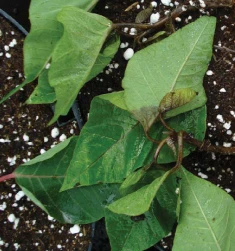
In poinsettia cuttings, the bacteria cause a mushy, brown rot at the base of the cuttings that moves upward into the stem. In older plants, these soft rot bacteria can enter the stems through pinching wounds. Other sources of the bacteria include contaminated tools and containers, debris on greenhouse benches and floors and irrigation water. Fungus gnat larvae can vector the diseases and inoculate them into the stems.
Sanitation is the most effective way of controlling the disease. Benches, pots and tools should be treated with disinfectants such as quaternary ammonium compounds, bleach or hydrogen dioxide. Avoid stressing cuttings, which makes them more susceptible to disease infection, by planting them as soon as they are received. Keep cuttings shaded during rooting. Avoid excessive moisture during the rooting process making sure the rooting medium is not overwatered. Plants that show symptoms of the disease should be promptly removed and destroyed. Manage fungus gnat populations.
Pictured: Bacterial soft rot on poinsettia.
Photo by Karen Rane, Univ. of Md.
Latest from Greenhouse Management
- The Growth Industry Episode 10: State of the Horticulture Industry
- Millennium Pacific Greenhouses launches California Grown Cucumber Program
- Scientists develop vitamin A-enriched tomato to fight global deficiency
- Tennessee Green Industry Field Day scheduled for June 11
- UTIA and UT Knoxville research teams will develop automated compost monitoring system
- Ken and Deena Altman receive American Floral Endowment Ambassador Award
- [SNEAK PEEK] Leading Women of Horticulture: The women of Fairview Greenhouses & Garden Center
- [SNEAK PEEK] Leading Women of Horticulture: The inventive women of TPIE ’26