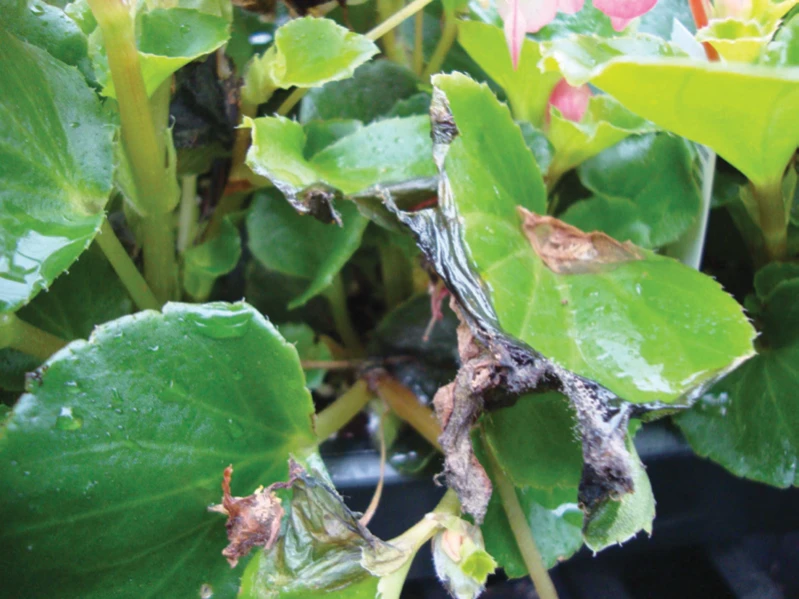

Botrytis leaf spot is one of the aspects of a wide-ranging disease often called Botrytis blight. The ubiquitous fungus Botrytis cinerea is most famous for what it can do to flowers, but on some species, under favorable environmental conditions, it can cause spotting on leaves as well. Plants that are especially prone to Botrytis attack include begonia, geranium, vinca, snapdragon, lisianthus, osteospermum, poinsettia, New Guinea impatiens, exacum and zinnia.

Photo courtesy of Margery Daughtrey
Margery is a plant pathologist specializing in ornamentals at Cornell University’s Long Island Horticultural Research & Extension Center. All photos courtesy of Margery Daughtrey. mld9@cornell.edu
Latest from Greenhouse Management
- Jackson & Perkins expands into Canadian market
- Green & Growin’ 26 brings together North Carolina’s green industry for education, connection and growth
- Marion Ag Service announces return of Doug Grott as chief operating officer
- Cincinnati Zoo & Botanical Garden debuting new perennial section at 2026 Breeder Showcase
- The Garden Conservancy hosting Open Days 2026
- Registration open for 2026 Perennial Plant Association National Symposium
- Resource Innovation Institute and North Dakota State University explore co-location of data center and greenhouses
- Fred C. Gloeckner Foundation Research Fund calls for 2026 research proposals