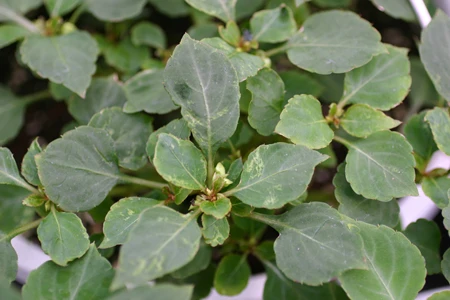
Now that warm temperatures have arrived and flowers are in full bloom, growers are being advised to inspect plants for increased thrips and spider mite activity. Mich. St. Univ. extension horticulture and marketing educator Tom Dudek said susceptible crops like calibrachoa, geranium, gerbera, impatiens, petunia and tomato should be checked for thrips activity in the flowers and on the leaves. Look for flecking and spotting caused by feeding activity.
He said spider mites have been found on fuchsia, ivy geraniums and most tropicals. The mites are even showing up on dracaena and vinca vine.
For chemical control, Dudek said growers need to rotate chemical classes to avoid resistance.
He advises growers not to carry over insects from one crop to another. Don’t keep houseplants or allow weeds to grow in the greenhouse. Thrips numbers should be kept at less than 10 insects per sticky card per week on poinsettias and dracaenas grown during the fall and winter.
Pictured: Now that warm temperatures have arrived growers should be scouting and monitoring for thrips (damage on impatiens shown) and spider mites, particularly on susceptible crops.
Photo by Leanne Pundt, Univ. of Conn.
Latest from Greenhouse Management
- Millennium Pacific Greenhouses launches California Grown Cucumber Program
- Scientists develop vitamin A-enriched tomato to fight global deficiency
- Tennessee Green Industry Field Day scheduled for June 11
- UTIA and UT Knoxville research teams will develop automated compost monitoring system
- Ken and Deena Altman receive American Floral Endowment Ambassador Award
- [SNEAK PEEK] Leading Women of Horticulture: The women of Fairview Greenhouses & Garden Center
- [SNEAK PEEK] Leading Women of Horticulture: The inventive women of TPIE ’26
- Growing successful spring crops with Topflor