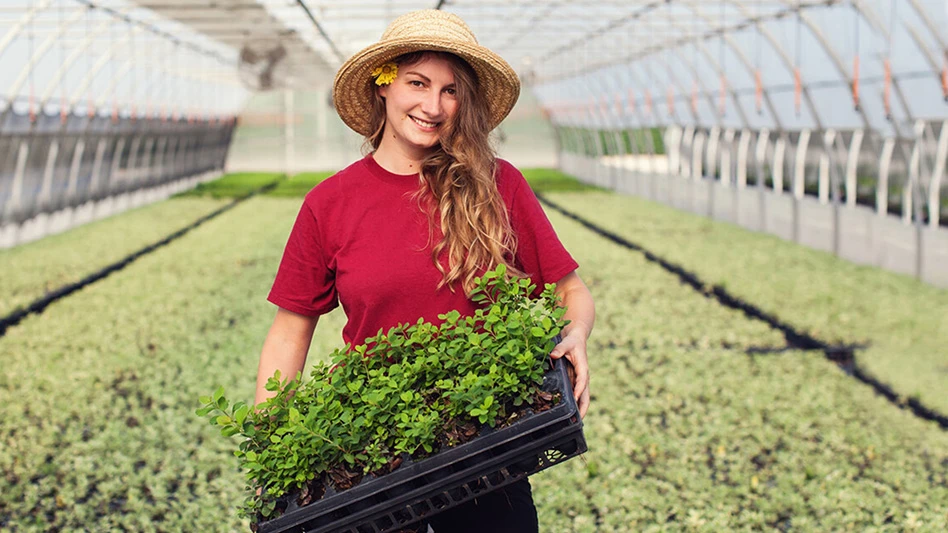
Coconut fiber, or coir, is becoming popular as a growing medium, but it’s important to understand its limitations and advantages before making the switch, said Julie P. Newman, farm adviser at the
Some advantages include high water-holding capacity, better air penetration and acceptable pH levels.
Coir readily absorbs water, so a wetting agent is not needed. Because of its high lignin content, coir breaks down slowly which keeps the medium structure open. This allows air to better penetrate, encouraging larger, healthier roots, she said. Coir typically lasts two to four years.
The pH of most commercially available coir ranges from 5.8 to 6.5, so liming is not required. There are no disposal problems associated with coir. It’s a waste product of the coconut industry. Coir also may deter fungus gnats and algae by keeping the surface dry.
The most common problem with coir is it can have an extremely high salt content, especially in lower grades. Coir high in salts should be leached before use.
{sidebar id=1}
Coir has a lower cation-exchange capacity and it is high in phosphorous and potassium. Growers switching from sphagnum peat to coir need to change their fertilizer practices.
For more: Julie P. Newman, (805) 645-1459; jpnewman@ucdavis.edu.
Latest from Greenhouse Management
- The Growth Industry Episode 10: State of the Horticulture Industry
- Millennium Pacific Greenhouses launches California Grown Cucumber Program
- Scientists develop vitamin A-enriched tomato to fight global deficiency
- Tennessee Green Industry Field Day scheduled for June 11
- UTIA and UT Knoxville research teams will develop automated compost monitoring system
- Ken and Deena Altman receive American Floral Endowment Ambassador Award
- [SNEAK PEEK] Leading Women of Horticulture: The women of Fairview Greenhouses & Garden Center
- [SNEAK PEEK] Leading Women of Horticulture: The inventive women of TPIE ’26