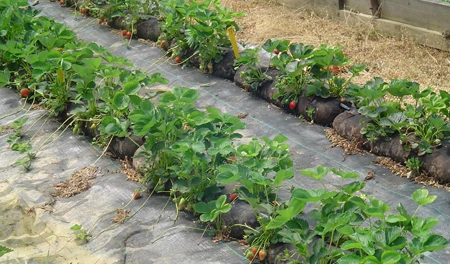
Compost socks are made of mesh materials and filled with compost. Plants are grown in the socks with irrigation and fertility management provided when necessary. Researchers at Ohio St. Univ.’s South Centers at Piketon are comparing the production and yield of strawberries in a compost sock system to that of in-ground high tunnel production.
OSU extension horticulturist Brad Bergefurd said if the compost socks are successful, plant production could be expanded to areas that generally aren’t considered ag-friendly. Bergefurd said the compost system could be combined with high tunnels eliminating the need for soil.
“Since you don’t need soil, you don’t need a field or farmland,” Bergefurd said. “An old parking lot or a vacant lot in the middle of the city would work.”
Only in the first year of evaluating the compost sock system, Bergefurd said initial results look promising. The socks could support a whole host of vegetable crops, including tomatoes, peppers and lettuce.
The technology completely supports a multiple cropping system,” Bergefurd said. “We are testing to see whether one compost sock can support three years worth of crop production.”
Pictured: Combining a compost sock system with high tunnel structures could allow growers to produce crops anywhere space was available, including parking lots and vacant lots.
Photo courtesy of Ohio St. Univ.
Latest from Greenhouse Management
- The Growth Industry Episode 10: State of the Horticulture Industry
- Millennium Pacific Greenhouses launches California Grown Cucumber Program
- Scientists develop vitamin A-enriched tomato to fight global deficiency
- Tennessee Green Industry Field Day scheduled for June 11
- UTIA and UT Knoxville research teams will develop automated compost monitoring system
- Ken and Deena Altman receive American Floral Endowment Ambassador Award
- [SNEAK PEEK] Leading Women of Horticulture: The women of Fairview Greenhouses & Garden Center
- [SNEAK PEEK] Leading Women of Horticulture: The inventive women of TPIE ’26