New hydroponic growers can sometimes struggle with their crops. To succeed, they have to have an understanding of their growing system, and some of the common problems that arise. Steve Froehlich, consultant to CropKing, and Jim Brown, horticulturist for CropKing, have encountered most of the common issues and devised solutions to the problems. Both men shared some of their tips for overcoming deficiencies with your crops.
Greenhouse Management: First, what are some of the common problems you have seen with new growers, or growers trying new crops?
Steve Froehlich: Problem number one is not understanding the processes that the plant is going through. That relates back to not controlling the environment or not staying on top of your cultural practices. That leads to possible disorders within the crop.
To fix that, work with a reputable company. Work with someone that has experience in the crop that you’re growing, so they can give you basic knowledge of what equipment you need and how you can set it up. I see too many growers that search the Internet for whatever piece of equipment they need and they purchase it, thinking they have the best thing in the world, and they find out it’s really the wrong system for what they’re trying to grow, or worse yet it’s the wrong system for their environmental conditions.
GM: What is the most common issue you hear with tomato growers?
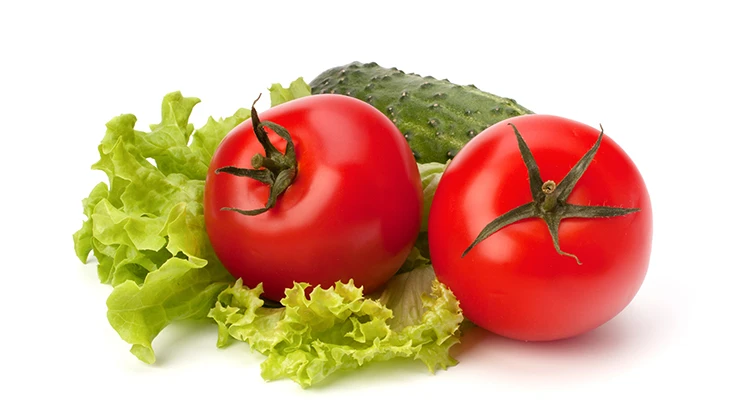
Jim Brown: A lot of the problems I see involve consistency of fruiting over a long period of time. If we don’t cluster prune, that is to say prune off some of the fruit on the early clusters, the plant will get loaded up and decide, “That’s enough.” Then it will stop setting fruit for two or three clusters. That’s not good for marketing. For beefsteak tomatoes, we’ll allow two, three, four, maybe five, on the first cluster. But no more than three or four on succeeding clusters. When you get into the summertime, you get some high temperatures that can interfere with some fruiting. A lot of the questions that I get are related to flower set, and fruiting.
SF: The number one call I get on tomatoes is fungal related. Growers battling Botrytis or another disease. And that gets back to management and how you’re managing that house. I get calls from growers all the time and they tell me they have plants dying and they don’t know what’s going on. Almost always I can trace it back to the wrong equipment for growing the plants or the grower doesn’t yet understand how to utilize that tool. I’d look at watering levels and other environmental conditions. I’d have him take a large number of photographs for me to examine.
JB: There are always some nutritional issues but that’s when something is off track. Usually, a grower does not call up and ask about a nutritional problem. Typically, something in the plant tips me off that it’s a nutritional issue. Veiny fruit, where you can see through the fruit and you can see the veins in the fruit itself…that’s an indication of a lack of potassium. Fruiting tomatoes feed more heavily on potassium. Fruiting cucumbers feed more heavily on calcium. There are differences from one plant to another in these nutritional issues.
Another question I often get about tomatoes is that the bottom leaves are starting to yellow. Growers will keep them pruned up so there’s only foliage at the top of the plant, but at the bottom of the leaves that are there they can start getting yellow along the veins. That is not uncommon, particularly as you go into summertime, because the plant recycles the magnesium. The magnesium is the central molecule of the chlorophyll. When the magnesium is moved out of the leaf and to the top of the plant, the shelf between the veins first turns yellow and then it can turn brown or a purplish color because it has died. As long as that’s not too prevalent, as long as it’s not halfway up the leaves on the remainder of the plant, that’s okay. A little bit of that is okay.
GM: Leafy greens are an extremely popular crop for new growers. What are some of the problems you’ve encountered with greens?
SF: The number one problem that I get called for is tip burn, or edge burn, on the leaves. It’s a browning or a dying back of the leaves of the plant. Some of the more smooth leaves can be more prone to it. Most often we can trace it back to physical environment. But then, what to do about it, can be the problem. If the house is designed wrong, there’s not a lot we can do.
Slow growth is a common problem. A lot of things contribute to slow growth. The number one contributing factor is what’s going on in the root zone.
Anytime you get above 78-80 °F in the root zone, you’re going to see problems in leafy greens. Keep your temperature, under full light conditions, between 70 and 73 °F at the highest. At 75 you’ll probably still be okay. You get into the upper 70s and your problems will increase and a lot of the disorders in lettuce will show up. Tip burn is one, slow growth is another, fungal problems, powdery mildew, etc. When you start having wide fluctuations in that solution temperature, or in the root zone, you’ll have problems.
GM: How can growers protect the temperature of their solution?
SF: You may be able to keep the solution properly chilled depending on your facility. This is the battle that all lettuce growers deal with. The floating raft growers, the ones growing lettuce by floating it on a pond essentially, do it by sheer volume. They have a lot of water in there, so the temperature is very slow to change. For the NFT growers, the ones that grow on low volumes of water, it may be advisable or profitable to put in chillers to be able to cool the solution, so it’s on a re-circulating system. In that case, before the solution goes back to the greenhouse it goes through a chiller and then is returned to the crop. In some rare instances, it might be advisable to dump the solution on a more regular basis. In other words, if it’s heating up today and I can’t get the temperature back down by tomorrow, it might be best for you to start over. Generally speaking, water coming in off the well or on city water will be less than 70°F. My well water comes in at 62 to 65°F year-round.
Again, this is the battle that every lettuce and herb grower faces when growing in a floating raft or NFT: How do we keep the solution in that range? All of us face days when our night time temperatures stay above the 70s and your solution goes to that temperature.
GM: What are some of the common problems with cucumbers?
JB: Probably, not pruning enough of the fruit at the beginning of the growth of the plant. The plants that grow in the greenhouse are all female. They cannot produce male flowers. Regular cucumber plants produce male flowers first on several of the nodes before they produce a female flower. If they can’t produce a male flower, they produce a female flower. If we leave that on to develop, it will load the plant down with fruiting before it has developed enough to grow a good crop. That’s why we have to remove the female flowers. I prefer to remove them up to the 10th node.
The questions related to cucumbers tend to be about not producing or that the fruit is curling. If the young cucumbers start curling as they hang there then the end turns around like the end of a “J.” Then it’s either fruit overload or it could be nutritional.
One of my common sets of questions when nutrition might be a problem is, “What is the electrical conductivity (EC)? What is the PH? What is the EC in the leach? What runs off the plants compared to the strength of what is fed to the plants?” Those are indications of how the plants respond to what they’re getting. If they’re gobbling everything they can out of the solution, and there’s a big drop in the EC, then the grower should be feeding more. If it’s building up a little bit, that’s okay. If it’s building up too much, then the plant is probably struggling to get water.
Latest from Greenhouse Management
- Jackson & Perkins expands into Canadian market
- Green & Growin’ 26 brings together North Carolina’s green industry for education, connection and growth
- Marion Ag Service announces return of Doug Grott as chief operating officer
- Cincinnati Zoo & Botanical Garden debuting new perennial section at 2026 Breeder Showcase
- The Garden Conservancy hosting Open Days 2026
- Registration open for 2026 Perennial Plant Association National Symposium
- Resource Innovation Institute and North Dakota State University explore co-location of data center and greenhouses
- Fred C. Gloeckner Foundation Research Fund calls for 2026 research proposals