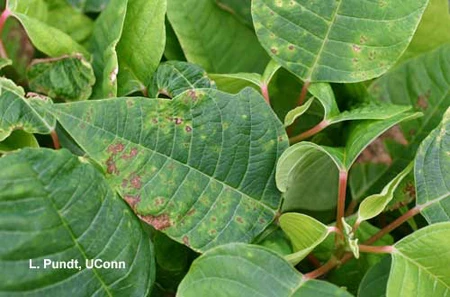
Xanthomonas campestris pv. vesicatoria, which causes bacterial leaf spot, is the most common and destructive disease of peppers in the Northeast. Univ. of Mass. plant pathologist M. Bess Dicklow, and extension floriculture specialist Paul Lopes, report different strains or races of the bacterium are cultivar specific resulting in disease symptoms specific to certain varieties. Tomatoes are also susceptible to the disease.
The bacterium is carried within seed or in solanaceous weeds and crop debris. Bacteria spread can occur between plants by splashing water, high-pressure sprayers or on workers hands and equipment.
High night temperatures and high humidity favor disease development. The disease can be impeded by prolonged dry spells.
Resistant varieties offer the best protection against this disease. Start with certified disease-free seed or treat seed with hot water or dilute solutions of bleach.
The following control measures are recommended: grow transplants in a clean, disinfected greenhouse; rotate crops; control solanaceous weeds; discard infected plants; and minimize leaf wetness periods by proper irrigation practices and plant spacing.
Pictured: Bacterial leaf spot is the most common and destructive disease of peppers in the Northeast.
Photo by Leanne Pundt, Univ. of Conn.
Latest from Greenhouse Management
- Millennium Pacific Greenhouses launches California Grown Cucumber Program
- Scientists develop vitamin A-enriched tomato to fight global deficiency
- Tennessee Green Industry Field Day scheduled for June 11
- UTIA and UT Knoxville research teams will develop automated compost monitoring system
- Ken and Deena Altman receive American Floral Endowment Ambassador Award
- [SNEAK PEEK] Leading Women of Horticulture: The women of Fairview Greenhouses & Garden Center
- [SNEAK PEEK] Leading Women of Horticulture: The inventive women of TPIE ’26
- Growing successful spring crops with Topflor