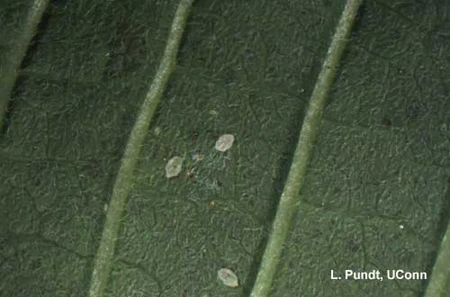
Incoming poinsettia cuttings should be carefully inspected for any unwanted hitchhiking insects and diseases. Univ. of Mass. extension floriculture specialist Tina Smith and Univ. of Conn. extension horticulture and greenhouse IPM specialist Leanne Pundt recommend that each batch of cuttings should be examined. Check the underside of leaves, especially the oldest bottom three, for whitefly eggs, nymphs and larvae. Because the eggs and nymphs are very small, a 10x hand lens or hands free optivisor is helpful. Smith and Pundt suggest randomly inspecting 10-30% of the cuttings. If whitefly are found, record the specific shipments, cultivars and life stages that are present.
If whitefly adults are not seen, don’t assume that the cuttings are clean. Adults are less likely to be seen than the more sedentary stages. Indicate which shipments and varieties may need follow-up treatment.
The roots should be white and healthy. Look for fungus gnat larvae and signs of feeding damage on the roots, which will have blunt tips. Also check the roots for root rot damage.
Check for bacterial leaf disease, which appears as angular leaf spots with a yellow halo. Under warm, wet conditions bacterial leaf diseases can spread rapidly.
Pictured: Since whitefly nymphs are very small, use a hand lens to inspect the underside of poinsettia leaves, especially the oldest bottom three.
Photo by Leane Pundt, Univ. of Conn.