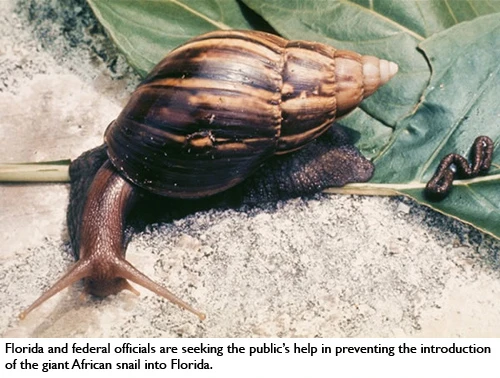
Fla. Dept. of Agriculture and Consumer Services, USDA and U.S. Fish and Wildlife Service have joined together in a cooperative effort to prevent giant African snail (Achatina fulica) from being introduced into Florida and are asking the public for help. The snail is considered a serious plant pest because of its rapid reproductive cycle and ability to destroy ornamental plants, crops and forests.
Scientists consider giant African snail to be one of the most damaging snails in the world because they are known to consume at least 500 different types of plants. The snails can also cause structural damage to buildings.
Giant African snail is one of the largest land snails in the world growing up to 8 inches long and 4½ inches in diameter. Each snail can live up to 9 years and contains both female and male reproductive organs. After a single mating session, each snail can produce 100-400 eggs. In a typical year, every mated adult lays about 1,200 eggs.
Cooperative Agriculture Pest Survey has stepped up its inspections following a recent giant African snail interception. No additional snails were found. Anyone who thinks they have seen a giant African snail or may have information on illegal snail smuggling/import activity, is asked to contact Fla. Dept. of Agriculture.
Latest from Greenhouse Management
- Millennium Pacific Greenhouses launches California Grown Cucumber Program
- Scientists develop vitamin A-enriched tomato to fight global deficiency
- Tennessee Green Industry Field Day scheduled for June 11
- UTIA and UT Knoxville research teams will develop automated compost monitoring system
- Ken and Deena Altman receive American Floral Endowment Ambassador Award
- [SNEAK PEEK] Leading Women of Horticulture: The women of Fairview Greenhouses & Garden Center
- [SNEAK PEEK] Leading Women of Horticulture: The inventive women of TPIE ’26
- Growing successful spring crops with Topflor