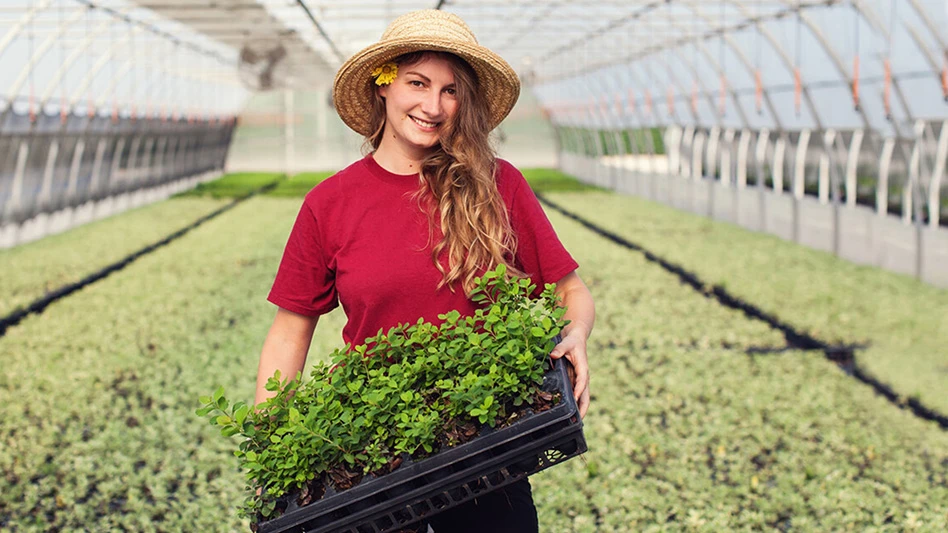
Supplemental lighting is often necessary for year-round greenhouse production of ornamentals and vegetables. However, the cost of providing supplemental light is high. It is therefore important that supplemental light is provided in a way that provides the greatest benefits for the crop, at the lowest possible price. To do so, it is important to understand the cost of providing supplemental light as well as how plants use that light. Accurate weather predictions can help minimize the risk of providing more excess light than is required by a specific crop.
On April 16, from 2-3 p.m. EST, University of Georgia professor Marv van Iersel will discuss how to account for these factors to help grow high-quality, profitable crops.
For more information on GLASE and webinar registration, click here.
Latest from Greenhouse Management
- The Growth Industry Episode 10: State of the Horticulture Industry
- Millennium Pacific Greenhouses launches California Grown Cucumber Program
- Scientists develop vitamin A-enriched tomato to fight global deficiency
- Tennessee Green Industry Field Day scheduled for June 11
- UTIA and UT Knoxville research teams will develop automated compost monitoring system
- Ken and Deena Altman receive American Floral Endowment Ambassador Award
- [SNEAK PEEK] Leading Women of Horticulture: The women of Fairview Greenhouses & Garden Center
- [SNEAK PEEK] Leading Women of Horticulture: The inventive women of TPIE ’26