A grower who was having trouble controlling Botrytis (gray mold) submitted infected plant samples to the Pa. St. Plant Disease Clinic in late 2010. Pa. St. Univ. plant pathologist Gary Moorman compared the effect of fenhexamid on the Botrytis from the infected plants and to Botrytis that had never been exposed to the fungicide. In culture the grower’s Botrytis grew even when exposed to high concentrations of fenhexamid. The Botrytis, which had never been exposed to fenhexamid, was controlled in culture.
Moorman also inoculated fenhexamid-treated (at the label rate) and non-treated plants with the two different Botrytis. Both fenhexamid-treated and non-treated plants died when they were inoculated with the grower’s Botryis. The old Botrytis did not kill the fenhexamid-treated plants, but did kill the non-treated plants.
Univ. of Mass. extension floriculture specialist Tina Smith and Univ. of Conn. extension horticulture and greenhouse IPM specialist Leanne Pundt advise growers to follow label directions when applying fenhexamid, which is a group 17 fungicide, to reduce the risk of Botrytis developing resistance.
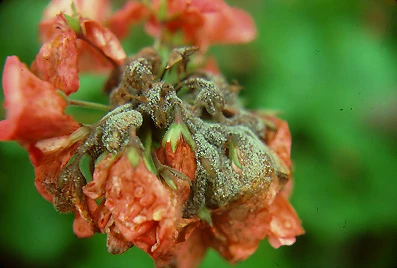
Pictured: Pa. St. Univ. plant pathologist Gary Moorman has identified Botrytis from infected plant samples submitted by a grower that is resistant to fenhexamid.
Photo by Gary Moorman, Pa. St. Univ.
Latest from Greenhouse Management
- Jackson & Perkins expands into Canadian market
- Green & Growin’ 26 brings together North Carolina’s green industry for education, connection and growth
- Marion Ag Service announces return of Doug Grott as chief operating officer
- Cincinnati Zoo & Botanical Garden debuting new perennial section at 2026 Breeder Showcase
- The Garden Conservancy hosting Open Days 2026
- Registration open for 2026 Perennial Plant Association National Symposium
- Resource Innovation Institute and North Dakota State University explore co-location of data center and greenhouses
- Fred C. Gloeckner Foundation Research Fund calls for 2026 research proposals