Consumer vegetable production is expected to remain strong this year and growers are expected to increase their production of vegetable and herb transplants to meet the demand. Leanne Pundt, extension horticulture and greenhouse IPM specialist at Univ. of Conn. Cooperative Extension, said producing high quality, pest-free vegetable transplants can be challenging for growers. She said a review of pesticide labels indicates that there are fewer insecticides and miticides labeled for greenhouse-grown vegetable bedding plants compared to ornamental bedding plants.
Pest Management Tables for Vegetable Bedding Plants provide the insecticides, miticides and fungicides, including organic products that can be used on greenhouse vegetable bedding plants.
She points out that not all products labeled for vegetables are labeled for herb bedding plants. Pest Management Tables for Herb Bedding Plants covers the insecticides, miticides and fungicides (including organic products) that can be used on herb bedding plants.
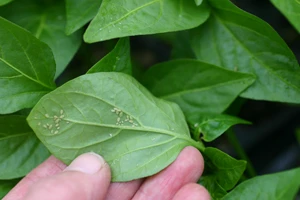
Pictured: It can be more difficult to control to insect pests, like aphids, on greenhouse-grown vegetable bedding plants because there are fewer controls labeled for these crops.
Photo by Leanne Pundt, Univ. of Conn.
Latest from Greenhouse Management
- The Growth Industry Episode 10: State of the Horticulture Industry
- Millennium Pacific Greenhouses launches California Grown Cucumber Program
- Scientists develop vitamin A-enriched tomato to fight global deficiency
- Tennessee Green Industry Field Day scheduled for June 11
- UTIA and UT Knoxville research teams will develop automated compost monitoring system
- Ken and Deena Altman receive American Floral Endowment Ambassador Award
- [SNEAK PEEK] Leading Women of Horticulture: The women of Fairview Greenhouses & Garden Center
- [SNEAK PEEK] Leading Women of Horticulture: The inventive women of TPIE ’26