Smart growers check the quality of the incoming plants they receive prior to planting them up or moving them into their greenhouses. Univ. of Conn. extension horticulture and greenhouse IPM specialist Leanne Pundt advises growers to also assess the quality of various natural enemies upon delivery. Things to look for include:
* Check number of shipment days and how cold or warm the ice packs are.
* Keep shipping packages out of extremes of sun, heat or cold. Release the biologicals as soon as possible.
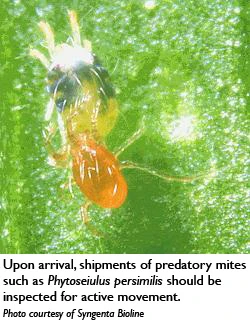
* Predators and parasitoids (predatory mites, some wasps) that are shipped in mobile stages should be inspected upon arrival to determine if they are actively moving.
* Biological control agents shipped as eggs or pupae should be checked for viability by placing a small sample in a clear, airtight, dry container. Hold the container in a shaded, unsprayed area for 2-3 days, and then carefully look for the active larvae or adults.
Most natural enemies have a very short shelf-life, especially those that are shipped without a food source, and should be applied immediately. Natural enemies that are supplied with a food source can be stored for a few days before use. Storage time depends on the particular natural enemy and environmental conditions.
Latest from Greenhouse Management
- The Growth Industry Episode 10: State of the Horticulture Industry
- Millennium Pacific Greenhouses launches California Grown Cucumber Program
- Scientists develop vitamin A-enriched tomato to fight global deficiency
- Tennessee Green Industry Field Day scheduled for June 11
- UTIA and UT Knoxville research teams will develop automated compost monitoring system
- Ken and Deena Altman receive American Floral Endowment Ambassador Award
- [SNEAK PEEK] Leading Women of Horticulture: The women of Fairview Greenhouses & Garden Center
- [SNEAK PEEK] Leading Women of Horticulture: The inventive women of TPIE ’26