The IR-4 Project has released two reports of interest to the ornamental horticulture community. The first report is a summary of products evaluated for control of borers, beetles, and white grubs. The second report is a summary evaluating methods for controlling invasive insect pests during shipment.
Authors Ely Vea and Cristi Palmer presented a 135-page document on the management of beetles, borers and white grubs that encompasses 11 years of testing. From 2005 through 2016, 66 products representing 43 different active ingredients were tested for management of adult and larval stages of coleopteran insects. In addition, 10 products representing 10 active ingredients were evaluated for lepidopteran clearwing borers in 2008 and 2009. These products represented both biological and chemical tools. Some products were already registered but more data were needed or they were considered standards to measure the level of efficacy achieved with other materials. Other products were in development but have not yet been registered with the EPA.
The report states that while organophosphates, pyrethroids, and neonicotinoids can provide good to excellent control of coleopteran insects, not all products work equally well in all situations. Additionally, treatments for borers are very different than treatments targeting white grubs. Developing newer classes of chemistry are important to reduce the environmental consequences and to minimize the development of resistance. Starting with the 2004 Annual Workshop, screening a number of products to manage coleopteran insects became one of the high priority projects for entomology.
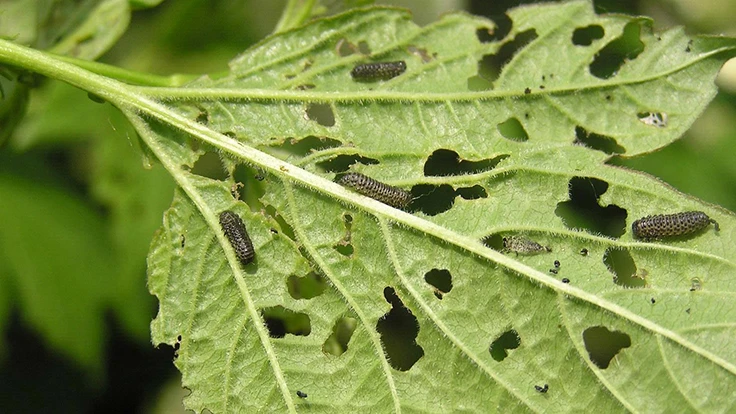
While a number of coleopteran and lepidopteran species were tested, only enough experiments were able to be completed on the coleopteran species black vine weevil, Japanese beetle, oriental beetle, Sri Lankan weevil, and viburnum leaf beetles to recommend actions to register or amend labels for these pests.
The second report “Developing sustainable methods for controlling invasive pests on ornamental plant cuttings” had two primary goals: studying the European pepper moth, Duponchelia fovealis, a newly-introduced invasive insect, and to evaluating methods for controlling invasive insect pests during shipment.
The research, which was primarily sponsored by USDA-APHIS, studied the moth’s life cycle, development and impact. It also compared the performance of conventional chemical and biological control tools prior to shipping, during a simulated shipping, and during actual shipping.
Some of the methods evaluated for insect control before and during shipping are heat treatments and biological control products.
The IR-4 Project is funded through USDA and is a major resource for providing pest management tools to specialty and minor use crops.
Photo: Viburnum leaf beetle is one of the pests studied in the IR-4 report "Management of Borers, Beetles, and White Grubs." Credit: Milan Zubrik, Forest Research Institute - Slovakia, Bugwood.org
Latest from Greenhouse Management
- The Growth Industry Episode 10: State of the Horticulture Industry
- Millennium Pacific Greenhouses launches California Grown Cucumber Program
- Scientists develop vitamin A-enriched tomato to fight global deficiency
- Tennessee Green Industry Field Day scheduled for June 11
- UTIA and UT Knoxville research teams will develop automated compost monitoring system
- Ken and Deena Altman receive American Floral Endowment Ambassador Award
- [SNEAK PEEK] Leading Women of Horticulture: The women of Fairview Greenhouses & Garden Center
- [SNEAK PEEK] Leading Women of Horticulture: The inventive women of TPIE ’26