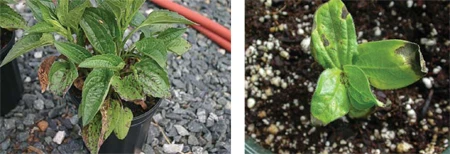
Univ. of Md. Plant Diagnostic Lab has received samples of Rudbeckia ‘Goldsturm’ infected with Septoria leaf spot and zinnia infected with bacterial leaf spot. Plant pathologist Karen Rane said plants spaced closely on the retail shelf or in landscape plantings are prone to these diseases.
She said the lower leaves of plants should be inspected for diseases symptoms. These are the leaves that tend to remain wet the longest following irrigation and are therefore the most susceptible to the diseases.
Increased plant spacing that would allow the foliage to dry more quickly may not be possible. Removal of infected leaves as soon as the symptoms are seen can help to prevent the disease from spreading to the rest of the plant and surrounding plants.
Pictured: Rudbeckia (left) and zinnia infected with leaf spot diseases. Symptoms tend to appear on lower leaves first since they remain wet the longest following irrigation. Photo courtesy of Univ. of Md. Extension
Latest from Greenhouse Management
- The Growth Industry podcast Episode 10: State of the Horticulture Industry
- Millennium Pacific Greenhouses launches California Grown Cucumber Program
- Scientists develop vitamin A-enriched tomato to fight global deficiency
- Incubating invention
- Tennessee Green Industry Field Day scheduled for June 11
- UTIA and UT Knoxville research teams will develop automated compost monitoring system
- Ken and Deena Altman receive American Floral Endowment Ambassador Award
- [WATCH] Taking root: The green industry’s guide to successful internships