Over the last quarter century, LED lighting has undergone a remarkable transformation, evolving from a mere substitute for conventional illumination to swiftly becoming the default standard in greenhouse and controlled environment agriculture globally.
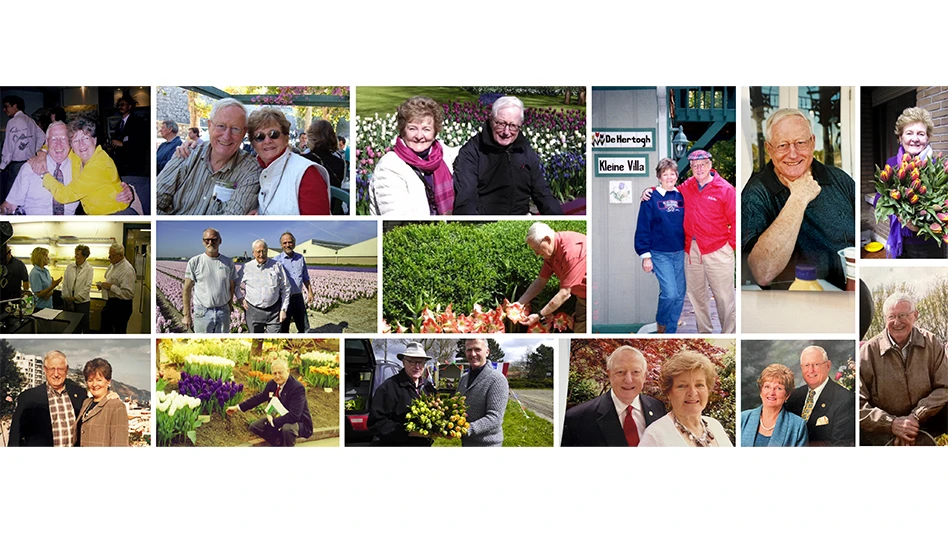
The rapid ascent of LED technology in the past two decades is primarily attributed to the pioneering work of Philips Lighting and specifically, the company’s horticulture LED team, under the guidance of Udo van Slooten, a pivotal figure in in Philips Lighting's LED development and application for horticulture.
“When we started [in 2007], we were one of the first companies who saw the potential of LED lighting,” van Slooten says. “We realized [LED] could become more efficient over time, but it had to be more than just energy savings. We had to look for applications that made sense.”
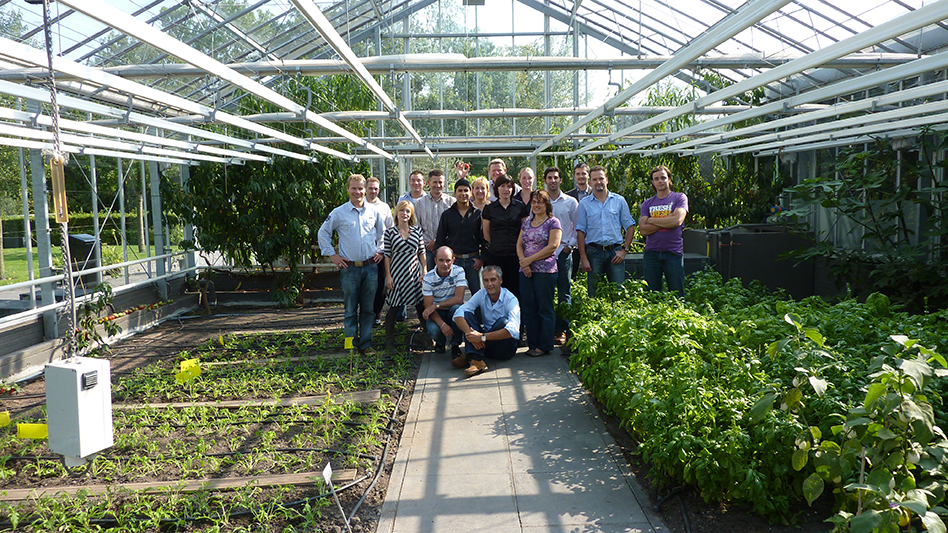 Above: The Philips horticulture team in 2009. In the 15-plus years since, the team has grown to more than 200 engineering and horticulture experts. Below: A photo of the Philips horticulture team from 2022. All photos courtesy of Signify.
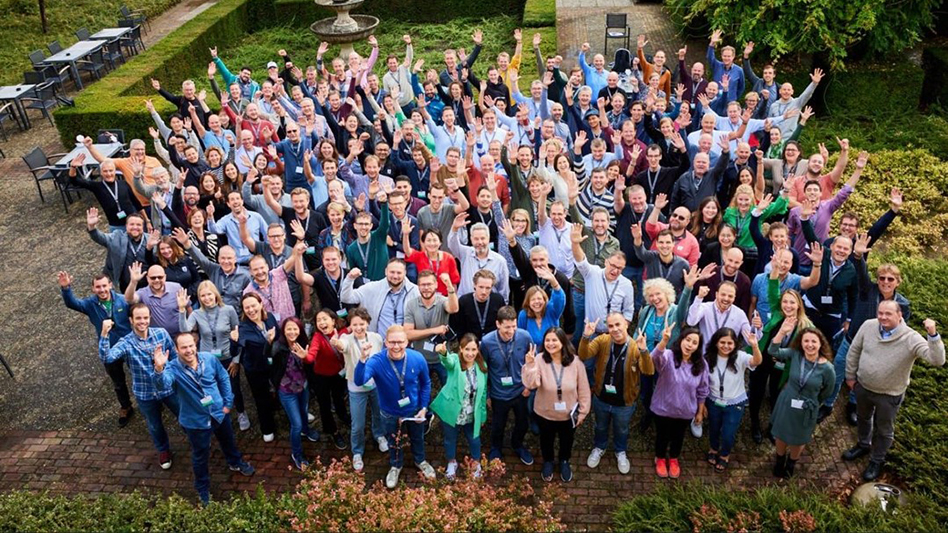
From its humble beginnings with van Slooten and a handful of key individuals, the horticulture team at Signify has grown to more than 200 engineering and horticultural experts serving critical markets worldwide. While the company looks to the future with the launch of its Philips GrowWise smart spectrum at this year’s GreenTech, its core philosophy remains unchanged: to thoroughly understand the horticulture industry’s specific needs for LED light applications and the vital role it plays in modern crop cultivation.
Illuminating LED’s Potential
Van Slooten recounts a pivotal moment in 2006 when Philips connected with regional tomato and rose growers who voiced a need for a cost-conscious lighting alternative to conventional greenhouse lighting sources. At the time, the company recognized that, while current LED technology might not yet be optimal for horticulture, its inherent flexibility, when developed, offered greater possibilities for growers beyond energy reduction.
The understanding of crop-light interactions and its active collaboration with universities and growers by the Philips Lighting team were instrumental in advancing and developing LED technology. From the start, van Slooten and his team partnered with researchers at Wageningen University & Research (WUR), a Netherlands-based institution that is one of the world’s top-ranked universities, playing a central role in horticulture research, education and innovation, particularly in greenhouse horticulture.
At the time, WUR plant researchers were conducting cutting-edge experiments on how fluorescent light impacted plant growth. According to van Slooten, Philips offered its LED lighting systems to WUR researchers to test in exchange for their trial data. This collaboration would pay dividends for Philips and the development and application of LEDs in horticultural settings.
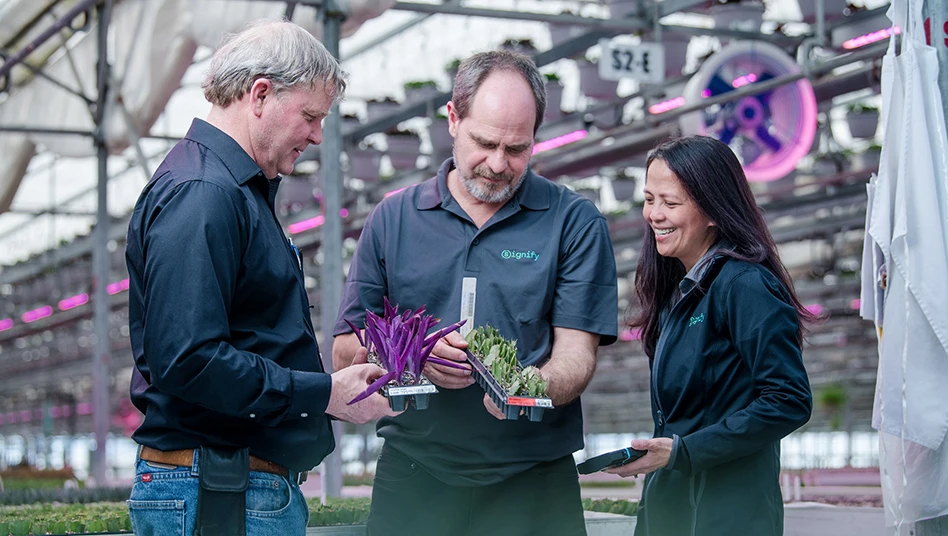
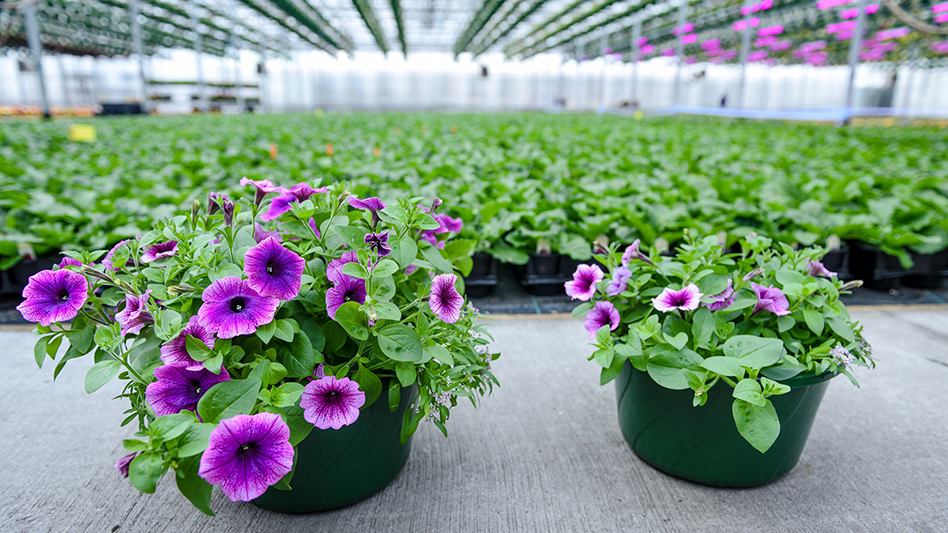 Petunia grown using LEDs versus a plant grown under traditional horticultural lighting.
Widespread trialing with growers around the world – whether with ferns in Belgium, tomatoes in Canada, or annual and perennial flowers along the East Coast – played a significant role in the adoption of this new technology by the broader grower community. According to van Slooten, initially, growers were risk-averse, hesitating to invest and convert their operations to "unproven" LED systems. However, once word circulated that early adopters were achieving marked production success and higher-quality plant material, conversion soon followed.
Grower Takes an Early Leap
For Jolly Farmer, upgrading the company’s 13-acre facility to LED technology was a journey of trial and error that began in 2012, says General Manager James Darrow. The company, which focuses on young plant production and grows 90 to 100 million plantlets annually, explored LED lighting because its existing high-pressure sodium (HPS) lighting was no longer feasible for the long term due to increasing energy costs and lower efficiency. But the initial investigation of LED systems yielded disappointing results.
“We started experimenting and brought in several different brands of LED lighting systems, several of which were a disaster from a cost perspective and what they actually did,” Darrow says.
The company, based in Northampton, New Brunswick, continued to trial various LED lighting systems for an additional four years before collaborating in 2016 with Philips Lighting, resulting in a successful partnership.
The initial trial involved 80 Philips LED toplighting fixtures. “We ran that first trial [with Philips], and immediately, it was very successful,” Darrow says. “In addition to reducing our energy costs, we were able to increase our light levels in the process, which was part of our objective.”
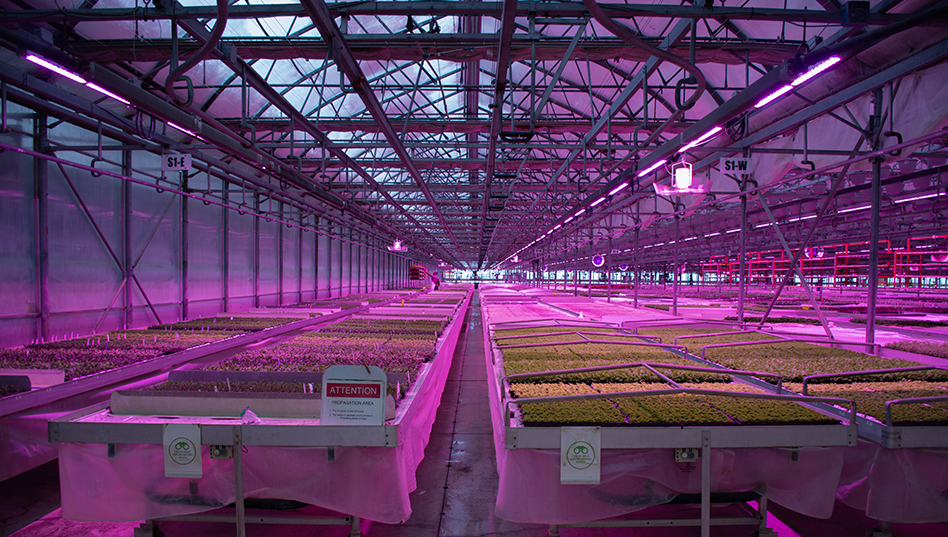 In 2018, Jolly Farmer began converting all of its existing lighting fixtures to Philips LEDs.
Jolly Farmer completed a two-phase conversion over to Philips LED toplighting fixtures in 2018 and 2019, installing a total of more than 3,500 lighting modules over 13 acres of greenhouses, a $1.65 million investment. According to Darrow, the conversion to Philips LED toplighting proved to be a solid capital investment for Jolly Farmer. The new lighting system slashed energy costs by 50%, which was critical as energy prices increased by nearly 30% in the years since the switch, says Darrow. In addition, the return on investment, which was the company’s most significant capital expenditure to enhance greenhouse operations, was realized within six years.
The success with LEDs seen at Jolly Farmer and other companies was enhanced by Signify's emphasis on providing growers with solid data and expert support.
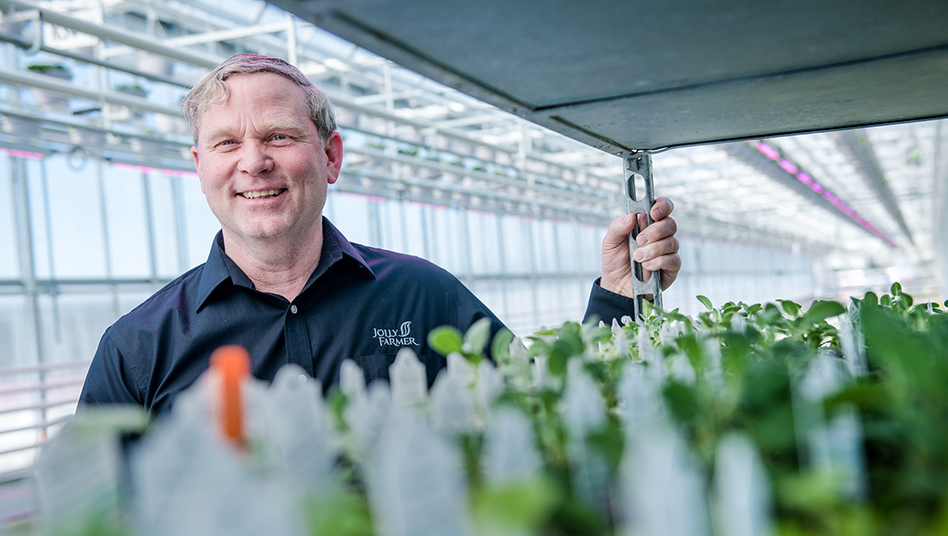 Jolly Farmer General Manager James Darrow.
“We said from the start that all customer-facing people have a background in horticulture,” van Slooten says. “That means we want the key account manager on our team to understand the business of the grower.”
To further support account managers, Philips formed comprehensive regionalized teams of university-trained plant specialists and application engineers to educate and guide growers on how to build and use their LED systems effectively and efficiently, van Slooten says.
“Because if you want to get the most out of your LED lighting, then you have to change the way you're growing your crop,” he adds. “We’re trying to help the growers get better results.”
The Power of Intelligent Lighting
According to van Slooten, a compelling aspect of Philips’ LED work lies in the realm of dynamic lighting, or the ability to precisely manipulate, tune, and intelligently apply the light spectrum to influence plant development.
Within horticulture, there’s been a rapid evolution toward data-driven and automated practices as growers strive for peak optimization. However, Anne Jancic, project manager for Intelligent Lighting Solutions at the Signify headquarters in Eindhoven, Netherlands, says this increasing sophistication simultaneously introduces greater complexity, demanding growers master a multitude of technologies to balance growing conditions. Greenhouse lighting is no different.
One example of continued innovation at Signify is the new Philips GrowWise smart spectrum, which bridges the gap for growers by simplifying the control process and unlocking the full capabilities of their greenhouse technology through comprehensive lighting management. “Smart spectrum automatically optimizes the spectrum of your light based on sunlight irradiation, and that results in boosted crop growth and saving energy costs,” Jancic says.
Jancic explains a newly installed lighting system includes a standard light recipe with a fixed color combination. For example, in tomato cultivation, it may be a blend of 90% red, 5% green and 5% blue. While these wavelengths contribute to photosynthesis and overall plant growth, Jancic says a fixture's energy efficiency can vary significantly based on its precise spectral composition.
Red light is the most energy-efficient, whereas blue, green and even far-red (a specific range of light just beyond what the human eye can perceive) require more energy per unit of light output. To optimize energy consumption, Jancic says growers aim to maximize the use of red light.
This is where the Philips GrowWise smart spectrum technology becomes invaluable, Jancic says. By dynamically responding to natural sunlight levels, which inherently contain the full spectrum of colors, the SmartSpectrum system intelligently adjusts supplemental lighting. Once the ambient green, blue and far-red light reaches a sufficient threshold, the system automatically dims these less energy-efficient colors and intensifies the red component.
“We recognize that growing is complex. We have quite a lot of ideas and directions we can go with [future algorithms] to give growers even more flexibility to automatically adjust or optimize the lighting system based on real-time factors that influence crop growth.”
Going forward, van Slooten says Signify's focus on LED applications in horticulture has not changed, and the company remains fixed on providing more than just luminaires, by offering innovative lighting solutions that make growers more productive and achieve greater value from their plant offerings.
“In the end, it’s nice that we’re able to convince growers that [LED] is a good technology, that this is the way you want to grow,” he says. “Then we’re able to connect them with the infrastructure and technical support to achieve [those goals].”
Darrow of Jolly Farmer states that enhanced efficiency and lower energy consumption, alongside improved root growth, firmer and more compact plant development, and reduced plant stretch, unequivocally confirmed that they had made the right choice.
“The only regret I have is that we didn’t make the switch to LED sooner,” Darrow says. “But that’s a dilemma I think a lot of growers face with adopting new technology. It’s a big investment, and they [fear] an improvement or upgrade or something better is just around the corner and they delay the decision. My advice is to trial different [LED] products and find the one that best suits [your operation] and just go for it.”
Latest from Greenhouse Management
- Quality Horticulture to acquire Hydrofarm Canada distribution
- Blue Grass Farms acquires Brehob Nursery
- OHP expands sales team with new hire and internal promotion
- The inventive women of TPIE ’26
- Seed Your Future aims to double 2025 total for 'Round-Up at the Register' 2026 campaign
- [WATCH] Remix: Sakata Playlist Combos and New Variety Spotlight
- Beacon Impatiens partners with Roots for Youth in 2026
- Inner visions