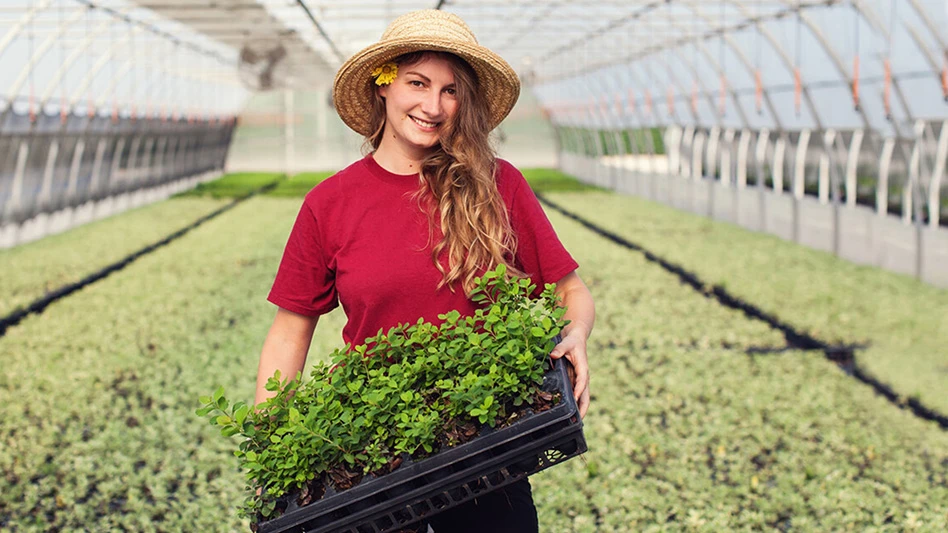
An increasing number of plants, including annuals, perennials, herbs, vegetables and woody ornamentals, are being used together in mixed containers. While visual compatibility is a major consideration, other production factors must be accounted for including temperature and light levels, pH range, fertilizer needs and water requirements, said Nora Catlin, floriculture specialist at Cornell University Cooperative Extension.
Plants grown in conditions not in their optimal range may not perform well and may be more susceptible to insects and diseases if they are stressed.
Catlin said having a variety of plants in containers will likely keep pest populations lower and help to reduce the chance of spread. However, if an insect or disease problem does occur, chemical control options may be more complicated and limited because of label restrictions and variable rates for the plants.
{sidebar id=1}
For more: Nora Catlin, Cornell University Cooperative Extension, 423 Griffing Ave., Suite 100, Riverhead, NY 11901-3071; (631) 727-7850 ext. 214; njc23@cornell.edu.
Latest from Greenhouse Management
- The Growth Industry Episode 10: State of the Horticulture Industry
- Millennium Pacific Greenhouses launches California Grown Cucumber Program
- Scientists develop vitamin A-enriched tomato to fight global deficiency
- Tennessee Green Industry Field Day scheduled for June 11
- UTIA and UT Knoxville research teams will develop automated compost monitoring system
- Ken and Deena Altman receive American Floral Endowment Ambassador Award
- [SNEAK PEEK] Leading Women of Horticulture: The women of Fairview Greenhouses & Garden Center
- [SNEAK PEEK] Leading Women of Horticulture: The inventive women of TPIE ’26