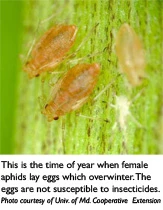
At this time, female aphids lay eggs which overwinter. Univ. of Md. Coop. Ext. personnel said aphids in the egg stage are not susceptible to insecticides. In the fall, males are produced that mate with females. During most of the year, aphids can reproduce parthenogenically (females do not mate and give birth to more females). Aphids can give birth to females that are ready to give birth to more aphids. This enables aphid populations to build up very quickly. Winged forms can be produced when populations are high to allow aphids to disperse to new plants or crops.
Monitoring: Look for aphids feeding on growing tips, along stems and in flower heads. In
heavy infestations, there will be many white cast skins and sooty mold on the plants. Aphids
secrete honeydew as a waste product which is a food source for the sooty mold fungus.
Control products: Insecticides include neem products and horticultural oils. Most of the systemic insecticides labeled for ornamental crops provide good control.
Biological controls: Predators and parasitoids, including lady bird beetle (Hippodamia convergens), lacewings, parasitic wasps (i.e., Aphidius colemani) and the predatory midge (Aphidoletes aphidomyza), are available from biological control suppliers. When released in the greenhouse they help control aphids before populations build to high numbers.
Latest from Greenhouse Management
- The Growth Industry Episode 10: State of the Horticulture Industry
- Millennium Pacific Greenhouses launches California Grown Cucumber Program
- Scientists develop vitamin A-enriched tomato to fight global deficiency
- Tennessee Green Industry Field Day scheduled for June 11
- UTIA and UT Knoxville research teams will develop automated compost monitoring system
- Ken and Deena Altman receive American Floral Endowment Ambassador Award
- [SNEAK PEEK] Leading Women of Horticulture: The women of Fairview Greenhouses & Garden Center
- [SNEAK PEEK] Leading Women of Horticulture: The inventive women of TPIE ’26