N.Y. State Agriculture Commissioner Darrel J. Aubertine has alerted commercial growers and home gardeners of the potential introduction of late blight this growing season. The disease, caused by Phytophthora infestans, spreads rapidly between plants in cool, wet weather. It primarily causes tomato and potato plants to wilt and die.
“The exceptionally cool, damp spring we are experiencing throughout New York State this year heightens our concern for late blight,” said Aubertine. “We saw the devastation it can do to a tomato crop in 2009, and we have already received reports of early late blight detection in neighboring states. Therefore, we want to remind our growers of this possible plant disease and alert them of the precautions they can take and how we, as a regulatory agency, are working to protect our plants.”
Last year, the Department initiated a concerted strategy to enhance the detection and eradication efforts that involved training its horticultural inspectors, surveying plants at the retail level and in commercial greenhouses. The Department also worked with Cornell Cooperative Extension to conduct outreach and follow up in the field with growers and gardeners.
This year, inspection of tomato plants has been a priority, and to date, more than 150,000 tomato plants have been inspected with no signs of late blight detected.
The Department has also been in regular communication with neighboring states and county Cooperative Extension offices regarding late blight. Recently, the Department learned of two localized outbreaks: one was on volunteer tomatoes in a greenhouse in Maine where there had problems with the disease in previous years; and one in a Connecticut greenhouse on potatoes and tomatoes that were likely introduced on the cut seed potatoes.
If late blight is detected in New York, the suspect plants are subject to quarantine upon initial visible diagnosis by a state horticultural inspector. A plant sample will be sent to the Plant Disease Diagnostic Clinic at Cornell Univ. for confirmation. If late blight is confirmed, the plants will be properly disposed of under state supervision and an investigation will be initiated in order to try and locate other infected plants.
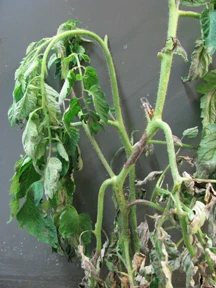
Pictured: Because of the cool, damp spring, N.Y. State Agriculture Commissioner Darrel J. Aubertine has alerted commercial growers and home gardeners of the potential introduction of late blight.
Photo by Sharon Douglas, Conn. Agricultural Experiment Station
Latest from Greenhouse Management
- The Growth Industry Episode 10: State of the Horticulture Industry
- Millennium Pacific Greenhouses launches California Grown Cucumber Program
- Scientists develop vitamin A-enriched tomato to fight global deficiency
- Tennessee Green Industry Field Day scheduled for June 11
- UTIA and UT Knoxville research teams will develop automated compost monitoring system
- Ken and Deena Altman receive American Floral Endowment Ambassador Award
- [SNEAK PEEK] Leading Women of Horticulture: The women of Fairview Greenhouses & Garden Center
- [SNEAK PEEK] Leading Women of Horticulture: The inventive women of TPIE ’26