Periwinkle (Catharanthus roseus) has proved to be an effective screening tool for treatments to control the bacterial disease Huanglongbing known as citrus greening. Caused by 3 closely related bacteria species, there is no known cure and no established effective treatments for the disease. It is a threat not only to the citrus industry in Florida, where it was discovered in 2005, but to citrus nationwide.
A team of scientists from the USDA-Agricultural Research Service and the Univ. of Fla. Indian River Research and Education Center have found that periwinkle performs well as a stand-in for citrus, becoming quickly infected with the bacteria and responding well to antibiotic compounds tested to reduce infection.
The researchers used disease-infected lemon trees to infect periwinkle plants and then conducted greenhouse experiments to find the optimal nutrient and soil treatments for regenerating periwinkle with high infection rates. The researchers also soaked infected periwinkle cuttings in different chemical compounds and found that two of them, penicillin G sodium and biocide 2,2-dibromo-3-nitrilopropionamide (DBNPA), performed well as potential treatments. The chemicals must still be evaluated in field trials and require approval by regulatory agencies before commercial use is possible. Results of the research are published in the journal Phytopathology.
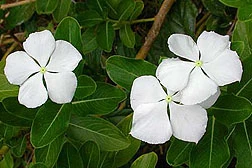
Pictured: Periwinkle has proved to be an effective screening tool for control treatments of Huanglongbing, also known as citrus greening. Photo courtesy of National Park Service
Latest from Greenhouse Management
- The Growth Industry Episode 10: State of the Horticulture Industry
- Millennium Pacific Greenhouses launches California Grown Cucumber Program
- Scientists develop vitamin A-enriched tomato to fight global deficiency
- Tennessee Green Industry Field Day scheduled for June 11
- UTIA and UT Knoxville research teams will develop automated compost monitoring system
- Ken and Deena Altman receive American Floral Endowment Ambassador Award
- [SNEAK PEEK] Leading Women of Horticulture: The women of Fairview Greenhouses & Garden Center
- [SNEAK PEEK] Leading Women of Horticulture: The inventive women of TPIE ’26