Plant physical defects can be predicted based on chromosome imbalances. Research conducted at Univ. of Calif.-Davis Genome Center found that physical defects in plants can be predicted based on chromosome imbalances. This could lead to being able to determine how the addition or deletion of genes and the organization of the genome affects organisms.
Project scientist Brian Dilkes, a Purdue Univ. assistant professor of horticulture, said understanding why and how these imbalances result in certain characteristics could provide insight into how to correct the defects in not only plants, but also in animals and humans. Understanding how the imbalances cause changes could allow scientists to manipulate plant traits to increase biomass for fuels or other purposes.
The research used the plant Arabidopsis thaliana. The study findings can be found in the journal Genetics.
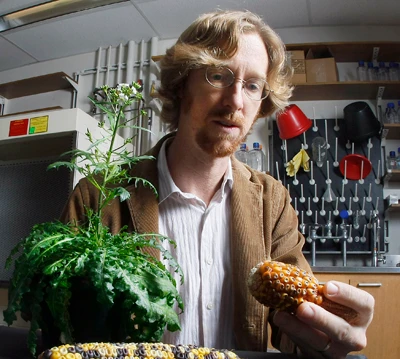
Pictured: Brian Dilkes, a Purdue Univ. assistant professor of horticulture, was part of a research team that determined that plant physical defects can be predicted based on chromosome imbalances.
Photo by Tom Campbell, Purdue Agricultural Communication
Latest from Greenhouse Management
- Jackson & Perkins expands into Canadian market
- Green & Growin’ 26 brings together North Carolina’s green industry for education, connection and growth
- Marion Ag Service announces return of Doug Grott as chief operating officer
- Cincinnati Zoo & Botanical Garden debuting new perennial section at 2026 Breeder Showcase
- The Garden Conservancy hosting Open Days 2026
- Registration open for 2026 Perennial Plant Association National Symposium
- Resource Innovation Institute and North Dakota State University explore co-location of data center and greenhouses
- Fred C. Gloeckner Foundation Research Fund calls for 2026 research proposals