As the days get longer, temperatures warm up and birds can be heard chirping outside, controlled environment produce growers must be ready for the environmental changes that spring brings. From equipment preparation to consulting, here’s what you need to know.
Prepare your equipment
In his travels across the United States, Steve Froehlich, horticultural engineer and crop consultant at CropKing, has interacted with plenty of growers who still need to make adjustments in their greenhouses to accommodate hotter, sunnier spring conditions. Growers can best prepare for warmer weather by turning on their fans and evaporative cooling pads.
Additionally, many growers continue to heat their greenhouses at night into the spring when they shouldn’t, Froehlich says. “It’s quite humid in the greenhouse by early morning,” he says. “The sun comes up, the house starts heating up fairly quickly, it forces them into cooling, and your humidity within the greenhouse plummets, or drops, very, very quickly. You put your plants into a wilting situation or a situation where they cannot bring up enough water quick enough to maintain the water loss that’s going on through the leaves.”
Although each greenhouse operation differs, plants generally take in more nutrients and water as light levels increase, Froehlich says. Growers can increase electrical conductivity levels to feed their plants more. Between March and May, growing conditions in most of the United States are favorable, and it is relatively easy to control the environment of greenhouses to maximize the plants’ growing potential.
Scout for insects
Growers should also be increasing their insect scouting efforts as they get into spring, Froehlich says. The winter of 2016-17 was particularly warm for much of the United States, including in Minnesota, where Froehlich lives. “We’ve had significant weather patterns that have blown bugs up from down south already,” he says.
Seasoned growers who have been in production before should record when they have had particular pest and disease pressure, such as powdery mildew, whiteflies or aphids, Froehlich says. By doing so, they can refer back to that information in future years. If they have recorded information in the past, it might come in handy this spring. At the same time, new growers should begin taking detailed notes to make production easier in future years. “Don’t get yourself in a situation where all of a sudden one day you have a huge infestation of bugs out there, and you’re not ready to combat it, whatever your combatant method may be – whether it’s introducing beneficials, or if it’s going after it with insecticides,” he says. “Have those things ready. If you’ve got history of having a problem, chances are you’re going to have it again.”
Know your market
Competition is involved in any produce market, but growers should be able to use controlled environment agriculture (CEA) methods to grow the best lettuce or product possible, Froehlich says. CEA growers have an advantage over growers that are more susceptible to natural elements or companies that have shipped their produce a long way – across the United States or from Mexico, for instance.
It is beneficial for growers to keep the market in mind to see what there is a demand for, and when, Froehlich says. For instance, nontraditional lettuce varieties tend to sell better through direct-to-consumer channels such as outdoor farmers markets and flea markets than wholesale supermarkets. Larger demographic data, such as age, ethnicity and location, are also important to note.
“One of the things I occasionally get – and this used to be probably more with tomatoes than lettuce – but I would have someone that would call me and say, ‘I’m growing these beautiful tomatoes, but I can’t sell them,’” Froehlich says. “Well, my first question is going to be, ‘Are your tomatoes the best tomatoes that are out there?’ And if you hesitate in answering that, you just told me you have problems with growing your tomatoes.”
Ask for help
Growers should reach out to horticulturists or other specialists about any problems they might be facing or production processes they might be unsure about, Froehlich says. “Along that line, too, is keep records, keep notes, whether it’s writing them on the calendar or you carry around a notebook with you, but keep good records, and take pictures,” he says. “Put them into a folder on your computer so you can go back again and say, ‘Oh, yeah, I remember this. This is what we did about it.”
Froehlich tells new growers to call him at least every month or every couple weeks. “It never fails to amaze me, that especially with new growers, they don’t make that phone call until they’re at dire ends,” he says. “Their crop is half dead, they’re going out of business, they’re costing a lot of money. They call us as a last resort. We should be that first resort, not the last.
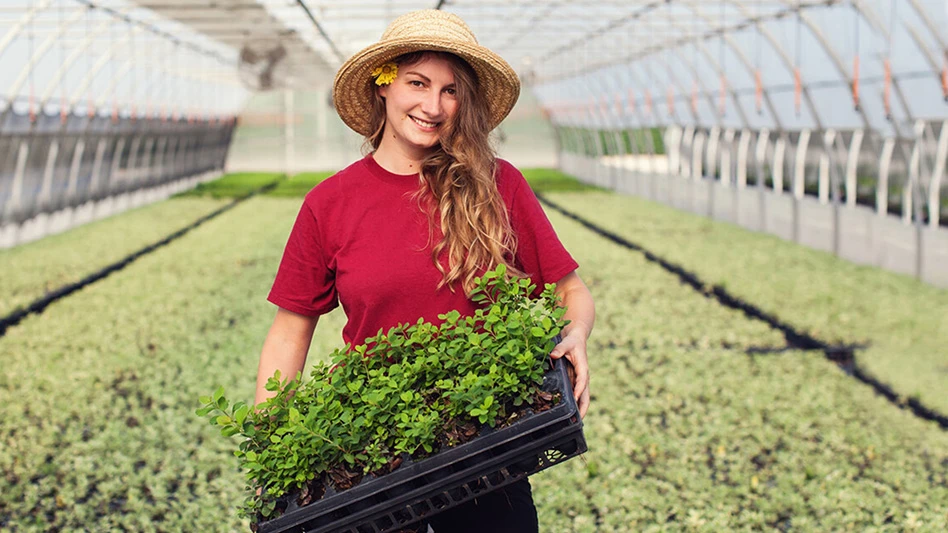
Photo courtesy of CropKing
Latest from Greenhouse Management
- Millennium Pacific Greenhouses launches California Grown Cucumber Program
- Scientists develop vitamin A-enriched tomato to fight global deficiency
- Tennessee Green Industry Field Day scheduled for June 11
- UTIA and UT Knoxville research teams will develop automated compost monitoring system
- Ken and Deena Altman receive American Floral Endowment Ambassador Award
- [SNEAK PEEK] Leading Women of Horticulture: The women of Fairview Greenhouses & Garden Center
- [SNEAK PEEK] Leading Women of Horticulture: The inventive women of TPIE ’26
- Growing successful spring crops with Topflor