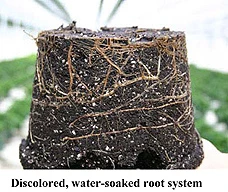
Univ. of Md. plant pathologist Karen Rane advises poinsettia growers that controlling pythium root rot on their plants takes an integrated approach. The best approach is to keep greenhouses clean of soil and debris, run plants on the dry side and maintain good fertility while keeping soluble salts at the proper level. Pythium is commonly found in soil and can enter the greenhouse in unsterilized growing media, used containers and on dirty tools and benches. Surface water sources including ponds and streams can also contain pythium. Irrigating plants with untreated water may introduce the pathogen to the crop. Rane said that applications of biological fungicides, such as Rootshield, early in the season can control root rot when the amount of pythium inoculums is low. If a grower has a history of pythium or root rot, fungicide drenches can help protect plants from infection.
Photo courtesy of Univ. of Md. Cooperative Extension
Latest from Greenhouse Management
- Jackson & Perkins expands into Canadian market
- Green & Growin’ 26 brings together North Carolina’s green industry for education, connection and growth
- Marion Ag Service announces return of Doug Grott as chief operating officer
- Cincinnati Zoo & Botanical Garden debuting new perennial section at 2026 Breeder Showcase
- The Garden Conservancy hosting Open Days 2026
- Registration open for 2026 Perennial Plant Association National Symposium
- Resource Innovation Institute and North Dakota State University explore co-location of data center and greenhouses
- Fred C. Gloeckner Foundation Research Fund calls for 2026 research proposals