To help prevent late blight next growing season, Beth Gugino, assistant professor of plant pathology at Penn St. Univ., recommends making sure that all late blight-infected tomato and/or potato plant tissue from this past season is dead and home gardeners refrain from composting diseased plant material.
“Late blight cannot withstand the freezing winter temperatures of the Northeast, but may be able to live in the center of a warm compost pile,” said Gugino. “As long as the plant tissue is alive, the pathogen can survive.”
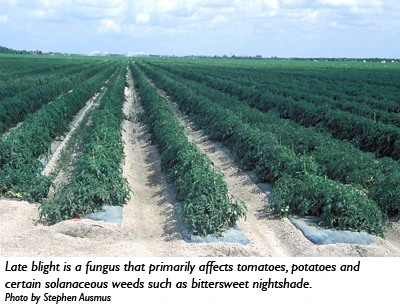
Late blight is a fungus (Phytophthora infestans) that primarily affects tomatoes, potatoes and certain solanaceous weeds such as bittersweet nightshade.
“An unseasonably cool spring followed by an equally unseasonably cool and wet summer facilitated late blight growth for both home gardeners and commercial farmers throughout the growing season, which is very rare,” Gugino said.
There is no need to remove dead tomato plant tissue this late in the season or treat the soil over the winter, since freezing temperatures will kill both the plant tissue and late blight. However, late blight can survive in infected potato tubers over winter and can be a potential source of the disease the following year. If they are infected, Gugino recommends they be dug up and disposed of. She said volunteer potato plants that begin to grow next season should be quickly destroyed.
The pathogen can't survive in or on tomato seeds, or on tomato cages and stakes between the seasons. Gugino said many bacterial diseases can survive in the seed and on the cages so it is still important to purchase high quality seed and to disinfect cages and stakes to help control these diseases.
Currently there are no tomato varieties resistant to late blight, however growers and home gardeners have observed that some may be less susceptible than others. Breeding work is under way and some resistant varieties are in the final stages of development and are expected to be available as soon as 2010.
Latest from Greenhouse Management
- The Growth Industry Episode 10: State of the Horticulture Industry
- Millennium Pacific Greenhouses launches California Grown Cucumber Program
- Scientists develop vitamin A-enriched tomato to fight global deficiency
- Tennessee Green Industry Field Day scheduled for June 11
- UTIA and UT Knoxville research teams will develop automated compost monitoring system
- Ken and Deena Altman receive American Floral Endowment Ambassador Award
- [SNEAK PEEK] Leading Women of Horticulture: The women of Fairview Greenhouses & Garden Center
- [SNEAK PEEK] Leading Women of Horticulture: The inventive women of TPIE ’26