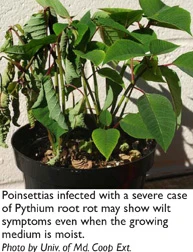
Sanitation is critical to reducing Pythium problems during the production cycle. Univ. of Md. Coop Ext. personnel said this fungus-like pathogen is commonly associated with soil, dirty containers and untreated pond water. There are a number of Pythium species that have different temperature requirements so the disease can be a problem year-round. Pythium can infect roots damaged from water stress or high soluble salts from too much fertilizer. Symptoms include water-soaked, brown roots with vascular tissue intact (commonly called “rat-tailing”). Infected plants may be smaller in size with off-color leaves. Severely infected plants appear to be wilting even though the growing medium is moist. Plants with severe root rot should be discarded. Fungicide drench applications may be needed to protect healthy plants against Pythium. Rotate products with different active ingredients to avoid resistance in Pythium populations.
Latest from Greenhouse Management
- The Growth Industry podcast Episode 10: State of the Horticulture Industry
- Millennium Pacific Greenhouses launches California Grown Cucumber Program
- Scientists develop vitamin A-enriched tomato to fight global deficiency
- Incubating invention
- Tennessee Green Industry Field Day scheduled for June 11
- UTIA and UT Knoxville research teams will develop automated compost monitoring system
- Ken and Deena Altman receive American Floral Endowment Ambassador Award
- [WATCH] Taking root: The green industry’s guide to successful internships