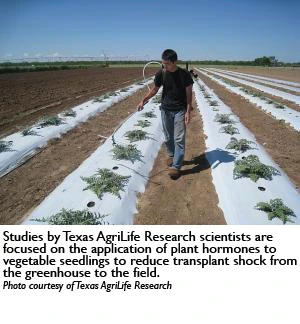
Vegetable plants moved from the greenhouse to the field often suffer transplant shock because of an imbalance between water loss through transpiration and water absorption through the roots, which typically causes wilting. Windy conditions or high temperatures can accelerate water loss.
Texas AgriLife Research plant physiologist Daniel Leskovar is studying the identification and understanding of plant adaptation mechanisms to temperature, water and biological stresses as part of an integrated vegetable cropping system. He and his colleagues have been successful in creating heartier tomato, pepper, watermelon and cantaloupe seedlings for transplanting.
His research has primarily involved controlling naturally-occurring vegetable growth regulators, such as abscisic acid (ABA). Leskovar said ABA closes the stomates, which reduces water loss through transpiration and prevents further moisture loss during periods of low water availability. Spray applications of ABA have reduced undesirable excess shoot growth on pepper, watermelon and cabbage transplants grown in the greenhouse. ABA applications to tomato, pepper and artichoke seedlings were also superior to other commercial film-forming antitranspirants in improving overall plant water stress.
Latest from Greenhouse Management
- The Growth Industry Episode 10: State of the Horticulture Industry
- Millennium Pacific Greenhouses launches California Grown Cucumber Program
- Scientists develop vitamin A-enriched tomato to fight global deficiency
- Tennessee Green Industry Field Day scheduled for June 11
- UTIA and UT Knoxville research teams will develop automated compost monitoring system
- Ken and Deena Altman receive American Floral Endowment Ambassador Award
- [SNEAK PEEK] Leading Women of Horticulture: The women of Fairview Greenhouses & Garden Center
- [SNEAK PEEK] Leading Women of Horticulture: The inventive women of TPIE ’26