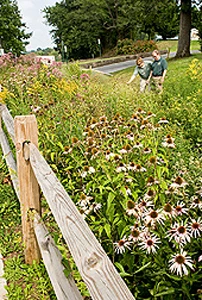
Rain gardens are being used by home owners and municipalities to reduce runoff and filter out sediment, but they also have the potential to remove toxic metals from storm water. USDA-Agricultural Research Service scientists are looking at the ability of the charred remains of poultry litter to absorb heavy metals. The biochar has been particularly effective at taking up copper, cadmium and zinc, which are usually difficult to remove from wastewater.
ARS chemists have developed a patented method for turning agricultural bio-waste, including, poultry litter bedding materials such as sawdust, wood shavings, peanut shells, chicken litter and feathers into biochar. The biochar and other farm and industrial byproducts are being trialed in rain gardens in Beaver, W.Va., county landfill plots and a mine reclamation site.
Pictured: USDA scientists are developing ways to improve rain gardens so that they not only reduce runoff, but also keep toxic metals out of storm drains.
Photo by Stephen Ausmus
Latest from Greenhouse Management
- The Growth Industry Episode 10: State of the Horticulture Industry
- Millennium Pacific Greenhouses launches California Grown Cucumber Program
- Scientists develop vitamin A-enriched tomato to fight global deficiency
- Tennessee Green Industry Field Day scheduled for June 11
- UTIA and UT Knoxville research teams will develop automated compost monitoring system
- Ken and Deena Altman receive American Floral Endowment Ambassador Award
- [SNEAK PEEK] Leading Women of Horticulture: The women of Fairview Greenhouses & Garden Center
- [SNEAK PEEK] Leading Women of Horticulture: The inventive women of TPIE ’26