Sun Tzu, the ancient Chinese general and font of quotable wisdom, once said, “If you know the enemy and know yourself, you need not fear the result of a hundred battles.”
In the greenhouse world, those enemies are the pests who feed on our crops. Dan Gilrein,extension entomologist at Cornell University, knows bugs. And he knows how they destroy your crops. One of the pests he sees most commonly is the aphid, a tiny creature that wreaks massive destruction on a myriad of floriculture plants. We spoke with him about the aphid and how it reaps havoc.
Meet your foe.
GM: Can you give a brief description of aphids and how they cause destruction?
Dan Gilrein: There are many different kinds of aphids, though we tend to see just a few different ones in greenhouse crops. These small (1/16" more or less) insects feed on plant sap to obtain nutrients. In greenhouses they reproduce without mating, so even one aphid can start a new colony. They can arrive with plant material, move from one crop to another or from weeds to the crops themselves, migrate in from outdoors, or by a variety of other means.
Damage is caused in several ways. Large numbers can lead to reduced growth and vigor. As aphids develop, they deposit excess sticky 'honeydew' on plants on which sooty molds grow - both can spoil the appearance. Feeding by some kinds causes severe plant distortion. Their physical presence can be objectionable to consumers and some also transmit plant viruses, though that is generally of minor importance to most (if not all) growers.
GM: What crops do aphids most commonly attack?
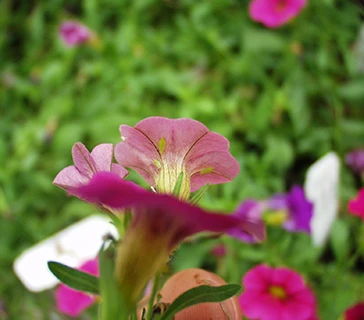
DG: Aphids can be found on many greenhouse crops, including both edibles and ornamentals. Common hosts include calibrachoa, salvia, osteospermum, impatiens, pansy, peppers, flowering cabbage and kale, tomatoes, cineraria, nasturtium, aquatic plants like lotus, and many others. The list is almost endless.
GM: Why are aphids such a nuisance?
DG: Growers find aphids frustrating to deal with for several reasons. They seem to appear suddenly and in high numbers - some kinds are well-camouflaged and easily miss detection in low numbers when best managed, exponentially increasing with warm conditions on well-fertilized plants. Some stages are mobile, moving from one crop to another. They can be challenging to control and growers have had crops rejected because of aphid 'contamination.'
GM: Are aphids more troublesome in any specific climate, region or setting?
DG: Aphids can be troublesome almost anywhere, but they tend to be more common in houses with vegetatively propagated material or on older crops like stock plants. I almost never receive complaints about aphids where only seed-grown plants are grown alone, at least in northern growing areas. We have many effective biological and conventional controls, but growers should try to have the aphids identified especially when using biological control, since the strategy needs to be tailored according to aphid species.
Latest from Greenhouse Management
- The Growth Industry Episode 10: State of the Horticulture Industry
- Millennium Pacific Greenhouses launches California Grown Cucumber Program
- Scientists develop vitamin A-enriched tomato to fight global deficiency
- Tennessee Green Industry Field Day scheduled for June 11
- UTIA and UT Knoxville research teams will develop automated compost monitoring system
- Ken and Deena Altman receive American Floral Endowment Ambassador Award
- [SNEAK PEEK] Leading Women of Horticulture: The women of Fairview Greenhouses & Garden Center
- [SNEAK PEEK] Leading Women of Horticulture: The inventive women of TPIE ’26