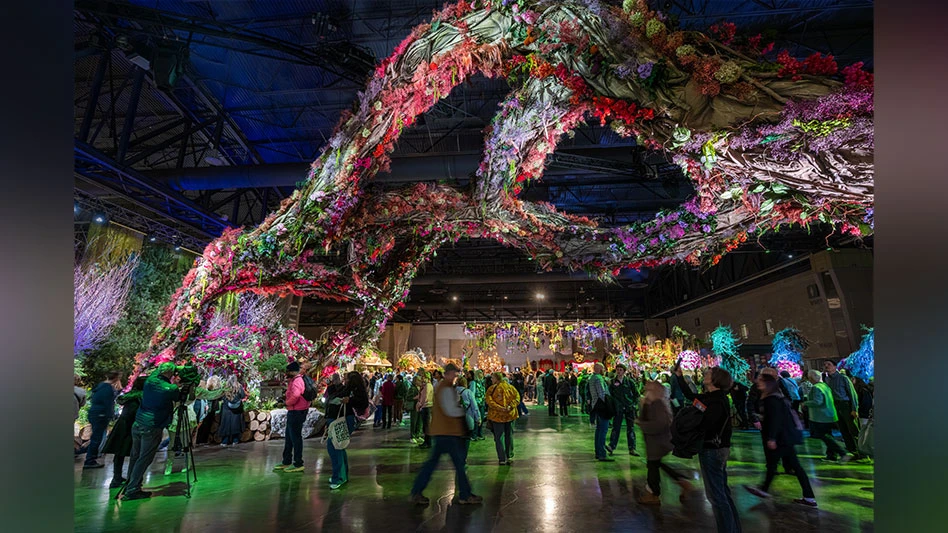
The "Slow Food" movement, which encourages people to eat regionally grown crops and foods, may have a budding imitator---flowers. 
Some flower farmers in California are reporting an increased demand for local flowers, grown without pesticides. For the Plarisans, a mother-daughter combo operating out of California, that means growing rare local flowers like the near-dark sunflower or rainbow hued zinnias. Their most in-demand flower, and the most difficult to grow, is the dahlia.
"I thought roses would be the most difficult to grow, but they haven't been," Karen Plarisan, mother and owner of Verbena Flowers and Trimming, told the Republican American. "But the dahlias got infested with white flies and that attracted moldy mildew. It caught us by surprise."
In the fall, the duo turns to homegrown produce, foraged materials, local farm stands and familiar flowers.
The New York Times reports that the so-called "Slow Flower" movement is popular along the coastlines and loses influence further into the country. Some of the flowers are being used for non-traditional wedding bouquets and arrangements.
Sources: The Republican American and The New York Times.
Latest from Greenhouse Management
- The Growth Industry Episode 10: State of the Horticulture Industry
- Millennium Pacific Greenhouses launches California Grown Cucumber Program
- Scientists develop vitamin A-enriched tomato to fight global deficiency
- Tennessee Green Industry Field Day scheduled for June 11
- UTIA and UT Knoxville research teams will develop automated compost monitoring system
- Ken and Deena Altman receive American Floral Endowment Ambassador Award
- [SNEAK PEEK] Leading Women of Horticulture: The women of Fairview Greenhouses & Garden Center
- [SNEAK PEEK] Leading Women of Horticulture: The inventive women of TPIE ’26