In 2014, Smith Gardens in Aurora, Ore. decided to shift away from neonicotinoid use. The decision forced the team to “expand our horizons,” says Roy Merker, Smith Gardens’ integrated pest management (IPM) coordinator.
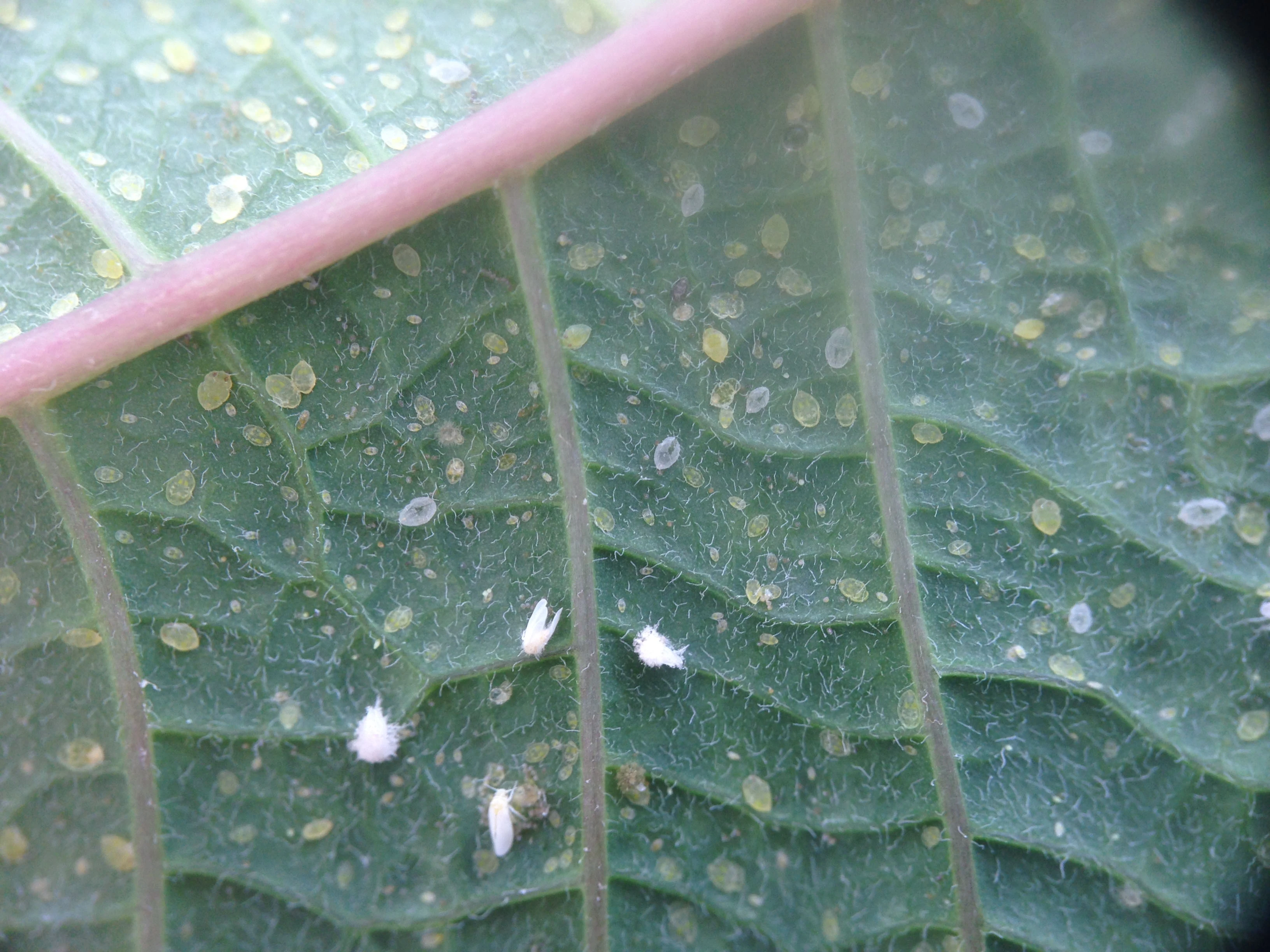
During a meeting that year with a consultant, Merker and others on his team were made aware that they could have had either the B-biotype whitefly, or the Q-biotype whitefly, which has proven to be more insecticide-resistant to other whitefly biotypes. Click here to read more about the Q-biotype whitefly.
The team needed to find out which biotype was present in their greenhouse because of the whitefly populations they see every year on their poinsettia crops. Smith Gardens ships about 500,000 poinsettia plants to big-box stores every season.
After sending samples to a lab, it was confirmed that they did, in fact, have the Q-biotype in their greenhouses. So their chemical representative put them in contact with SePRO to try a new product called Rycar. Rycar is a non-neonicotinoid product that’s effective against whiteflies and other pests, such as aphids and thrips. They discovered that it would fit in perfectly with their rotation for their poinsettia season. “We have to be pretty aggressive with the whitefly, so we definitely start our rotation preventatively,” Merker says.
Not only does it provide effective control on its own, but Smith Gardens can use the product as a fog, instead of spraying or drenching their poinsettia plants. There are three big advantages to being able to use Rycar as a fog, Merker says. Fogging results in a quicker application speed, doesn’t leave the plants too wet (which can cause Botrytis), and provides thorough coverage, even under the foliage’s canopy where whiteflies typically land first before feeding.
Because Rycar has a 2-application restriction per crop, per cycle, and in order not to help Q-biotypes build resistance, Merker uses it in rotation with other products. But he chooses Rycar when he predicts he’s going to see a surge in whitefly infestation.
“We take good records and charts of whitefly counts in the greenhouses, and we know that this week, right around this time, is when whitefly numbers start to increase significantly. And this is the time that we’ll do our Rycar application,” he says.
Another bonus to the product is that he can continue to use it in the spring season because of Rycar’s effectiveness on pests like aphids.
“It’s taken a lot of the stress off of our shoulders without the neonics, and it’s the key component to our rotation,” Merker says. “I’m really happy with it.”
Photo courtesy of SePRO
Latest from Greenhouse Management
- Jackson & Perkins expands into Canadian market
- Green & Growin’ 26 brings together North Carolina’s green industry for education, connection and growth
- Marion Ag Service announces return of Doug Grott as chief operating officer
- Cincinnati Zoo & Botanical Garden debuting new perennial section at 2026 Breeder Showcase
- The Garden Conservancy hosting Open Days 2026
- Registration open for 2026 Perennial Plant Association National Symposium
- Resource Innovation Institute and North Dakota State University explore co-location of data center and greenhouses
- Fred C. Gloeckner Foundation Research Fund calls for 2026 research proposals